The
ever-increasing demand for AI computing power has driven the global
semiconductor market to exceed the trillion-yuan scale in 2026, four years
ahead of expectations. Currently, the AI smart device segment is growing
rapidly, with an average annual growth rate exceeding 50%. Terminals such as AI
glasses, AI robots, and AI PCs are rapidly proliferating, and the AI agent
service ecosystem is also expected to be fully implemented by 2035. Alongside
industry development, AI terminals are placing higher demands on low power
consumption, miniaturization, and algorithmic capability. AWINIC's first 55nm
BCD process chip, the AWA88188, leveraging advanced process technology,
ultra-compact size, ultra-low power consumption, and comprehensive algorithms,
deeply empowers the new generation of AI smart devices. At the same time, the
AI glasses industry is undergoing an architectural transformation, shifting its
development focus from "display-first" to
"interaction-first" and from "cloud intelligence" to
"on-device real-time processing." The previously overlooked audio
link has now become the core key to industry upgrading.
Audio is
rapidly evolving from a traditional "functional module" into the
"core gateway" for AI interaction. On June 3rd, at the 16th Songshan
Lake IC Forum, AWINIC Electronics delivered a speech
titled *"AWA88188: Low Power, Small Package, On-Device Computing
Power – AWINIC's Flagship Amplifier for AI Glasses
Innovation,"* elaborating on the company's strategic thinking in
on-device AI audio and launching a "computing power + algorithm +
chip" trinity, end-to-end audio interaction solution specifically for AI
smart glasses.
I. Target
Market & Core Pain Point Analysis
Current
consumer smart wearables (watches, audio glasses, etc.) focus on portability
and multi-function integration, resulting in highly compact mechanical
structures. Due to hardware limitations, the mainstream application processors
in the industry generally lack high-performance audio DSPs. Some are only
equipped with HiFi4 DSPs offering 50 Mcps of computing power, which is
insufficient to support professional-grade audio algorithm operation, leaving
narrow room for sound tuning. The rapidly advancing AI revolution is redefining
the value of audio across three dimensions:
1. Audio is the
Core Gateway for AI Interaction: In current AI
smart wearables, voice data far exceeds text, and most AI smart devices (e.g.,
AI glasses) rely more heavily on voice interaction. Therefore, high-quality
uplink capture, wind noise suppression, and transmission technologies are
crucial.
2. On-Device AI
is a Key Complement to the Cloud: Physical AI is
emerging rapidly, driving a significant increase in the demand for NPUs and
DSPs in on-device systems. To optimize user experience, functions like voice
and environmental feedback require leveraging advanced process technologies to
enhance on-device computing power, enabling instantaneous response while
safeguarding data privacy and security.
3. Extreme
Lightweighting Becomes Inevitable: AI smart
wearables demand extremely low power consumption and high integration. For
example, the PCB area within the temple of AI glasses is a competition
shrinking from cm² to mm². AWINIC is advancing the evolution of advanced
packaging technologies like 0.25mm pitch and SiP, helping chips break through
to smaller sizes and lower energy consumption.
II. AWA88188
High-Computing-Power, All-in-One Wearable Audio Solution
AWINIC's
three core insights into audio development in the AI era:
1. Audio is the
core gateway for AI: Voice data volume reaches 3.9 TB, 12 times that of text,
making it a natural digital gateway. However, acoustic design for AI smart
wearables (e.g., AI glasses) is challenging – how to achieve effective noise
cancellation in high winds outdoors? How to ensure high-quality transmission?
These are key technical hurdles.
2. Explosive
demand for on-device computing power: Transitioning
from Cloud AI to Physical AI requires more on-device computing power to achieve
millisecond-level real-time response, privacy protection, and compliance.
On-device AI will be a crucial supplement to the cloud.
3. Trend
towards ultra-low power consumption and miniaturization: Advanced
packaging technologies like 0.25mm pitch and SiP continue to evolve. AWINIC
will persistently inject new technologies for coordinated development.
Based on
this, AWINIC launches the AWA88188, its first product using a 55nm BCD process.
The advanced process delivers ultra-low power consumption, a smaller size, and
richer software algorithms. This chip achieves breakthroughs in three
dimensions: on-device computing power, ultra-low power consumption, and
ultra-small packaging.
(1) Feitian
DSP™ 5.0 Enables High-Quality Audio
The built-in
Feitian DSP™ creates an exceptional sound solution, with on-device computing
power enhancing the audio experience. The native Feitian DSP™ 5.0 delivers up
to 200 MCPS of computing power, enabling rich audio algorithm effects. It
adapts to various platforms across low, mid, and high tiers, with
self-developed DSP computing power continuously growing.
Strategic
significance of this design:
·
Platform diversity prevents algorithms from working stably
across numerous platforms.
·
Low-power platforms have limited computing power, unable to meet
the demands of rich audio algorithms.
·
Secondary development and porting of algorithms introduce
adaptation difficulties and project timeline risks.
The built-in
DSP is precisely designed to solve these three major pain points.
New-Generation
AI Sound Field Surround Algorithm:
"Sound is a flat sensation; surround algorithms create a wonderfully
immersive experience." AWINIC adopts AI content recognition and
separation, combining sound field algorithms with scene applications (movies
& games). The movie mode offers deeper immersion, while the game mode
provides clearer directional sense. The sound field not only widens but also
adds spatial audio experiences, creating a more "captivating" feel.
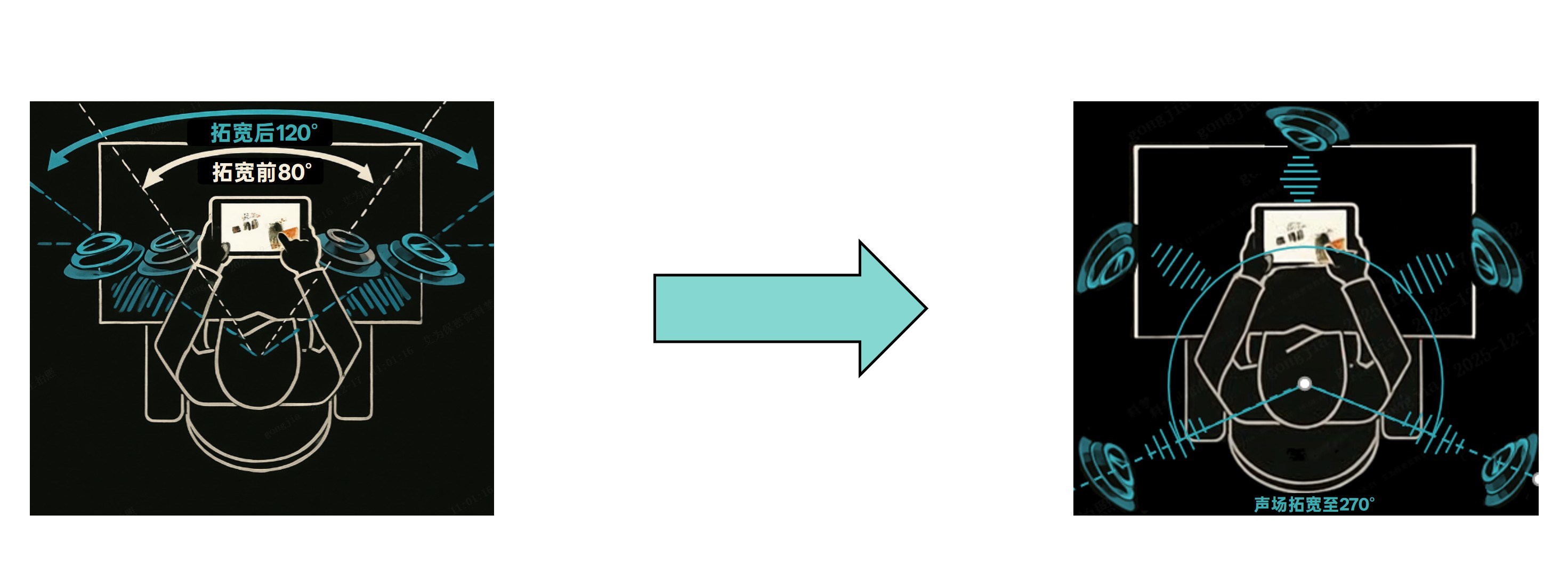
Figure 1: Sound Field
Widening Comparison
AI Noise
Suppression:
Due to space constraints, the micro-speaker's diaphragm and acoustic cavity are
very small, easily causing airflow noise. When playing large-dynamic,
low-frequency audio, the diaphragm's large amplitude causes excessively fast
airflow or vortices within the tiny cavity, generating noise.
The AI noise
suppression algorithm learns the noise frequency band, dynamically identifies
and suppresses specific sounds like airflow noise or piano noise, targeting
points prone to noise generation. While removing noise, it leaves other signals
unaffected. Subjective loudness loss is less than 0.5dB, eliminating
environmental interference while maintaining smooth listening, without
compromising voice quality.

Figure 2: Algorithm Noise
Suppression Diagram
Super Volume
Mode:
Can't hear clearly outdoors or in noisy environments due to insufficient
loudness? One-click switch to Super Volume Mode gives you the best sound for
every scenario. Raising traditional volume limits easily causes clipping
distortion and speaker overload. The Super Volume algorithm increases loudness
while controlling distortion, achieving "powerful yet clean, durable yet
protective."
· Indoor Quiet Mode: In quiet environments, balanced
tri-frequency response delivers refined, transparent sound, restoring the
authentic essence of music.
· Outdoor Clarity Mode: In noisy scenes,
it reduces booming low frequencies and enhances mid-high frequencies, allowing
sound to cut through environmental noise – loud and clear.
· Other Modes (e.g., Podcast Mode): Focuses on vocal
performance, highlighting rich midrange tones and smoothing sharp sibilance for
comfortable, fatigue-free extended listening.
(2)
New-Generation Ultra-Low Power Technology – Power Consumption Drastically
Reduced
The AWA88188
innovatively supports a Super Low Power mode, automatically adjusting the boost
threshold based on the amplitude variations of music or voice signals,
drastically reducing power consumption: static (standby) power decreased by
36%, battery life extended by 53%.
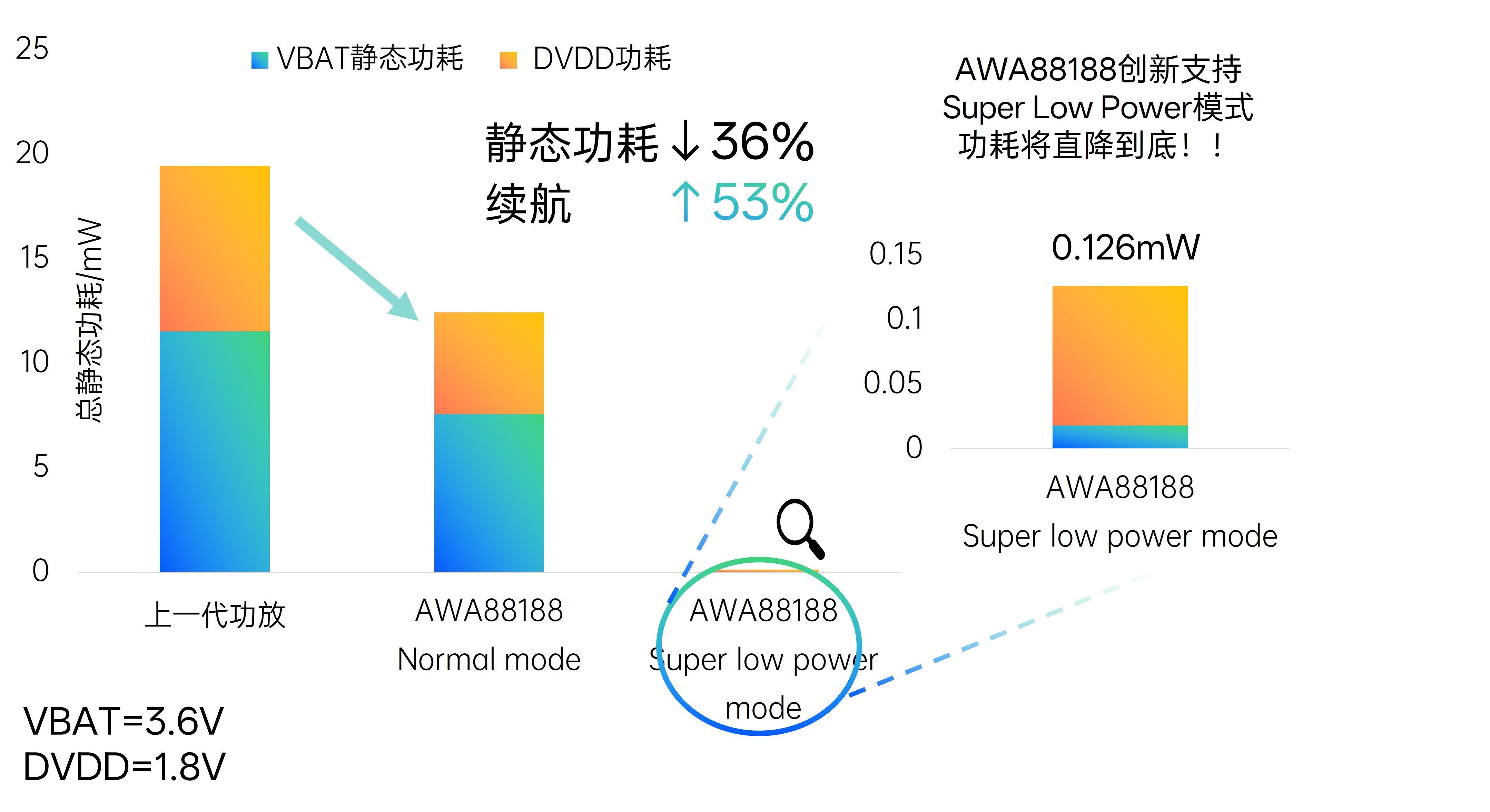
*Figure 4: AWA88188 - Ultra-Low Power Consumption*
(3)
Ultra-Small Package
The AWA88188
uses a 0.35mm pitch WLCSP package, with a chip area of only 3.018mm² – a 40%
reduction compared to the previous generation. Additionally, it uses an
inductor-less, 2x Charge Pump design, saving 50% of PCB layout area. This is
critical for the space constraints of AI smart devices (such as the temples of
AI glasses).
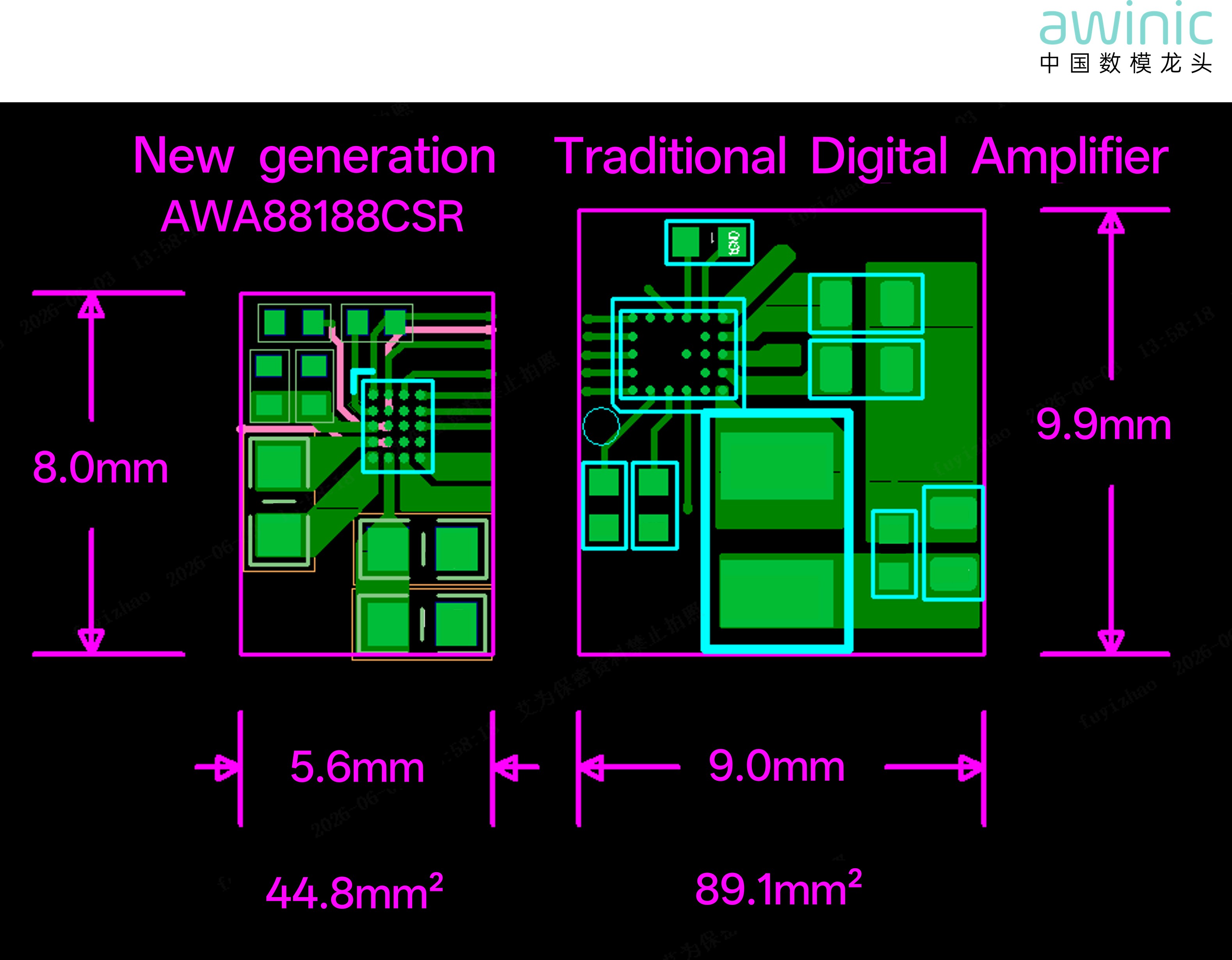
Figure 5: Comparison of
Typical Peripheral PCB Footprint Area
IV. AWINIC
AI Smart Glasses Solution
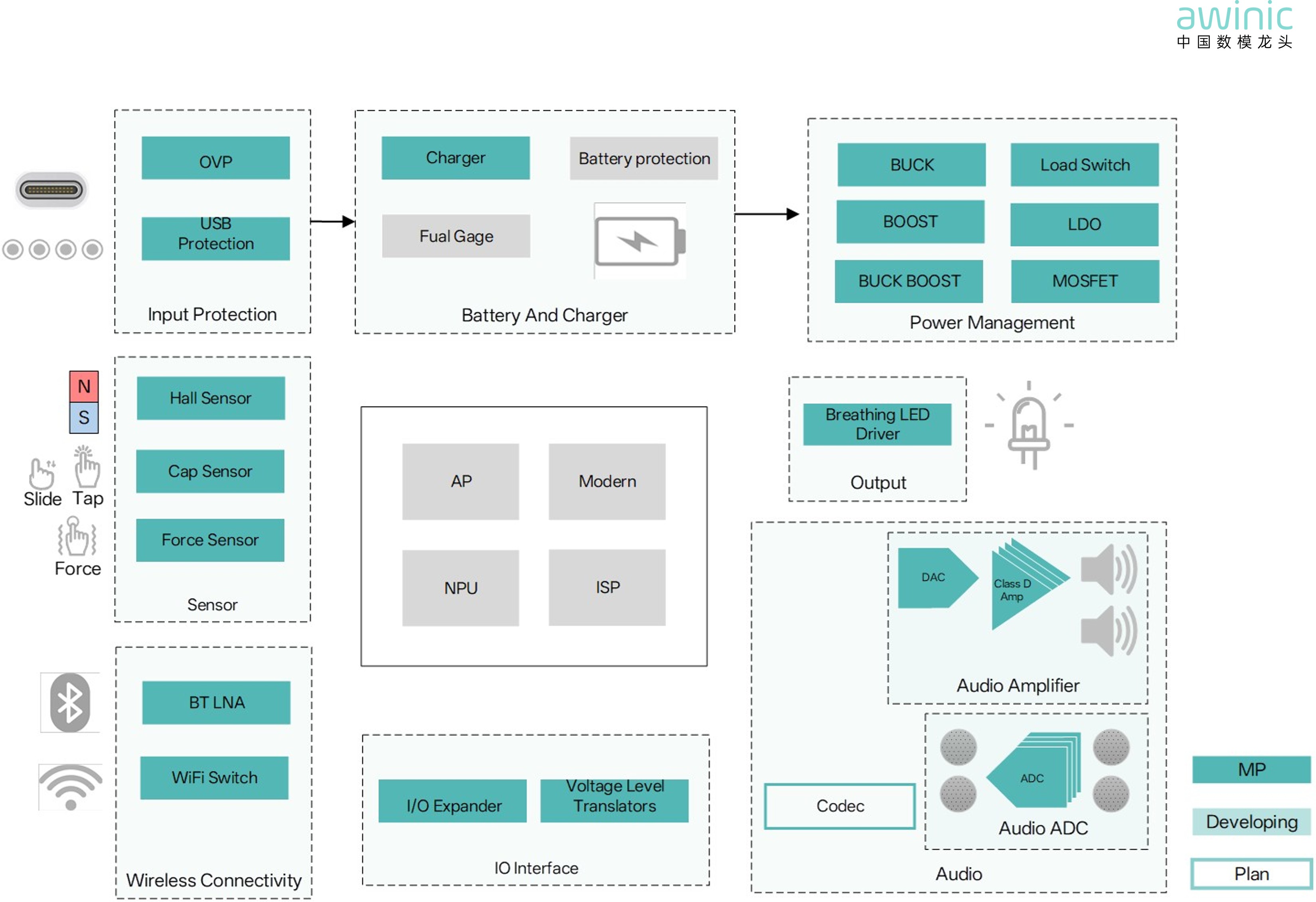
Figure 6:
AWINIC AI Glasses Application Solution Block Diagram
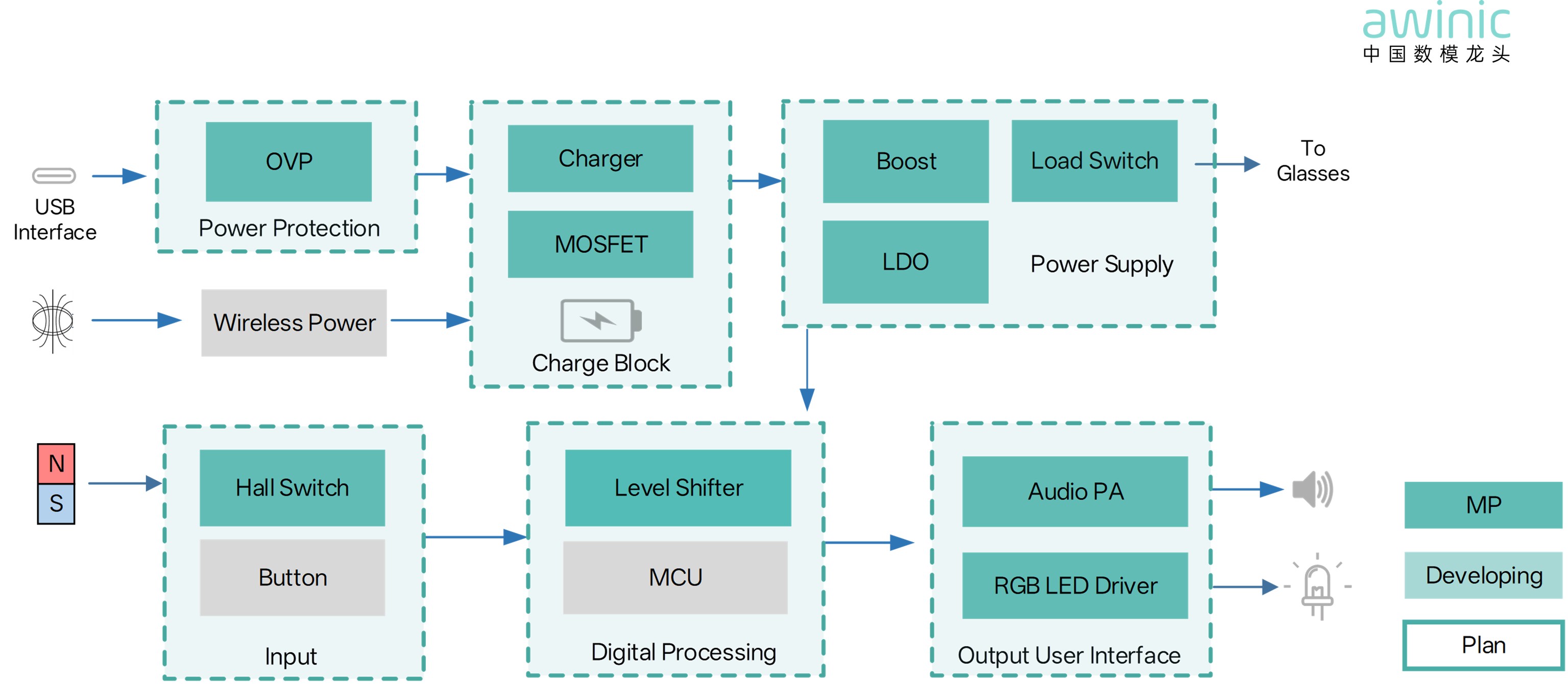
Figure 7: AWINIC AI Glasses
Charging Case Solution
Facing the long-term development trends of miniaturization, low
power consumption, and high audio quality in AI terminals, AWINIC Electronics
is leveraging AI glasses as a strategic entry point to implement various
new-form AI application solutions. The AWA88188 represents a highly competitive
answer to this challenge. This chip achieves multiple hardware and software
breakthroughs through its 55nm BCD process and Feitian DSP™ 5.0. "It not
only achieves lower power consumption, smaller size, and higher computing power
but also validates that in the AI hardware era, traditional components can
transform into computational nodes. When an amplifier carries AI capabilities,
audio evolves from the last link in the device to the first point of
interaction. Mastering this gateway means grasping the core opportunity of
next-generation interaction – this is the core value of the AWA88188."
(Source: WeChat public account @Zhang Guobin, "AWA88188: Turning an 'Amplifier' into an AI
Gateway – AWINIC Rewrites the Audio Underlying Logic of AI Glasses").
Moving forward, AWINIC Electronics will continue to deepen its independent
R&D efforts, iterate audio chip technologies, and consistently deliver
high-performance, highly reliable core hardware and solutions for the AI
wearable field.