In sectors such
as smart homes, automotive electronics, and industrial control, capacitive
touch technology has become the mainstream human-machine interface due to its
advantages like no mechanical wear, sleek appearance, and flexible interaction.
However, "water" remains an unavoidable challenge for capacitive
touch technology—failed operation after washing hands, false triggers from
falling water drops, unresponsiveness under liquid coverage. These pain points
severely restrict the application of capacitive touch technology in humid
environments.
I. Industry Pain
Points: "Strikes Out" When Wet—Three Most Common Issues
Traditional
capacitive detection chips face a core problem in humid, dripping, or
liquid-covered scenarios: they "cannot distinguish between water
drops/moisture and normal operation." Specific issues include:
1. Water drops
cause false touches, leading to unintended device actions
Whether it's
outdoor car door handles or smart door locks getting rained on, or water
droplets from workshop moisture, traditional solutions mistake water drops for
actual touches, resulting in random switch toggling, false screen wake-ups, and
even unintended activation of industrial equipment—posing safety risks.
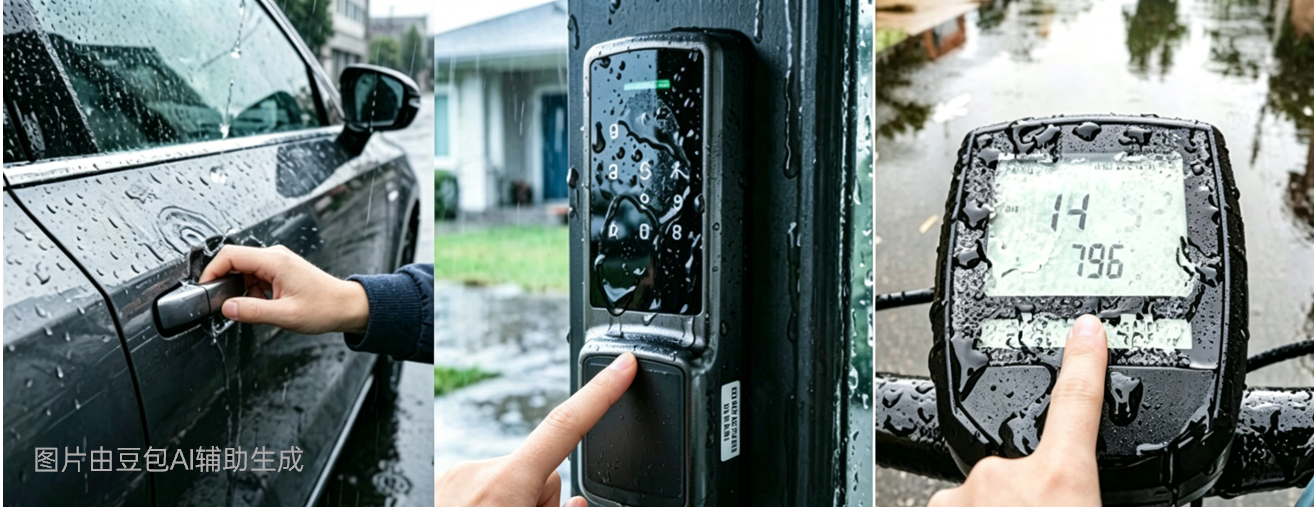
Figure 1: Water drop scenario demonstration
2. Inaccurate
release detection, compromising both safety and user experience
In consumer
electronics, smart control panels, industrial buttons, and similar scenarios,
buttons need to accurately detect whether a finger has been released. But
traditional solutions in humid environments either get misled by moisture into
thinking there's still contact, or suffer from low sensitivity, causing
sluggish or missed release detection—affecting normal device operation.
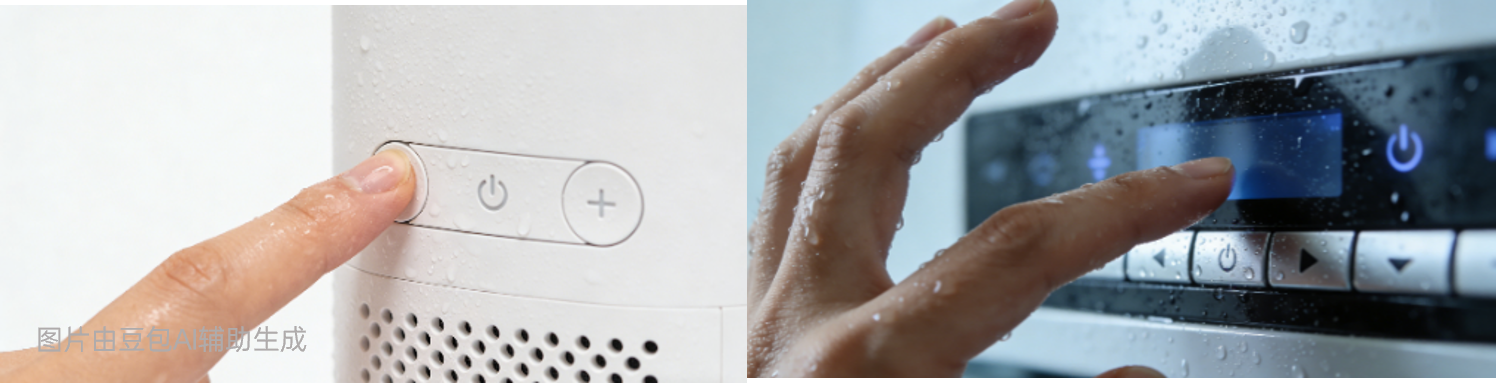
Figure 2: Release detection scenario demonstration
3. Complete
failure under liquid coverage, unusable in complex conditions
Under extreme
conditions where water fully covers the detection area, traditional solutions
get blocked by the water layer, fail to sense human touch, and become
completely unresponsive. Moreover, they struggle to adapt to different liquids
such as water or oil, resulting either in inaccurate detection or requiring
multiple chips to work together—increasing cost and device size.
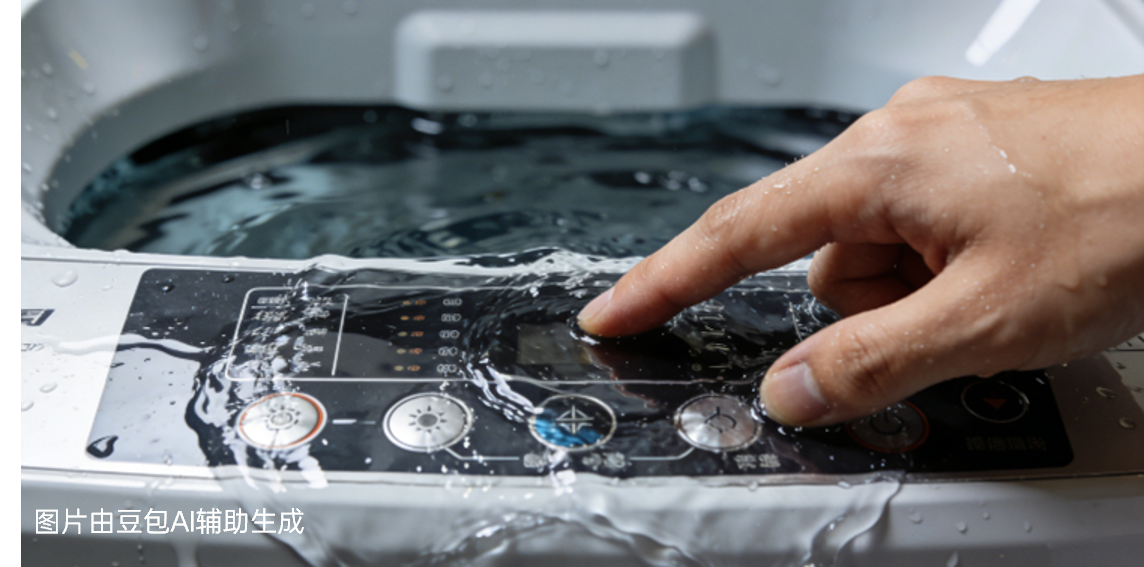
Figure 3: Liquid coverage scenario demonstration
II. AWINIC's
Next-Generation Waterproof Technology—Three Breakthroughs
1. Technical
Architecture
The
new-generation capacitive waterproof solution adopts a "hardware +
algorithm" co-design approach, forming a complete technical loop from
signal acquisition to final decision:
-
Hardware
design layer: Enhanced shield electrodes physically isolate water drop
interference.
-
Signal
acquisition layer: 1aF-level high-precision ADC captures weak touch signals
transmitted through the water layer.
-
Signal
processing layer: Spread spectrum technology and digital filtering purify signals
and remove noise.
-
Environmental
adaptation layer: Temperature compensation and adaptive baseline adjustment
eliminate temperature drift effects.
-
Algorithm
decision layer: Powered by AWINIC Dayu® Waterproof 2.0 algorithm, it
comprehensively distinguishes between human touch and water interference
using multi-dimensional features, enabling adjacent key suppression and
false-touch filtering.
This complete
system achieves three breakthroughs: no false touches from water drops, >99%
wet-hand recognition rate, and >98% success rate under liquid
coverage—thoroughly solving touch challenges in humid environments.
2. Three
Breakthroughs
① No false
touches from water drops
At the hardware
design layer, newly added shield electrodes, combined with a unique detection
PAD design, reduce false-touch risk at the source.
In water drop testing (drop diameter 2–5mm, drop frequency 1 drop/second),
after 10,000 consecutive tests, the false-touch rate is reduced to under 1%—an
improvement of over 95% compared to traditional solutions.
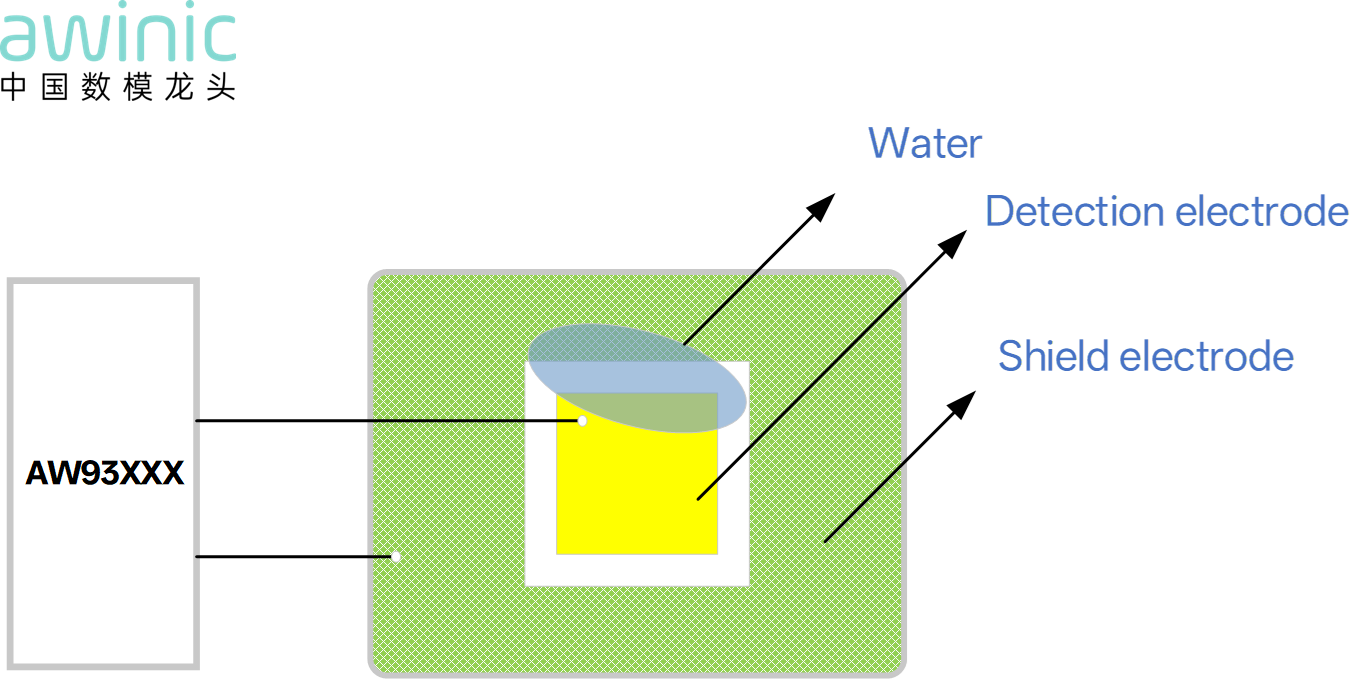
Figure 4: AWINIC water drop test solution
② Normal
operation with wet hands
The AWINIC
Dayu® Waterproof 2.0 algorithm features upgraded multi-dimensional signal
extraction, capturing signal trend changes, amplitude variations, and other
information in real time for more accurate touch action recognition.
The built-in adaptive baseline adjustment algorithm responds quickly to
external environmental changes, greatly improving the success rate of wet-hand
touches.
Actual wet-hand click tests show a success rate of over 99%.
③ Normal
recognition under liquid coverage
-
High-sensitivity
detection: 1aF-level
capacitive detection accuracy captures weak touch signals transmitted
through liquid layers.
-
Shield
electrodes effectively
block interference between adjacent keys under liquid coverage.
-
The
AWINIC Dayu® Waterproof 2.0 algorithm integrates a brand-new adjacent key
suppression function, effectively avoiding key misjudgment.
For matrix buttons under liquid coverage, actual effective click success
rates exceed 98%.
3. Recommended
Typical Application Design
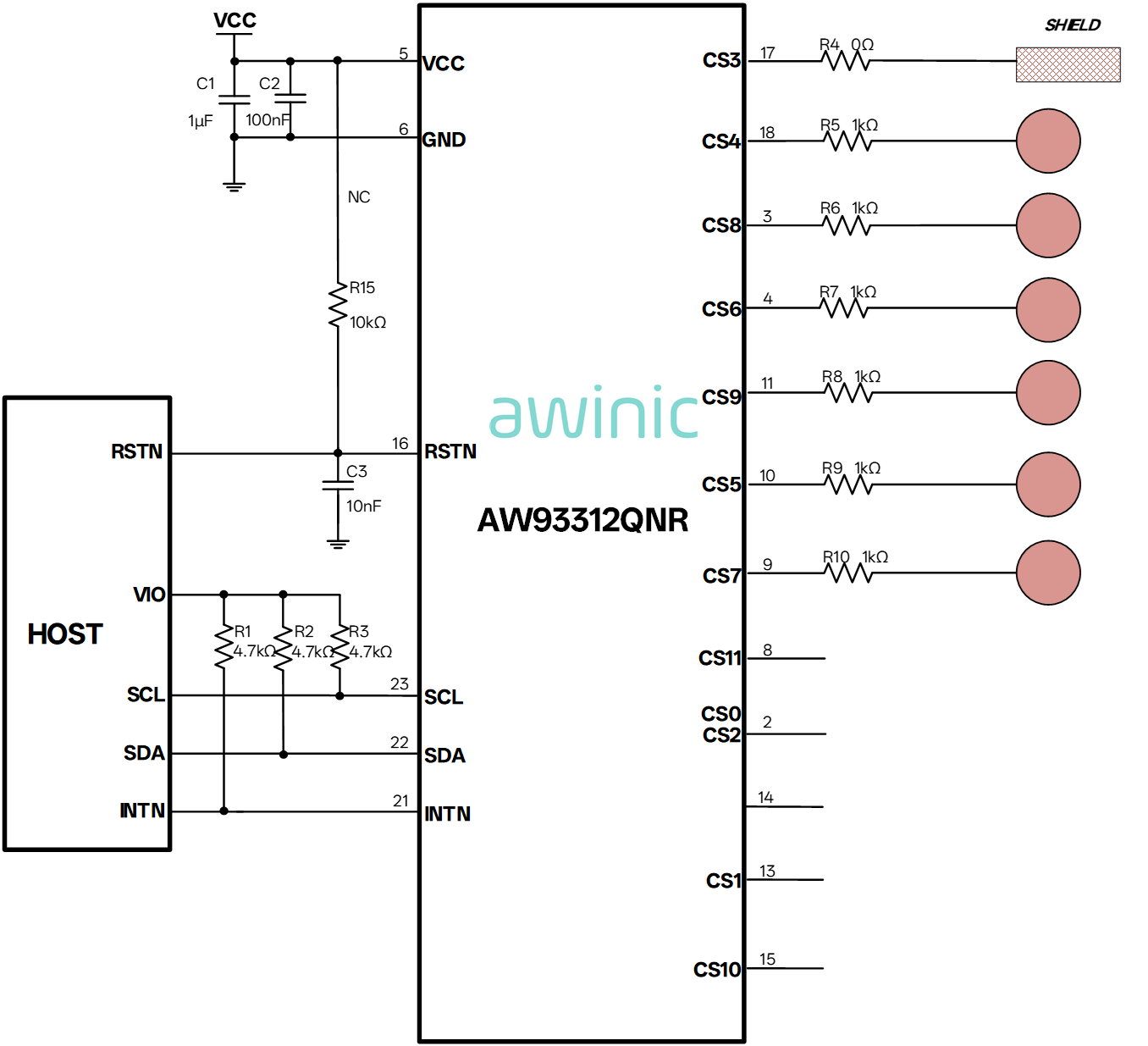
Figure 5: AW93312QNR Block Diagram
3/5/12 channels,
high-sensitivity self-capacitance & mutual-capacitance touch
|
Parameter
|
Value
|
|
Capacitive resolution
|
1aF
|
|
Compensation capacitance
|
220 pF
|
|
Button actions
|
Single tap, double tap, triple tap, long press (waterproof)
|
|
Gestures
|
1D slide, 2D slide, circular slide
|
|
Wear detection
|
Supported
|
Low power
consumption
|
Mode
|
Current
|
|
Active
|
23.5 μA
|
|
Doze
|
10.7 μA
|
|
Sleep
|
8.9 μA
|
Other
specifications
-
I2C:
400 kHz, address configurable
-
VCC:
1.65V–3.6V
-
Memory:
20KB RAM
-
Temperature
range: –40°C to +85°C
III. AWINIC
Capacitive Touch Chip Selection Guide
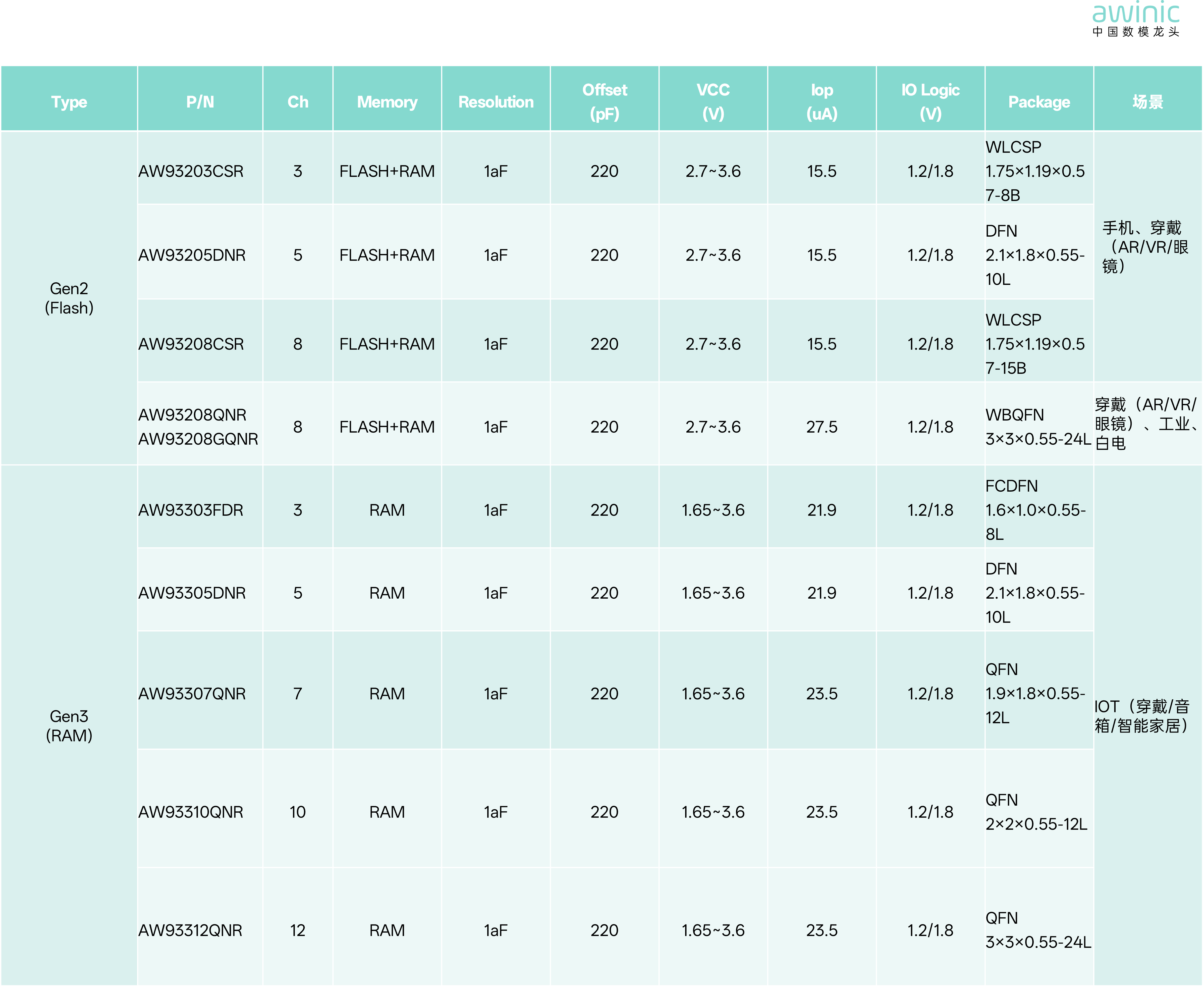
Table 1: AWINIC Capacitive Touch Chip Selection Guide