Although electric toothbrushes have long been a part of our
daily lives, certain user experience pain points remain difficult to overcome:
“Brush too lightly, and you worry about inadequate cleaning;
brush too hard, and you fear damaging your gums.”
This guesswork-based brushing experience introduces uncertainty
into daily oral care, not to mention the accompanying issues of noise,
splashing, and battery life concerns.
True intelligence should be capable of “sensing” and
“protecting.”
The pressure-sensing solution launched by AWINIC enables
electric toothbrushes to achieve precise pressure detection and intelligent
response. When no pressure is applied, it avoids splashing; when excessive
pressure is detected, the system responds immediately, actively adjusting power
or issuing a warning, thereby preventing gum damage caused by over-brushing at
the source.
01
Pressure-Sensing Application Scenarios for Electric Toothbrushes
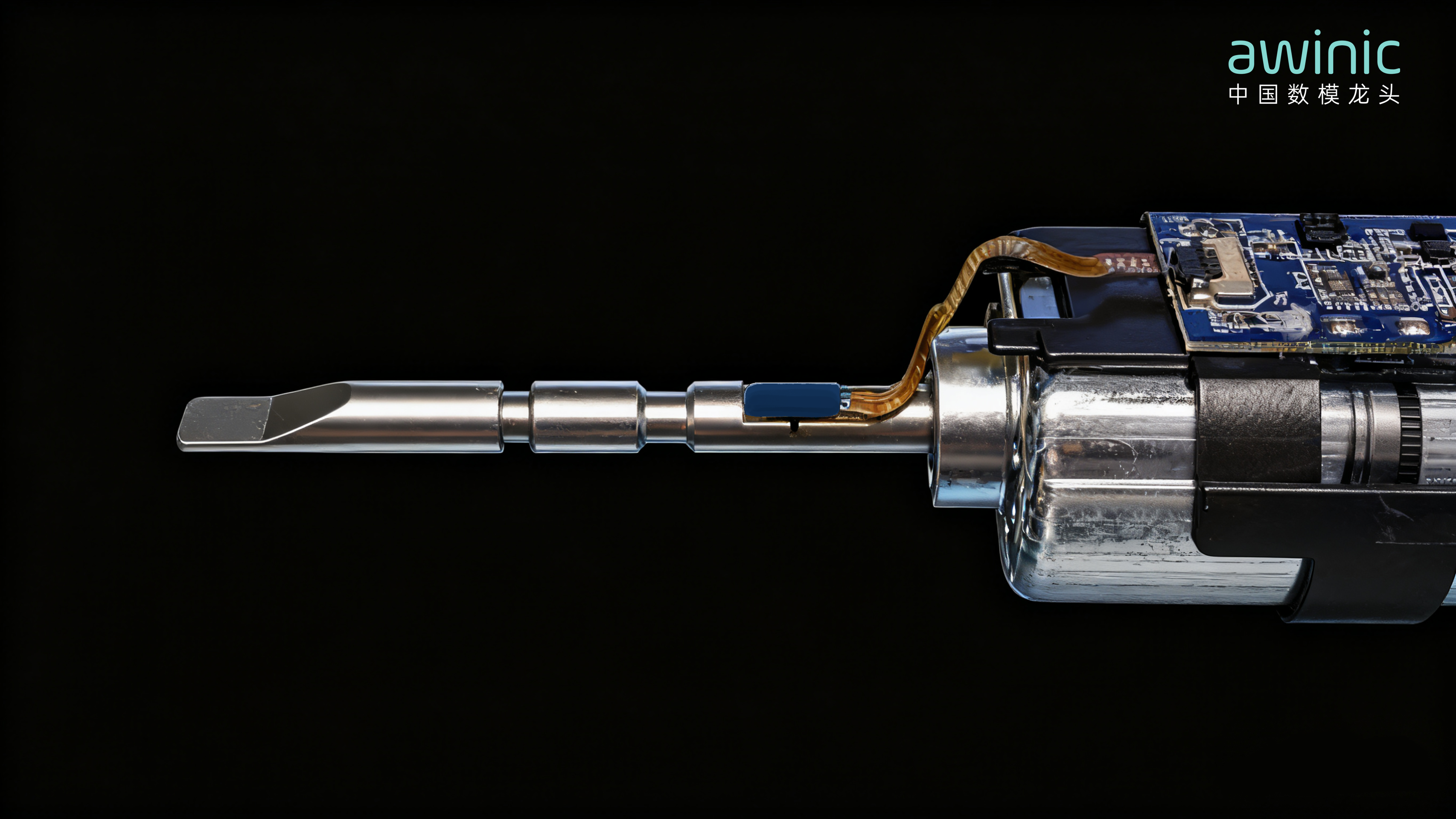
Figure 1: Electric Toothbrush Head
1. Pressure-Sensitive
Button
The electric toothbrush features one button, with different
functions achieved through long and short presses:
·
Long press to turn on/off
·
Short press to switch modes
2. Pressure Sensing at
the Brush Head
·
After power-on, if the brush head force is below 30g, it starts
with weak activation.
·
When the brush head force is between 30g and 200g, the brush
head operates normally according to the selected mode.
·
If the sensed pressure exceeds 200g, the display or LED shows a
“brush head pressure” warning. Simultaneously, the brush head uses intermittent
vibration to alert the user and reduces vibration frequency to protect the
gums.
3. Other Key
Considerations in Applications
· Temperature Compensation: When
the ambient temperature changes, the electric toothbrush’s housing structure
may become softer or harder, affecting sensor trigger sensitivity. A
temperature compensation algorithm is needed to compensate for this and improve
user experience.
· Low-Power Solution: For
example, in standby mode, the chip intermittently monitors button triggers to
save power, ensuring sufficient standby time.
02
AWINIC’s Electric Toothbrush Solutions
To meet the demands of electric toothbrush applications, AWINIC,
a leader in analog and mixed-signal ICs, offers two solutions: an AFE solution and
an SoC solution.
AFE Solution –
AW86872QNR
The AW86872QNR is a high-precision pressure-sensing front-end
featuring a 14-bit ADC. It can amplify tiny signals by 256 times, capturing
subtle changes in brush head pressure. With a baseline tracking algorithm, it
resists temperature drift interference and accurately identifies force
differences. Its ultra-low power consumption (4μA) and small package size
perfectly suit the compact structure of toothbrushes, meeting both battery life
and lightweight requirements.
The AW86872QNR solution is highly cost-competitive, making it
tailor-made for electric smart toothbrushes.
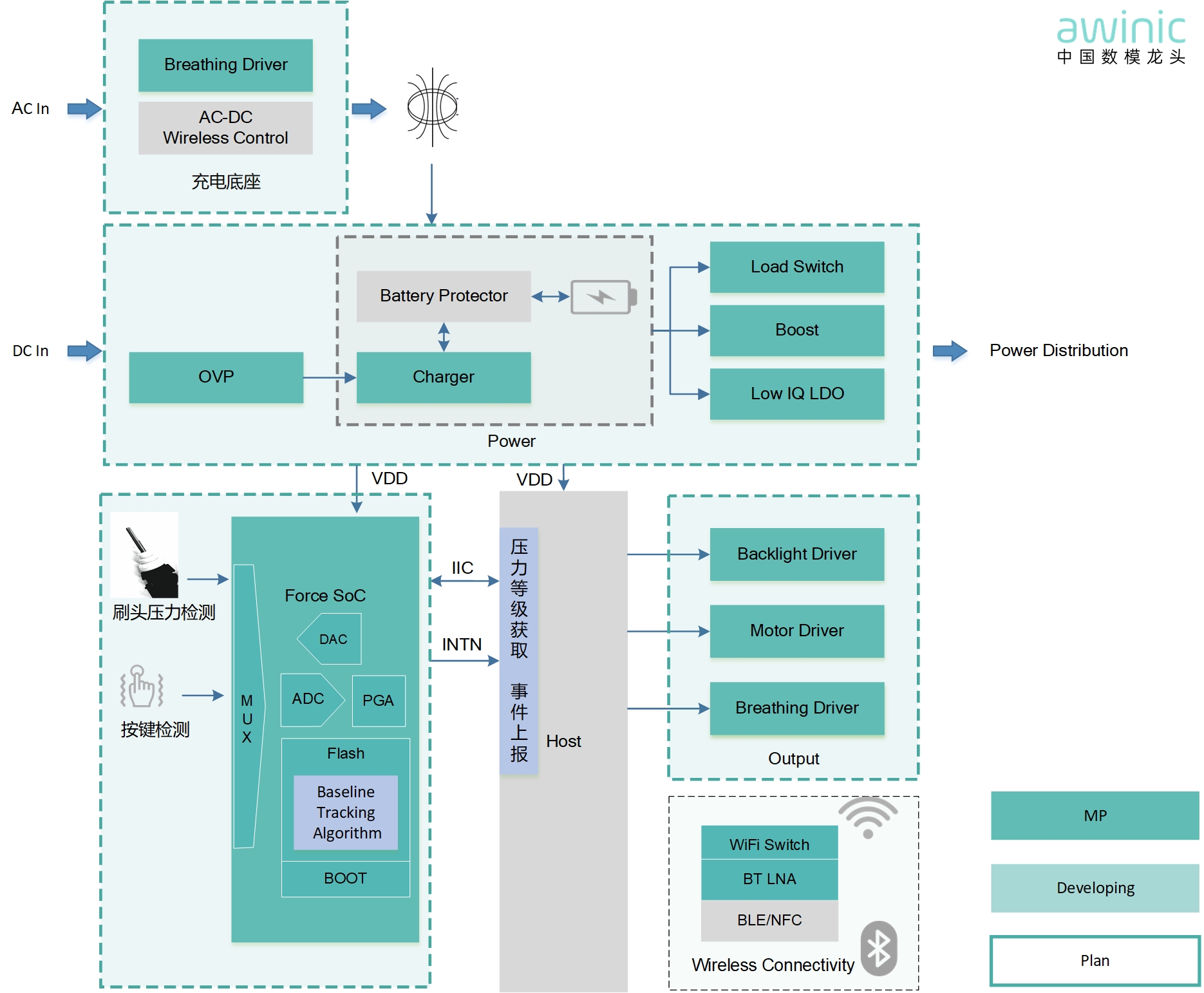
Figure 2: AW86872QNR Electric Toothbrush Application Block
Diagram
SoC Solution –
AW86803QNR
Leveraging the chip’s 60KB flash, customers can integrate the
solution. The pressure recognition module no longer requires an additional main
controller, enabling direct pressure and button detection. An external motor
driver chip can also be connected based on actual needs. When brush head force
exceeds the limit or a button is triggered, the motor can be controlled
immediately for feedback, significantly boosting development efficiency.
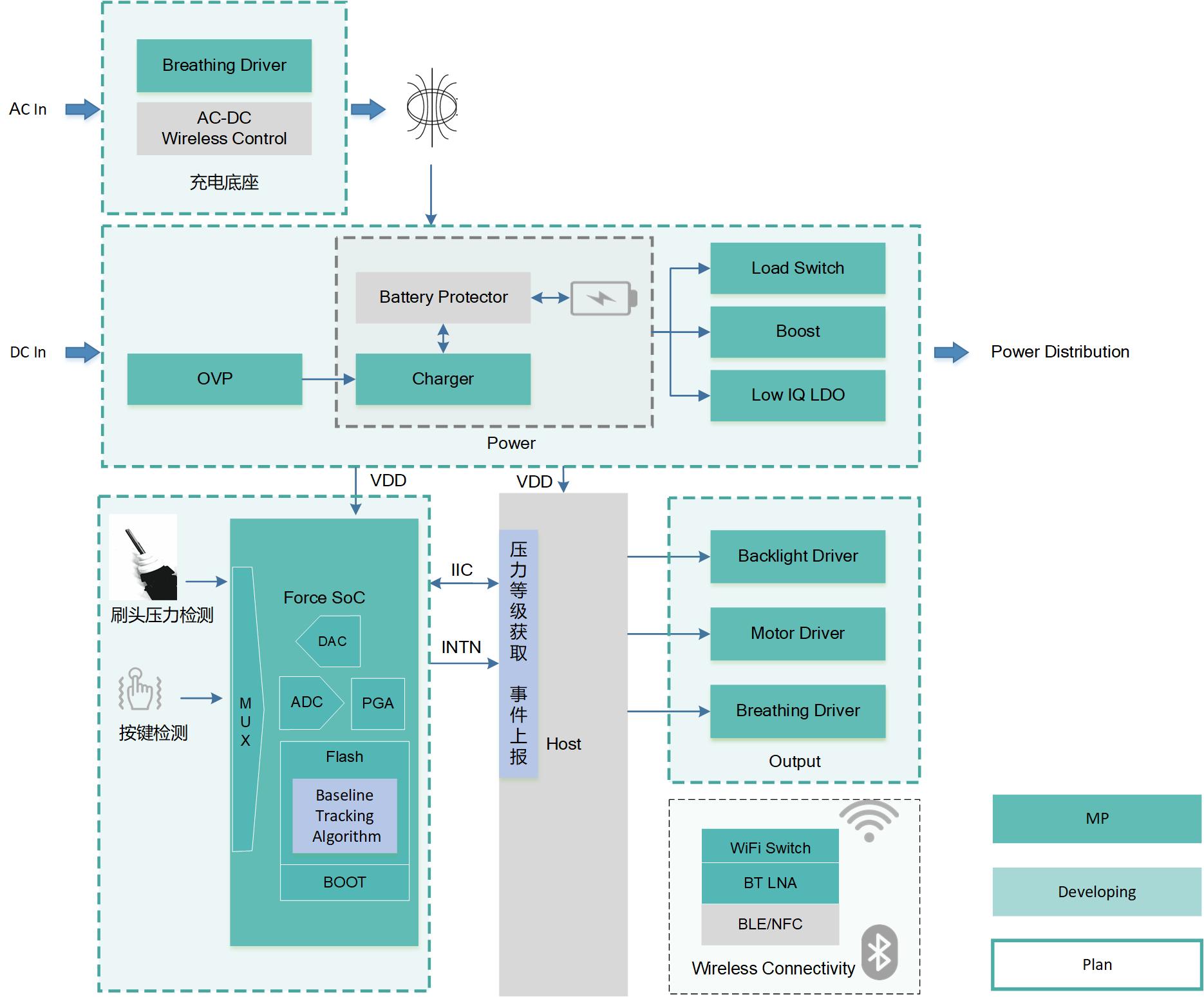
Figure 3: AW86803QNR Electric Toothbrush Application Block
Diagram
03
Component Selection
This electric toothbrush circuit solution is designed with a
modular approach, incorporating AWINIC’s series of components to ensure stable
operation. The overall architecture revolves around three dimensions: power supply – control – interaction.
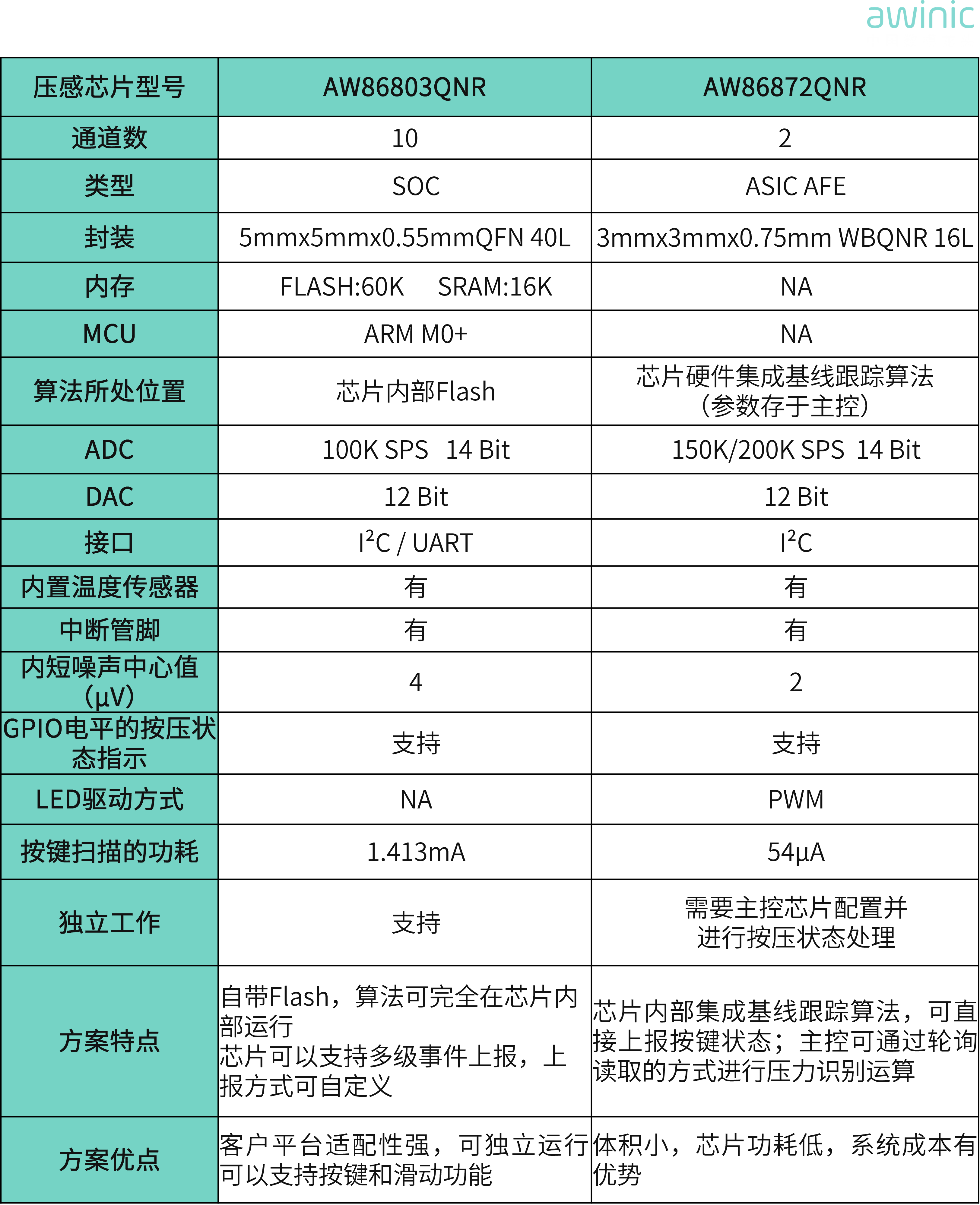
Table 1: Solution Comparison Table
Power Supply &
Battery Management Module – Multi-Layer Protection Design
· AW32002CSR Li-ion
battery charging chip supports USB specifications and power path management,
compatible with 3.7V Li-ion batteries.
· AW37030D110DNR LDO
chip provides 300mA high-performance regulated output to power core components.
· AW33901FCR over-voltage
protection chip features 30mΩ low on-resistance and 50ns fast shutdown to
protect downstream circuits.
Motor Control
· AW8637DNR driver chip
supports 1.9A high-current output and integrates under-voltage, over-current,
and over-temperature protection.
Human-Machine
Interaction Module
· AW86872QNR button
detection chip achieves precise button status recognition with 14-bit precision
and low power consumption.
The overall solution balances battery life, performance, and
safety, suitable for electric toothbrush products across different positioning
levels. The following is a partial component selection table:
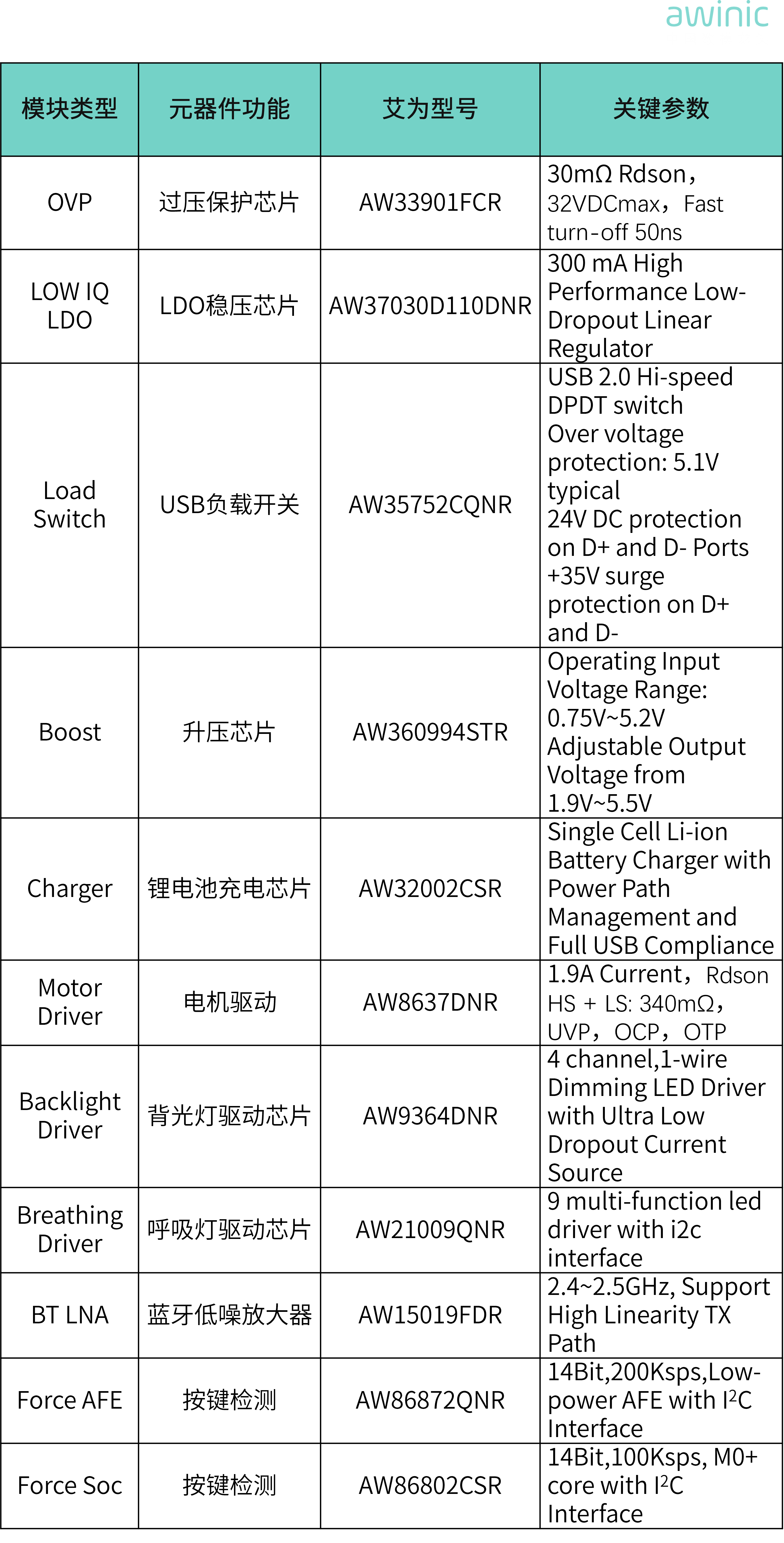
Table 2: Component Selection Table
For more
details about the solution, please visit:
https://www.awinic.com/cn/applicationDemo?id=1123