With the
rapid adoption of USB Type-C interfaces in smartphones, tablets, laptops, and
various smart devices, the Type-C port has become one of the most frequently
used components and the most susceptible to environmental influences. Compared
to traditional interfaces, Type-C offers significant advantages in charging,
data transmission, and video output. However, its structure is more intricate,
and its usage scenarios are increasingly complex.
In daily
use, users often connect their devices in various environments—such as rainy
conditions, humid settings, during exercise, or even in regions with high
temperatures and humidity. Once moisture or liquid enters the Type-C port, it
can alter the electrical characteristics of the interface, leading to abnormal
behavior. In mild cases, this may result in charging failures or unstable
communication; in severe cases, it can cause short circuits or even permanent
damage to the port.
I. Industry
Pain Point & Awinic's Solution
To address
this common industry challenge, Awinic has developed a smart protection
technology system focused on Type-C interface reliability—the C-Shielding™
technology.
In
C-Shielding, the "C" stands for Connect Compact, symbolizing the use
of compact and efficient port detection and protection mechanisms to build a
robust and reliable shield for the Type-C interface. By intelligently detecting
environmental changes around the port and proactively protecting it,
C-Shielding™ technology significantly enhances the stability and reliability of
Type-C interfaces in complex environments.
Moisture
detection chips assess the presence of moisture or liquid ingress by monitoring
changes in the port's electrical characteristics in real time. Common detection
mechanisms include:
Static
Impedance Detection:
This method measures the equivalent impedance of the port pins. When moisture
appears in the interface, the impedance between electrodes decreases. This
approach typically uses an ADC circuit to sample the static equivalent
impedance of the target port and relies on the system to identify abnormal
impedance values, thereby detecting liquid ingress.
Dynamic
Capacitance Analysis:
This technique uses the port's response to AC detection signals to infer
changes in pin capacitance. By dynamically analyzing capacitance variations in
the target port, this method can identify moisture intrusion.
II. Awinic's
Solutions
Awinic Electronics
offers two moisture detection solutions based on distinct technical approaches
for different application scenarios:
Solution 1:
AW35615 – CC Port Solution Based on PD PHY
Awinic's
second-generation PD PHY chip addresses two common pain points prevalent in
current client applications: electrochemical corrosion in DRP mode and liquid
ingress detection.
Electrochemical corrosion in ports is a widespread issue in DRP
(Dual Role Port) applications such as smartphones, tablets, and laptops—where
the port handles both charging and discharging. This occurs because DRP ports
need to detect the insertion of Source or Sink devices, requiring them to
operate in toggle mode. According to the USB Type-C specification, the CC pins
on the port periodically carry one of the currents listed in the table below.
This repeated charge migration leads to electrochemical corrosion, and when
combined with moisture ingress, the corrosion rate accelerates significantly.
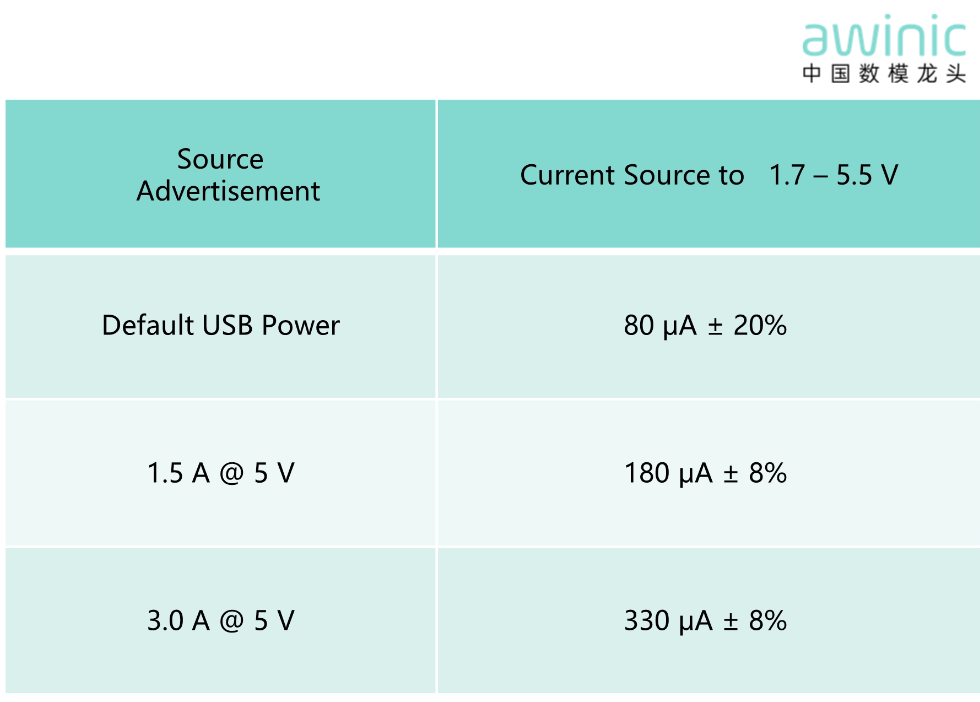
Table 1: Current Levels by Gear
Against
this backdrop, Awinic's AW35615 series chips introduce Wake mode, enabling
device insertion detection without the need for toggling (while also reducing
the chip's static power consumption). Customers can configure the chip to enter
Wake mode. When an external device is plugged into the port, the system
receives a Wake mode interrupt and then activates toggle mode to further
determine the type of device inserted. This implementation can be simplified as
follows:
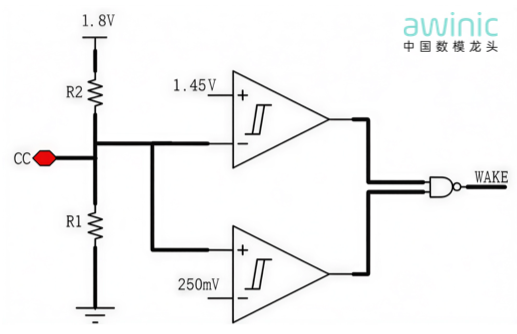
Figure 1: Wake Mode Diagram
When the chip is configured to enter Wake mode, it enables
internal mega-ohm level pull-up/pull-down resistors, maintaining the CC pin
voltage at approximately 0.9V with nA-level current. This significantly slows
down the rate of electrochemical corrosion on the port. When a device is
plugged in or moisture intrusion occurs, this voltage balance is disrupted,
triggering a WAKE interrupt and transitioning the system into moisture
detection and toggle mode.
Awinic's
PD PHY series chips feature a patent-protected hardware moisture detection
circuit integrated into the toggle process. The principle is explained in
conjunction with the diagram below:
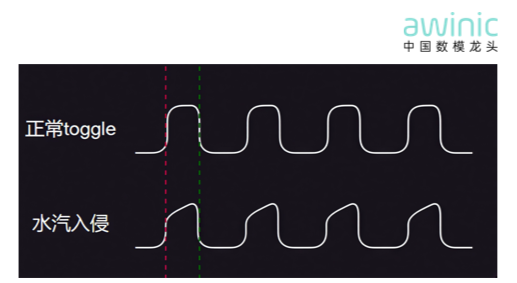
Figure 2: CC Pin Toggle Diagram
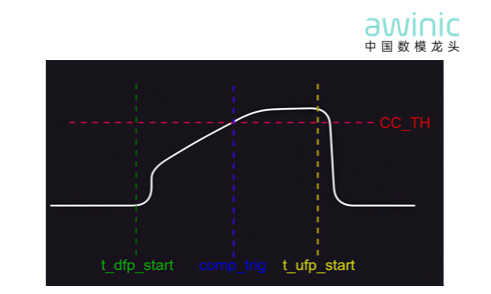
Figure 3: CC Pin Waveform Analysis Model
Diagram After Moisture Intrusion
As
shown in the figure, after moisture intrusion, the rising edge of the CC pin
voltage becomes abnormally slow due to the presence of a parasitic low-pass
filter. By setting parameters such as the target CC pin VOL level and the time
required to reach the target level, the sensitivity of moisture intrusion
detection can be flexibly controlled. A typical application block diagram is
shown below:
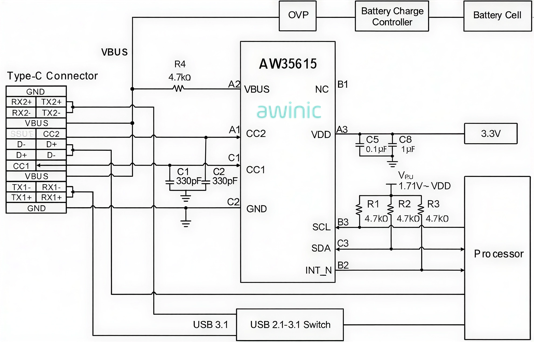
Figure 4: AW35615 Typical Application Block Diagram
Key
Specifications:
-
Supports
USB PD 3.1 with 28V EPR
-
Optimized
eye diagram performance
-
CC
pin maximum withstand voltage: 32V
-
Complete
PD protocol stack implementation with CTS certification (adaptable for
applications ranging from RTOS to Linux across various platforms)
-
Supports
1.2V and 1.8V I²C communication
-
Supports
dead battery mode, acts as SNK when unpowered
-
Built-in
patent-protected LPD hardware algorithm
-
Supports
VBUS detection and discharge control, preventing VBUS electrochemical
corrosion and aging
-
Supports
Wake low-power detection mode
Solution 2:
AW35613 Series – PD Controller-Based Port Protocol Solution
For applications
such as laptops that use a PD Controller as the port protocol solution—where CC
pin ESD protection and moisture detection are critical—Awinic introduces the
AW35613 series. This product line offers excellent ESD and surge protection
capabilities while integrating moisture detection functionality. It also
addresses electrochemical corrosion issues caused by the port being in
long-term toggle mode. The simplified implementation principle is as follows:
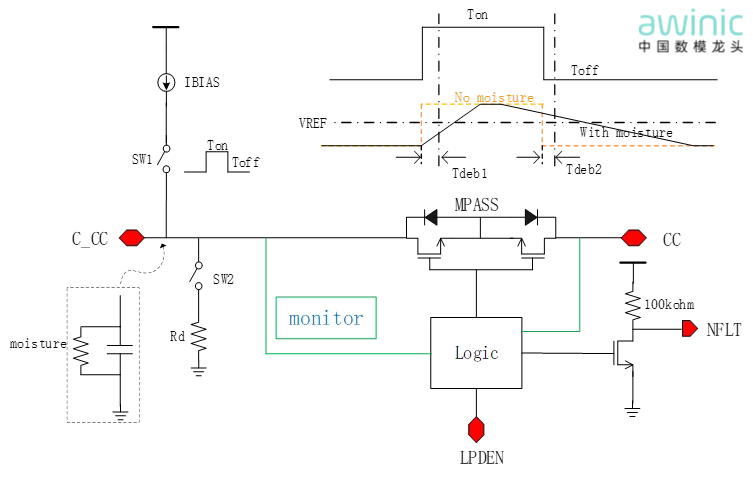
Figure 5:
AW35613 Moisture Detection Principle Illustration
When the port is
configured in DRP mode, the AW35613 continuously monitors the CC pin voltage on
the PD Controller side. It turns off the MPASS transistor and uses an internal
current mirror of approximately 2μA to act on the port's CC pin, thereby
detecting device insertion events.
At the same
time, this significantly reduces the rate of electrochemical corrosion on the
port in toggle mode. When the port voltage changes, the chip's internal monitor
logic circuit uses built-in timing logic to detect the equivalent AC impedance
or capacitance on the CC pin, thereby distinguishing between normal device
insertion and moisture intrusion. Based on this detection, it either opens the
MPASS to proceed with subsequent protocol communication or issues an NFLT
indication to notify the system of a liquid ingress event. A typical
application block diagram for the AW35613 is shown below:
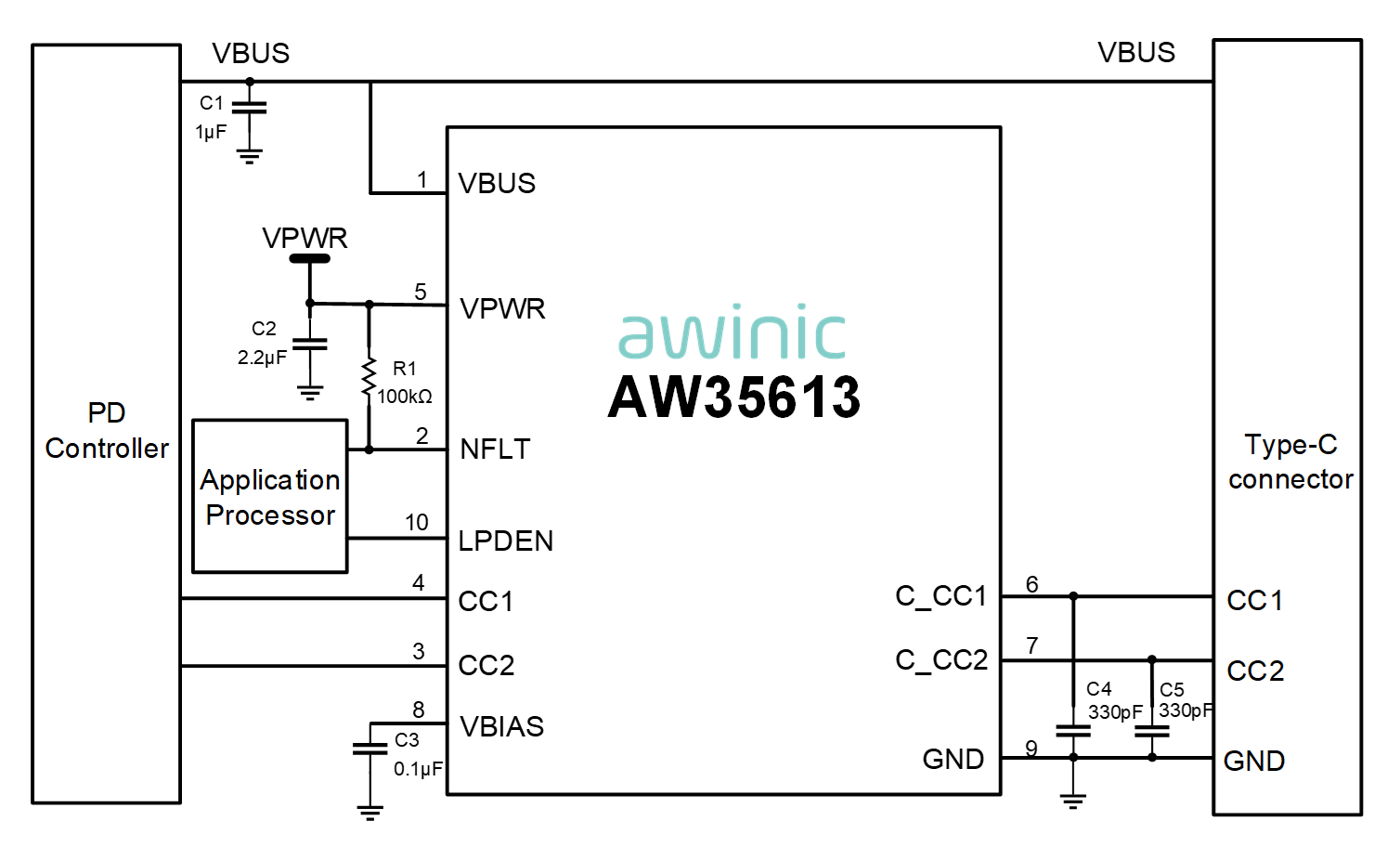
Figure 6: AW35613 Typical Application Block Diagram
Key
Specifications:
-
C_CC1/2
maximum withstand voltage: 32V
-
IEC61000-4-2
ESD rating: Contact ±8kV, Air ±15kV
-
IEC61000-4-5
surge capability: ±60V
-
CC1/2
overcurrent capability: 600mA
-
Supports
dead battery mode
-
Supports
moisture detection
-
CC
Ron: < 0.3Ω
-
C_CC
OVP threshold: 5.8V
-
-3dB
bandwidth: 160MHz
III. System
Design and Optimization Considerations
In overall
system design, the moisture detection chip typically works in coordination with
components such as the AP controller, PD Controller, OVP chip, and MOSFET.
Awinic recommends paying attention to the following key points during design:
🎯 Detection Pin Selection: Based on the
port pin layout, prioritize CC pins close to VBUS.
⚖️ Sensitivity Calibration: Ensure no
false triggering occurs in high-humidity environments.
🔄 Closed-Loop Protection Chain: The
detection → power-off → recovery path must be complete and reliable.
⚡ Low-Power Control: Keep standby current
at the μA level to extend battery life
Actual measurements show that these two chips can significantly improve the reliability and lifespan of Type-C interfaces in humid environments without requiring changes to the external structure.
As USB Type-C interfaces become increasingly common in smart devices and USB PD fast charging power levels continue to rise, interface reliability has become a growing concern for system design engineers.
Awinic's C-Shielding™ technology establishes a comprehensive reliability protection solution for Type-C interfaces through intelligent moisture detection, low-power monitoring, and system-level protection mechanisms.
Guided by the Connect Compact design philosophy, C-Shielding™ technology adds an intelligent protective shield to the interface without altering the structural design of the end device, effectively enhancing device reliability in complex environments.
Looking ahead, as smart device application scenarios continue to expand, interface reliability technologies like C-Shielding™ will become an essential part of Type-C system design.