Have you ever wondered, while wearing a
smartwatch to track your running route, piloting a drone through the air, or
stepping into a virtual world with a VR headset, how these devices actually
"sense" their position, orientation, and direction of motion? The
answer is simple: it all comes down to a small yet powerful core component – the
9-axis sensor.
It may not be as visible as a smartphone
screen or a drone’s propeller, but it acts as the device’s "inner
ear" and "balance center," quietly working behind the scenes to
capture spatial information, determine direction, and maintain stable motion.
Today, we’ll break down the mysteries of the 9-axis sensor in plain language
and explore how it’s quietly becoming an integral part of our daily lives and
empowering industries across the board.
1. How Does Hall
Play a Role in Sensor Applications?
In practical
applications, Hall sensors often appear as part of a 9-axis configuration. Many
people hear the term "9-axis" and assume it’s some complex technical
jargon, but it’s actually not mysterious at all. A 9-axis sensor is essentially
a combination of three basic sensors: a 3-axis Hall sensor (abbreviated as M),
a 3-axis accelerometer (A), and a 3-axis gyroscope (G). That’s why it’s often
referred to as an M+A+G combo sensor. Each sensor is responsible for
detecting a different dimension of information, and together, they work in sync
to deliver full 360° spatial awareness. In simple terms, it’s like giving the
device "eyes (to sense direction) + a body (to sense motion) + a
balance system (to sense orientation)" – equipping it with spatial
judgment similar to that of humans. Among these, the 3-axis Hall sensor is
often used to measure the Earth’s magnetic field and is closely tied to compass
functionality, which is why it’s also called a geomagnetic sensor, 3-axis
magnetometer, or electronic compass sensor.
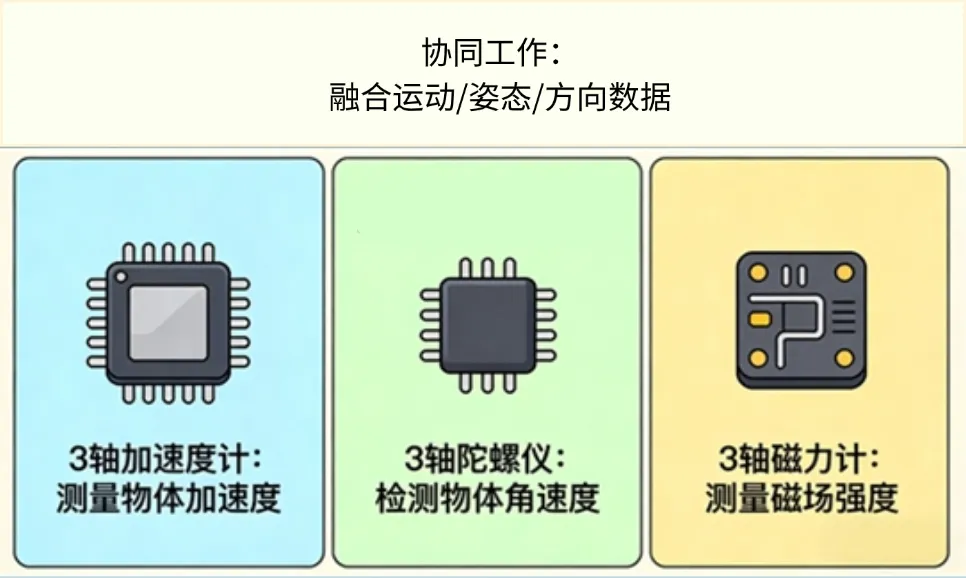
Figure 1:
Diagram of a 9-Axis Sensor Disassembly
The Three Core Components: Divided
Labor, Indispensable Together
In layman's terms, a 9-axis sensor =
a 3-axis accelerometer + a 3-axis gyroscope + a 3-axis magnetometer. These
three "partners" each have their own roles, complementing one another
to perfectly solve the problem of single sensors being "inaccurate or limited
in perception."
1.1 3-Axis
Magnetometer: Sensing the Earth's Magnetic Field to Determine North, South,
East, and West
As we know, the
Earth's magnetic field runs north–south and is distributed in an orderly manner
across the planet's surface. When a geomagnetic sensor is placed within this
stable magnetic field, it can measure the components of the Earth's magnetic
field along its three axes. Through a certain calculation method, the relative
direction between the magnetic field and the sensor can be determined. This
principle allows us to precisely determine the absolute orientation (north,
south, east, and west) of a device. When we use a phone for navigation, the
feature that keeps the "navigation arrow pointing toward the
destination" is powered by the magnetometer—no matter how you rotate your
phone, it locks onto the direction and keeps you on track.
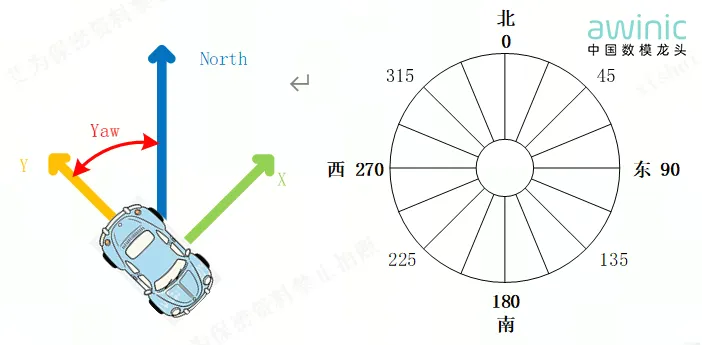
Figure 2:
Compass Functionality
1.2 3-Axis
Gyroscope: Sensing Rotation Angle to Capture Subtle Movements
If the
accelerometer handles "linear motion" (such as moving
forward/backward, left/right, or up/down), the gyroscope is responsible for
"rotational motion." It precisely captures the rotation angle and
angular velocity of a device. For example, whether a phone rotates around the
center of its screen or a drone tilts and turns, the gyroscope can keenly
detect even the slightest angular changes. Its key advantage is its fast
response—it captures instantaneous changes in orientation. For instance, when
you quickly twist your wrist to switch screens on your phone or perform a sharp
turn with a drone, the gyroscope instantly detects the angle change, ensuring
the device responds without delay or lag. However, it does have a minor
drawback: over extended periods, its angle measurements can "drift"
(slight errors). This is where the other two sensors come in to help correct
the data, ensuring overall accuracy.

Figure 3:
Principle of Gyroscope Angle Sensing
1.3 3-Axis
Accelerometer: Sensing Motion Speed to Determine Up, Down, Left, and Right
Its core function is to detect a
device's "acceleration" and "direction of gravity." For
example, it determines whether a device is stationary, in motion, tilted, or
flipped. The "auto-rotate screen" feature we use daily on our phones
relies on this sensor—it continuously detects the phone's tilt angle and
adjusts the screen orientation accordingly to match our viewing habits.
Here's a
real-life example: when a smart band counts "steps," the
accelerometer detects the up-and-down motion of the wrist (changes in
acceleration). Each complete swing is counted as one step. Similarly, when
tracking "pace" during a run, it captures changes in acceleration to
accurately determine how fast you're moving.
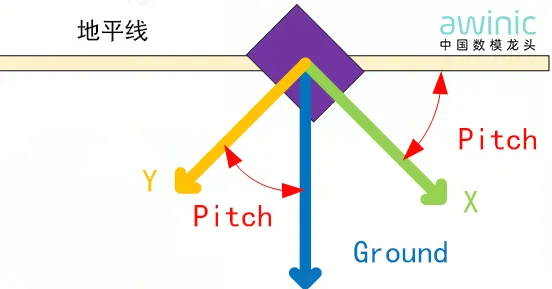
Figure 4:
Principle of Accelerometer Gravity Sensing
2. Why Combine
Them into a 9-Axis Sensor?
The limitations
of a single sensor are quite evident, making it difficult to meet the precise
demands of smart devices. For example, if you only have an accelerometer, the
angle data it measures can be disrupted by motion during activities like
running or when experiencing impacts. If you only have a gyroscope, long-term
use leads to accumulating errors in the data. If you only have a magnetometer,
the data is easily affected by external magnetic fields, resulting in a loss of
accuracy.
The core
advantage of the 9-axis sensor lies in its use of data fusion technology—combining
the data from all three sensors and using algorithms to correct each one's
individual errors. This ultimately achieves "precise, stable, and
comprehensive" spatial awareness. Take drone flight as an example: the
gyroscope detects the fuselage's rotation, the accelerometer measures flight
speed and tilt angle, and the magnetometer determines the flight direction.
Only through the coordinated work of all three can the drone achieve precise
turns, maintain stable tilt attitudes, and avoid losing control under different
scenarios and conditions.
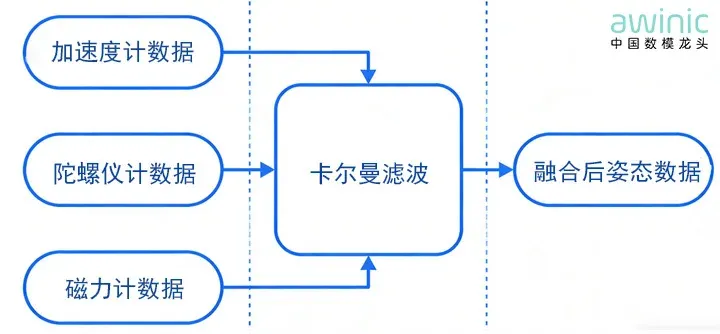
Figure 5: Data
Fusion for High-Precision Attitude
PART 01: Geomagnetic Sensor Calibration
Like most
sensors, Hall sensors require calibration before use. We know that the Earth's
magnetic field is constantly changing, compounded by the continuous presence of
various chaotic magnetic fields in the surrounding environment. This makes
sensor calibration both difficult and challenging. Through extensive
application experience, Awinic has repeatedly refined hard-iron and soft-iron
correction models, developed innovative denoising fusion algorithms, and
conducted countless parameter adjustments and simulations to find the optimal
solution.
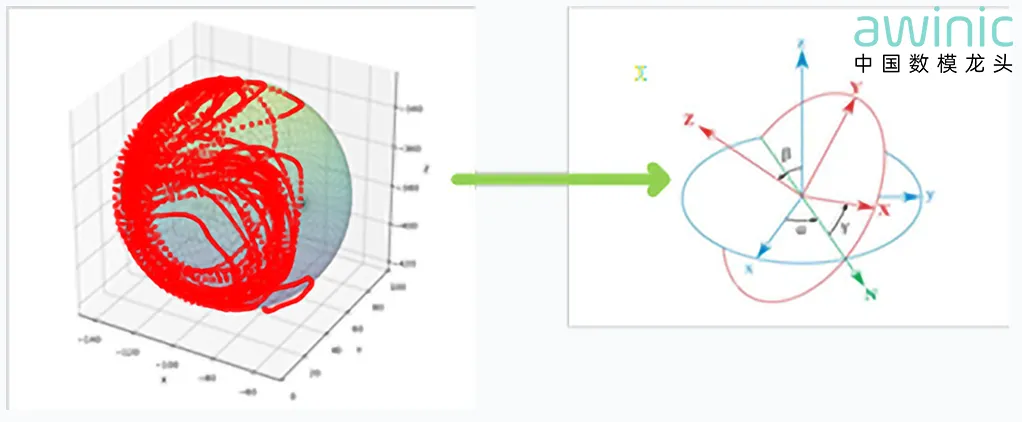
Figure 6:
Geomagnetic Calibration Algorithm
PART 02: Hall Sensors Empower A+G to Make
Life More Convenient
Today, the
M+A+G sensor combination is no longer exclusive to high-end devices. From the
smartphones and watches we use daily to industrial manufacturing, aerospace,
and other advanced fields, it is everywhere—quietly enhancing our quality of
life and improving industry efficiency. It has become the "silent
guardian" of the smart era.
2.1 Consumer
Electronics: The "Perception Experts" Closest to Us
This is the
most widespread application area for 9-axis sensors, found in nearly every
smart device:
· Smartwatches/Fitness Bands: These
devices not only track steps and sleep posture (using the accelerometer), but
also capture swimming stroke movements (via the gyroscope) and provide outdoor
navigation and direction (via the magnetometer). Some can even detect falls. By
combining the data from all three sensors, they sense sudden changes in acceleration
and posture, triggering alerts to help keep users safe.
· Smartphones/Tablets: Features
like auto-rotate, motion-controlled games (such as swinging your phone to play
tennis or racing games), and AR effects (like scanning the ground to place a
virtual model) all rely on the 9-axis sensor. It ensures virtual models stay
"attached" to the ground without drifting or misaligning, greatly
enhancing the user experience.
· Wireless Earbuds: Some
high-end wireless earbuds use 9-axis sensors for wear detection and gesture
control—turning your head to adjust volume (gyroscope detects rotation), or
automatically pausing playback when an earbud is removed (the accelerometer and
magnetometer work together to sense the wearing state).

Figure 7: 9-Axis
Sensor Applications in Consumer Electronics
2.2 Smart Home:
Making Appliances More "Aware" of You and More Intelligent
9-axis sensors
free traditional home appliances from the constraints of "manual
operation," enabling automation and personalized control, making homes
more convenient and attentive:
-
Smart
Robot Vacuums: Using 9-axis sensors to perceive their own orientation and
position, these vacuums can avoid bumping into furniture, never get lost,
and precisely plan cleaning routes. They ensure no area is missed and no
spot is cleaned repeatedly, giving us truly hands-free convenience.
-
Smart
Desk Lamps: By
utilizing accelerometers and gyroscopes to detect the lamp's tilt angle,
smart lamps can indirectly determine the user's sitting posture. If the
posture is poor, the lamp can issue a timely reminder. Combined with
ambient light sensors, it can also adjust brightness to help protect the
user's eyesight.
-
Smart
Navigation: Magnetometers
are used to detect the direction of vehicle movement.
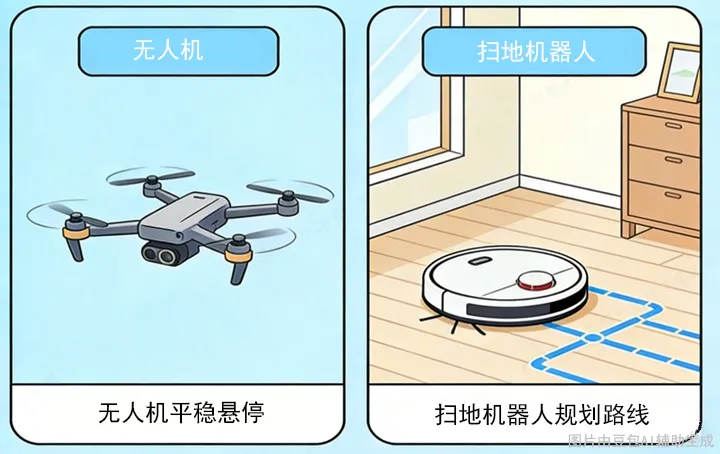
Figure 8: 9-Axis
Sensor Applications in Smart Homes
2.3 Sports &
Fitness: Precisely Recording Athletic Data to Support Scientific Training
In the sports field, the "precision
sensing" advantage of 9-axis sensors is fully utilized, making them an
invaluable tool for fitness enthusiasts and professional athletes alike:
-
Fitness Trackers/Action Cameras: These devices
accurately record motion data for activities like running, cycling, and
swimming—such as stride length and cadence while running, or stroke
frequency while swimming. Through data analysis, they provide scientific
training recommendations to help improve performance.
-
Yoga/Fitness Equipment: Smart yoga mats and
fitness mirrors use 9-axis sensors to detect the user's movements in real
time, assessing whether postures are correct and providing instant
feedback to correct errors. This helps prevent injury and makes training
more effective and safer.
-
Professional Sports Equipment: High-end gear like
snowboards and surfboards are also equipped with 9-axis sensors to record
the amplitude and rotation speed of an athlete's movements. This allows
athletes to analyze their technique in detail, optimize training plans,
and enhance performance.
2.4 Industrial
& Aerospace: The "Core Assurance" for High-End Sectors
In industries and aerospace applications
where precision and stability are paramount, 9-axis sensors are indispensable
core components. They play a critical role in "attitude control" and
"positioning," safeguarding safety and efficiency in these demanding
fields:
-
Drones/Unmanned Vehicles: When a drone is in
flight, 9-axis sensors continuously monitor its attitude, direction, and
speed. Working in conjunction with the navigation system, they ensure
stable hovering and precise flight. Even in the presence of light winds,
the sensors enable quick attitude adjustments to prevent loss of control.
For autonomous driving in unmanned vehicles, these sensors detect steering
angles and driving posture, assisting with path planning and obstacle
avoidance to ensure safe operation.
-
Industrial Robots: Robotic arms in factories rely on 9-axis
sensors to perceive their rotation angles and positions. This enables them
to perform tasks like grasping, transporting, and assembling with
millimeter-level precision, significantly improving production efficiency
and product quality.
2.5 Medical
& Healthcare: Assisting Diagnosis and Protecting Health
Beyond everyday applications and
high-end industries, 9-axis sensors have also entered the medical and
healthcare field, providing precise data for disease diagnosis and
rehabilitation, quietly working to protect our health:
-
Rehabilitation Equipment: Devices like limb
rehabilitation trainers use 9-axis sensors to detect a patient's limb
movement patterns and range of motion. This allows for precise assessment
of recovery progress and helps doctors create personalized rehabilitation
plans, accelerating the patient's recovery.
-
Medical Monitoring: Some portable medical devices, such as
Parkinson's disease monitors, use 9-axis sensors to detect the amplitude
and frequency of tremors. This assists doctors in diagnosing the
condition, tracking treatment effectiveness, and making informed
adjustments to therapy plans.
-
Mobility Assistance: Smart walkers, prosthetics, and other
mobility aids are also equipped with 9-axis sensors. These sensors detect
the user's walking posture and movement intentions, helping the user walk
steadily and safely, enhancing both comfort and mobility for those with
limited movement.
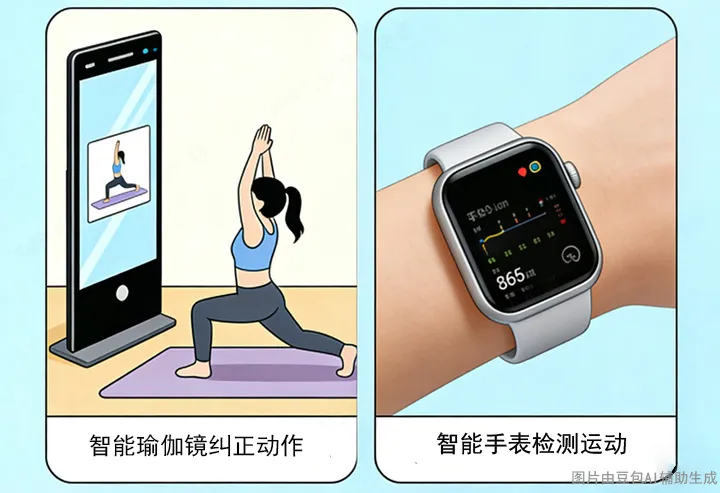
Figure 9:
9-Axis Sensors in Healthcare Applications
3. A Promising Future: The Development Path of 9-Axis Sensors
As
technology continues to advance, 9-axis sensors are also evolving steadily,
moving toward being smaller,
more precise, more power-efficient, and more intelligent. In
the future, they will unlock new scenarios and possibilities.
On one hand,
their size will continue to shrink and power consumption will decrease,
allowing them to be embedded in even smaller devices such as smart rings or
implantable medical devices, enabling more discreet and convenient sensing
capabilities. On the other hand, data fusion algorithms will be continuously
optimized, further improving sensing accuracy and enabling operation in more
complex environments—such as those with strong magnetic fields, high
temperatures, or high pressure—meeting the demands of more high-end
applications.
Additionally,
9-axis sensors will become deeply integrated with cutting-edge technologies
such as AI, big data, and the Internet of Things (IoT). For example, smart
devices could use 9-axis sensors to learn user habits—like preferred operating
postures—to deliver more personalized services. In industrial settings, these
sensors could monitor equipment operation in real time, predict potential
failures, and enable preventive maintenance, reducing losses caused by
equipment breakdowns.
In essence,
the core value of a 9-axis sensor is simple: it gives devices the ability to
perceive space. While it may not be the "brain" of a device like a
CPU, it provides the brain with the most accurate and comprehensive spatial
data, making devices smarter, more flexible, and more reliable.
From the smartphones and watches we use every day, to the drones
and industrial robots that ensure safety, to the spacecraft exploring the
mysteries of the universe, 9-axis sensors are quietly playing an indispensable
role as the invisible foundation of the smart era. Looking ahead, as technology
continues to evolve, they will enter even more scenarios, bringing greater
convenience and joyful to our lives, work, and production.