The explosive growth of
the Internet of Things (IoT) has given rise to diverse wireless transmission
needs. Different application scenarios such as smart devices, smart homes,
Industry 4.0, and smart cities have differentiated requirements for speed,
power consumption, range, and cost, thereby promoting the coexistence and
complementarity of multiple wireless transmission technologies like Wi-Fi,
Bluetooth, UWB, LoRa, ZigBee, and RFID.
Comparison
of Core Characteristics of Wireless Transmission Technologies:
· Data Rate: Wi-Fi
(Gbps) > UWB > Bluetooth > ZigBee > RFID > LoRa (kbps).
· Power Consumption: Passive
tags for LoRa/ZigBee/RFID are extremely low; Wi-Fi is relatively high.
· Range: LoRa (km) >
Wi-Fi/ Bluetooth/ ZigBee (10–100m) > UWB (<50m) > RFID (1–100m).
· Positioning Accuracy: UWB
(cm-level) > Bluetooth/Wi-Fi (m-level) > LoRa (coarse positioning).
01 Wi-Fi
Wireless Network
· Common Frequency Bands: 2.4~2.5GHz
/ 5~7.125GHz
· Core Advantage: High
bandwidth and high data rate, making it the mainstream technology for
internet access and large-volume data transmission within local area networks.
· Characteristics: Relatively
high power consumption, medium coverage range, requires access points
(APs/routers) to build a network. The latest standards (such as Wi-Fi 6/6E/7)
have significantly improved speed, capacity, and efficiency.
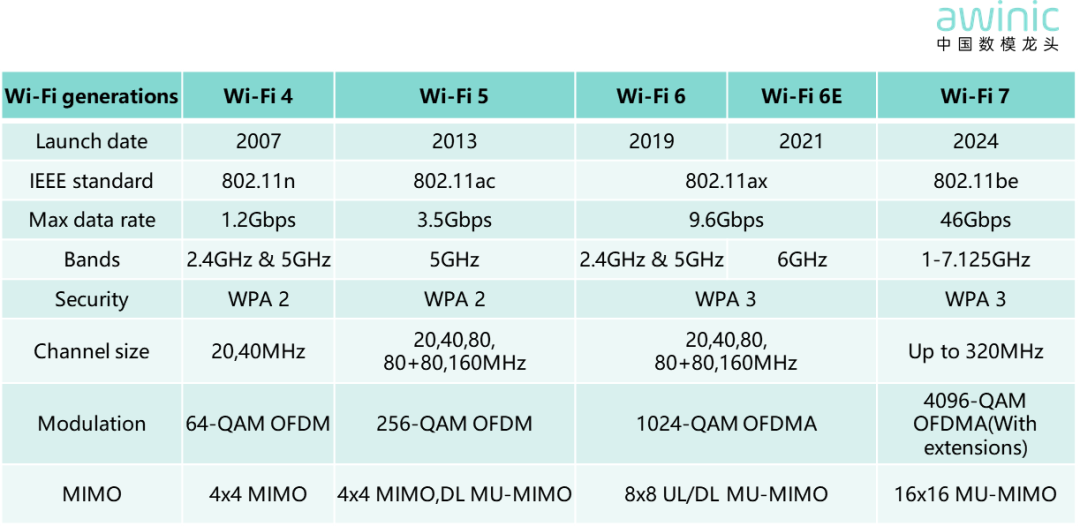
Table 1:
Characteristics of Various Wi-Fi Standards
Typical
Application Scenarios: Home/office networks, 8K high-definition video
transmission (Wi-Fi 6/7), AR/VR device interconnection, smart home
connectivity, etc.
Future Evolution
Trends: Expansion
into the Industrial Internet of Things (IIoT), supporting high reliability and
low latency (such as Wi-Fi 7's MLO multi-link aggregation technology).
Awinic's Wi-Fi
Compatible RF Switch Products offer advantages such as ultra-fast switching
time, low insertion loss (0.2~0.55dB, over 7% better than competitors), and a
rich variety of package types.
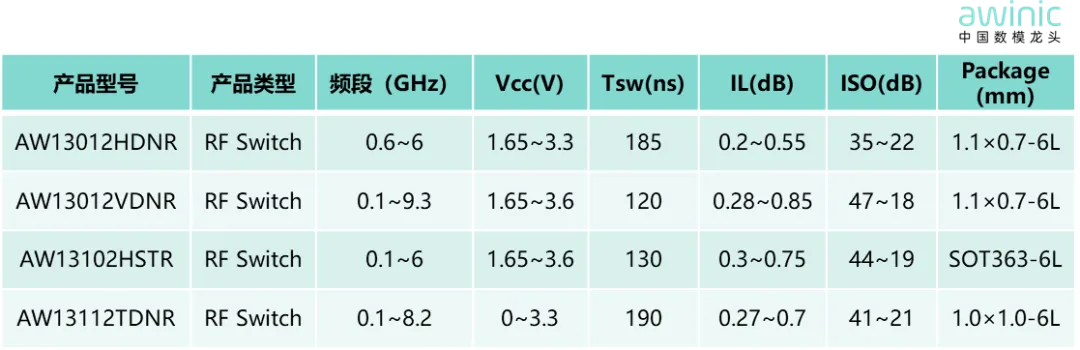
Table 2: Awinic's RF
Switch Product Features for Wi-Fi
02 Bluetooth
Operating
Frequency Band: 2.4~2.4835 GHz
Core
Advantages: Low power consumption (especially Bluetooth Low Energy -
BLE), simple short-range peer-to-peer connection between devices, low cost.
Characteristics: Moderate
data rate, short coverage range (Classic Bluetooth ~10 meters, BLE can reach
further). BLE is particularly suitable for long-term, battery-powered devices.
Supports various profiles to implement different functions (e.g., audio A2DP,
keyboard HID).
Typical
Application Scenarios:
· BLE: Wearable devices
(heart rate monitoring), indoor navigation (Beacon), Mesh lighting control.
· Classic Bluetooth: Lossless
audio (LE Audio), multi-device synchronization (e.g., headphones + watch).
Future
Evolution Trends: LE Audio supports multi-channel broadcasting; Bluetooth
Mesh covers large buildings (e.g., building automation).
Awinic's LNA
AW15019FDR, specifically designed for Bluetooth, supports all versions
from Bluetooth 4.0 to Bluetooth 5.4, and can improve the receiving sensitivity
of terminal devices by about 2dBm and increase coverage range by about 20%.

Table 3:
Awinic's Bluetooth LNA AW15019FDR Product Features
03 UWB (Ultra-Wideband)
Common Frequency Bands: 3.1~10.6GHz
Core Advantages: Centimeter-level high-precision
ranging and positioning, high data transmission rates (over short distances),
strong anti-interference capability.
Characteristics: It uses an
extremely wide spectrum of frequencies, hence the name
"ultra-wideband", and transmits signals with a very low power
spectral density. Signal penetration ability is relatively poor, and the
effective range is very short (within 50 meters).
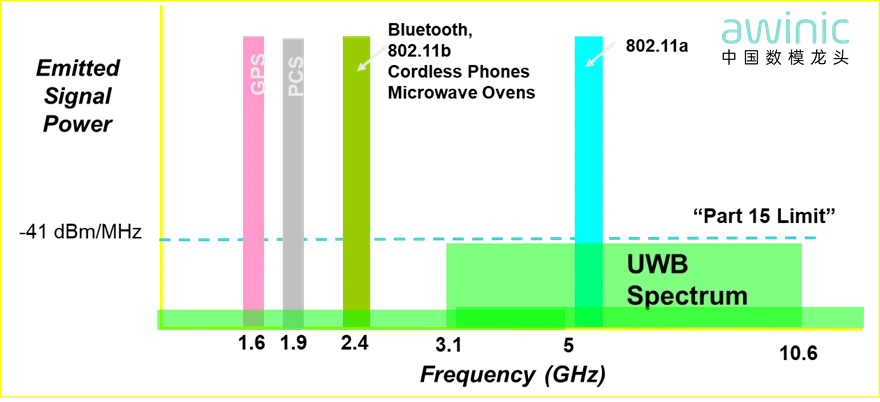
Figure 4: Power Spectral Density Diagram
Typical Application Scenarios:
· Positioning: AR
indoor navigation (shopping malls/airports), real-time tracking of factory
AGVs.
· Interaction: Secure
digital keys (keyless entry for cars/homes), millimeter-level tracking for VR
controllers.
Future Evolution Trends: Integration with
5G (high-precision positioning services), in-car radar (child presence
detection).
Awinic's UWB-Compatible RF Switch Products offer
advantages such as automotive-grade certification, ultra-wide bandwidth, and
low insertion loss.
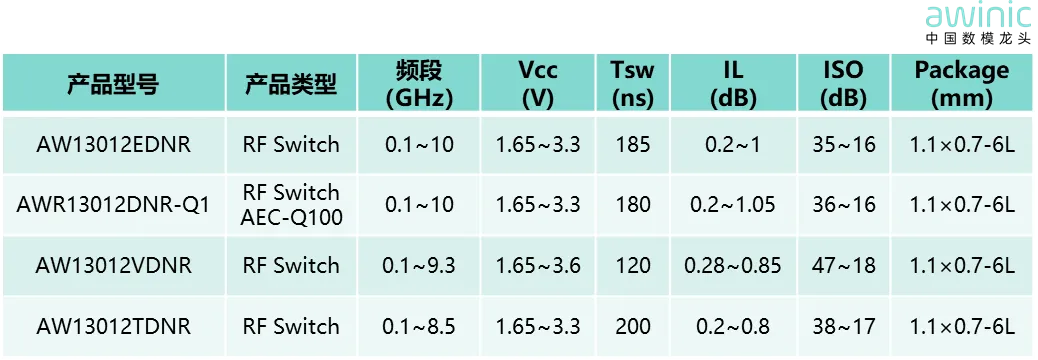
Table 5: Awinic's RF
Switch Product Features for UWB
04 LoRa
(Long Range)
Common
Frequency Bands: 433~928MHz
Core
Advantages: Ultra-long transmission distance, ultra-low power
consumption, strong penetration capability.
Characteristics: The
data transmission rate is very low, primarily used for transmitting small data
packets (e.g., sensor readings). It operates in the Sub-GHz low-frequency band,
offering strong ability to penetrate obstacles. It is often used in conjunction
with the LoRaWAN network protocol to form a Low-Power Wide-Area Network (LPWAN).
Typical
Application Scenarios:
· Wide Area IoT: Remote
water meter reading, environmental monitoring (power saving + long range).
· Urban Applications: Smart
bin fullness detection, shared bicycle electronic fencing.
Future
Evolution Trends: Direct satellite connectivity (LoRa in Space), underground
pipeline monitoring (strong penetration).
Awinic's
LoRa-Compatible RFFE Products offer advantages such as low power
consumption (20μA, over 20% better than competitors), low loss, and a rich
variety of package types.
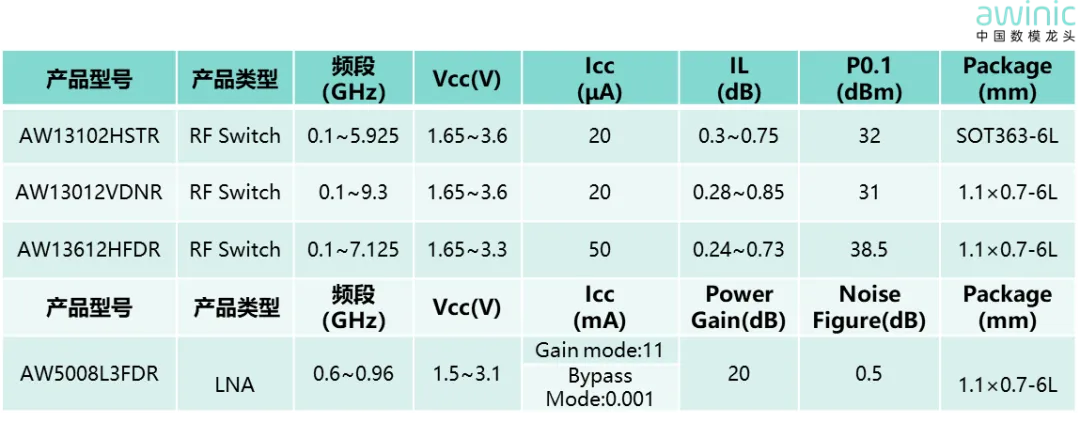
Table 6: Awinic's RFFE
Product Features for LoRa
05 ZigBee
Wireless Personal Area Network
Operating
Frequency Bands: 779~928MHz / 2.36~2.5GHz
Core
Advantages: Low power consumption, mesh networking, high
reliability, low cost.
Characteristics: The
main operating frequency band is 2.4GHz (globally available), also supporting
868MHz (Europe) and 915MHz (North America). The data rate is relatively low at
250 Kbps, suitable for transmitting small amounts of data.
Typical
Application Scenarios:
· Smart Home: The
Matter protocol supports interoperability between multiple brands; suitable for
battery-powered smart devices.
· Industrial: Smart
retail; wireless sensor networks (temperature/humidity/vibration monitoring).
Future
Evolution Trends: Migration to the Thread protocol (based on IPv6) to
improve compatibility with IP networks.
Awinic's
ZigBee-Compatible RFFE Products offer advantages
such as low power consumption, low loss, and a rich variety of package types.
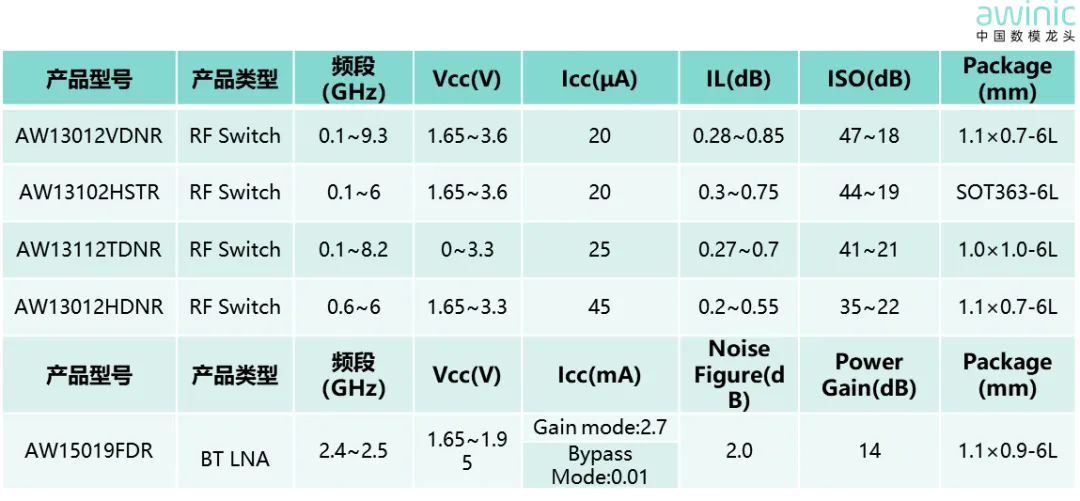
Table 7: Awinic's RFFE
Product Features for ZigBee
06 RFID
(Radio Frequency Identification)
Common
Frequency Bands: 125~148.5KHz / 13.553~13.567MHz / 433MHz / 858~930MHz /
2.4~2.483GHz
Core
Advantages: Contactless identification, batch reading, strong
environmental adaptability.
Characteristics:
· Passive RFID: No
battery required, powered by the electromagnetic field of the reader/writer
(low cost, long life).
· Active RFID: Has
its own battery, actively transmits signals (long identification range, up to
hundreds of meters).
· Semi-passive RFID: The
battery is only used to power the chip; signal transmission is triggered by the
reader/writer.
Typical
Application Scenarios:
· Passive Tags: Transit
card payments, access control systems, logistics pallet tracking, etc.
· Active Tags: Temperature-controlled
tracking in cold chain transportation (battery-powered + sensors).
Future
Evolution Trends: Integration with sensors (temperature/humidity +
location), anti-counterfeiting traceability (NFC encrypted tags).
Awinic's
RFID-Compatible RF Switch Products offer advantages
such as ultra-fast switching time (120ns, over 20% better than competitors),
low insertion loss, and a rich variety of package types.
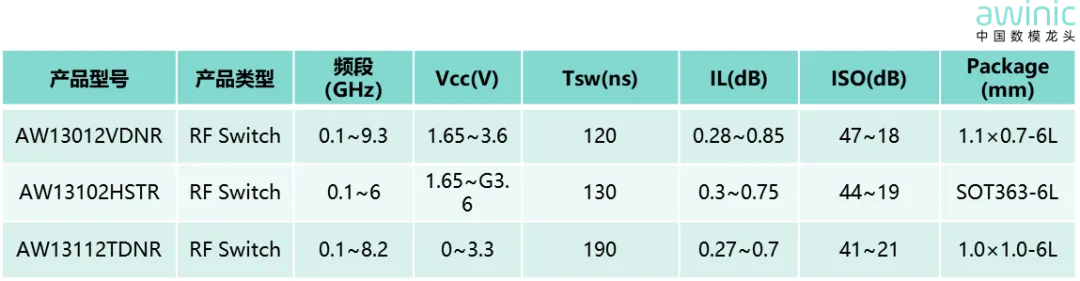
Table 8:
Awinic's RF Switch Product Features for RFID
The wireless
transmission technology ecosystem for the Internet of Things has shifted from
"breakthroughs in individual points" to "collaborative
evolution." The future requires further unlocking of technological
potential through standardization, convergence, and intelligentization. Awinic
has a comprehensive portfolio of radio frequency front-end products for
wireless transmission technologies such as
Wi-Fi/Bluetooth/UWB/LoRa/ZigBee/RFID: a chip product matrix featuring
ultra-wideband, ultra-low power consumption, ultra-fast switching time, and low
loss, which has already built wireless transmission solutions covering
multiple scenarios, multiple frequency bands, and high performance.
Awinic's RF
product line layout covers three core areas: consumer electronics,
industrial internet, and the automotive market, meeting the diverse and
complementary needs of various wireless transmissions through differentiated
design.