A Low Noise Amplifier (LNA) is located at the front end of the radio frequency (RF) receiver in a wireless communication system. Its function is to amplify the weak signal received by the antenna to a signal level that can be demodulated.
Adopting advanced technology, the AW15058LQNR features a low Noise Figure (NF) and multi-level adjustable gain. It can significantly improve the dynamic range of the entire system and provide a stable input signal for the subsequent circuit through its gain control function. This product is suitable for low-frequency receiving paths of multi-standard RF systems, including GSM/CDMA/WCDMA/LTE/5G NR.
The application scenario of the AW15058LQNR is as follows: Currently, communication terminals need to support an increasing number of RF Carrier Aggregation (CA) combinations. In scenarios where the ENDC L+L (Low-Frequency + Low-Frequency) combination with 4x4 MIMO is supported, the number of low-frequency ports of the LNA BANK in the system is insufficient. An additional multi-level adjustable gain low-frequency LNA is required to address this issue, thereby helping the terminal improve data throughput and internet speed.
Application Scenarios

Key Features of the AW15058LQNR
-
Frequency range: 0.6~0.96GHz
-
Gain dynamic range: 33dB, with 7-level adjustable gain
-
Maximum gain: 21.5dB
-
Low noise figure: 0.7dB
-
High linearity: IIP3 = -5.5dBm
-
Supports MIPI RFFE 3.0 protocol
-
Package: QFN 1.5mm × 1.1mm-11L
Product Advantage 1: Wide Gain Dynamic Range with 7-Level Adjustable Gain
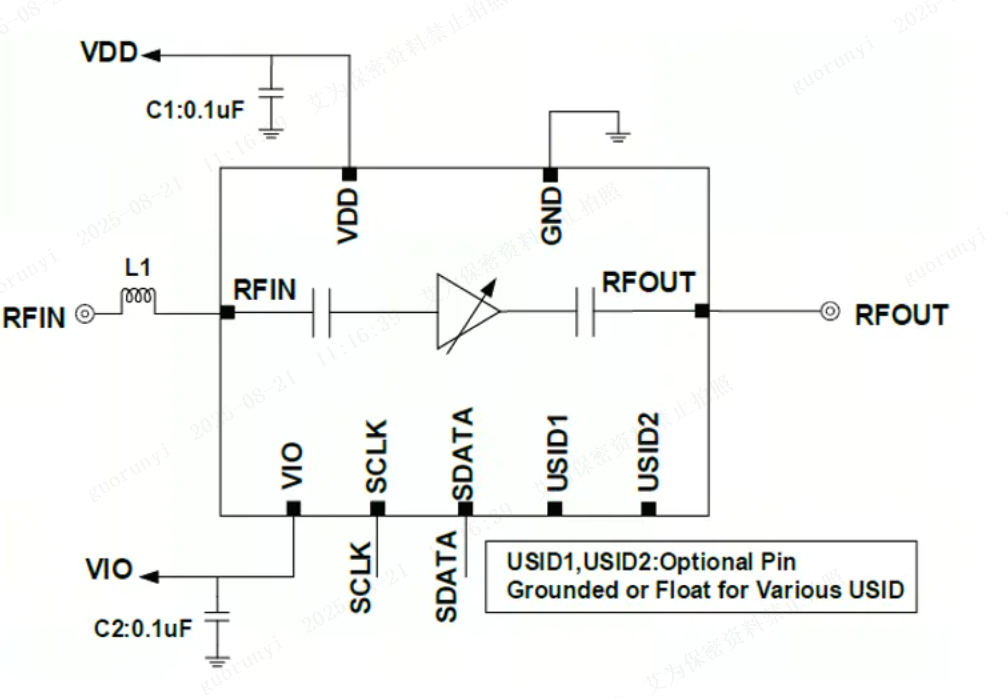
Operating in the frequency range of 0.6~0.96GHz, the AW15058LQNR offers gain adjustment from -12dB to 21.5dB. The multi-level adjustable gain function is realized by modifying the configuration of corresponding registers. Throughout the full gain range, it maintains excellent noise figure and linearity, along with good input and output impedance matching. This enables it to meet the requirements of coexisting multiple communication standards, including 5G NR.
Figure 1: AW15058LQNR Application Block Diagram
Product Advantage 2: Low Noise Figure (0.7dB)
The LNA is highly sensitive to the impact of system noise figure, and the importance of the front-end LNA cannot be overstated—it largely determines the final RF performance in weak signal conditions and the achievable bit error rate. If the noise performance of the LNA is insufficient, the link design work in terms of circuit and receiving path management will fail to meet 5G performance requirements. The AW15058LQNR has a minimum noise figure (NF) of 0.7dB, and this excellent NF contributes significantly to improving RF receiving sensitivity.
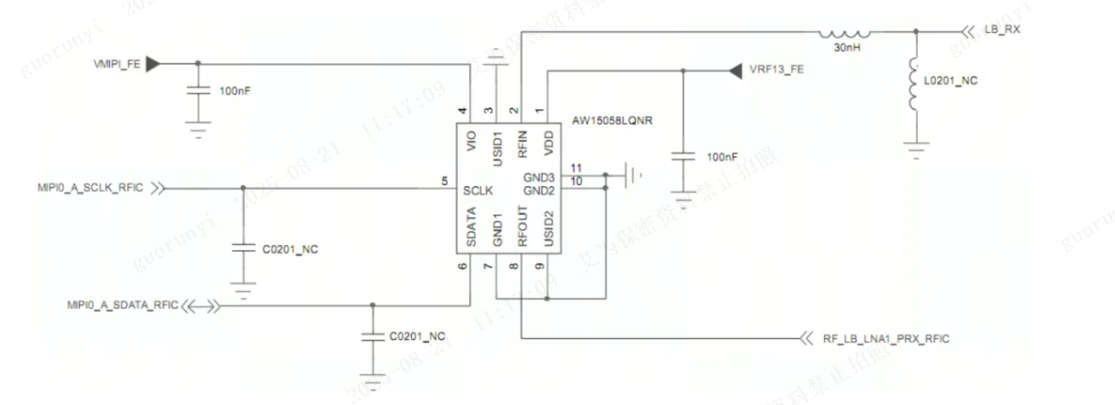
Figure 2: AW15058LQNR Applied in 5G NR Receiving Path
Product Advantage 3: High Linearity (IIP3 = -5.5dBm)
The LNA needs to have high linearity to avoid signal distortion caused by excessive amplification. Linearity is evaluated by indicators such as Input Third-Order Intercept Point (IIP3) and Input P1dB Compression Point (P1dB). The high linearity performance of the AW15058LQNR allows precise control of the power delivered to the receiver circuit.
Summary
The AW15058LQNR features a wide gain dynamic range of 33dB with 7-level adjustable gain, providing greater flexibility for the front end of the RF receiver. Its low noise figure (NF = 0.7dB) and high linearity effectively improve RF receiving sensitivity.
These outstanding performances enable the AW15058LQNR to be flexibly applied in the design of the RF receiver front end, while meeting the requirements of coexisting multiple communication standards including 5G NR.