With the launch of the iPhone 16 Pro, its newly added side camera control button has garnered widespread attention from consumers. Integrating both pressing and touch sliding functions, this button not only subverts traditional perceptions of physical buttons but also delivers an aesthetic, convenient, and highly technological human-machine interaction experience to users.
1. Functional Breakdown of the Camera Control Button
The "Camera Control" button is located on the right frame of the iPhone, below the power button, and resembles a camera shutter button. It features new functions such as quick camera activation, photo taking, and video recording initiation.
The specific functions of the iPhone 16 "Camera Control" button are as follows:
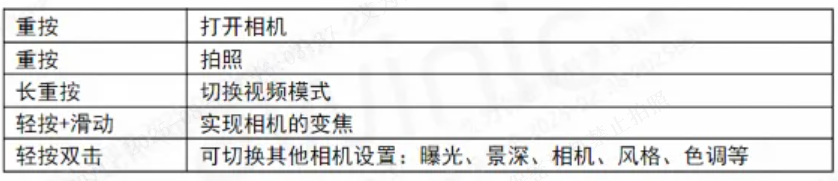
Table 1: Functions of the iPhone 16 "Camera Control" Button
These button functions are respectively enabled by capacitive touch detection technology, pressure touch technology sensors, and mechanical buttons (see Figure 1).
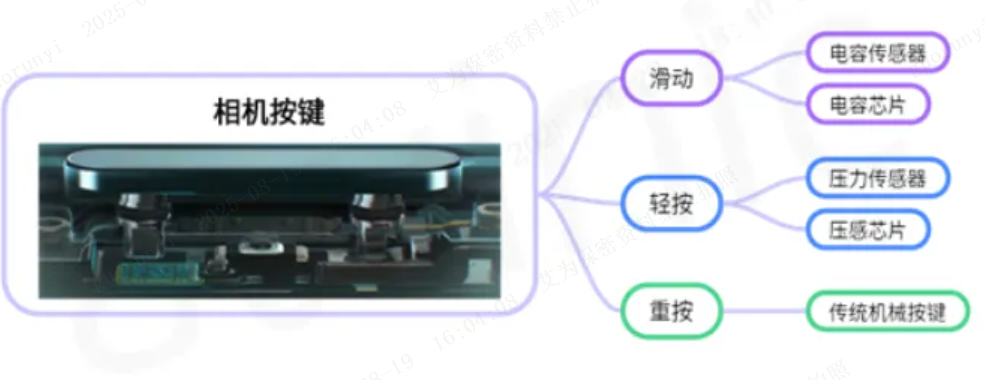
Figure 1: Camera Button Function Diagram
-
Capacitive touch detection technology: Enables touch functions on products without the need for openings, improving usability while extending product lifespan. Through professional slider design and sliding algorithm tuning, users only need to gently slide across the designated area to report coordinates with a precision of up to 0.1mm, ensuring a smoother sliding experience and more fluid application performance.
-
Full-pressure touch technology: Captures the user’s pressing force more accurately, achieving a minimum resolution of 1g, and exhibits stronger anti-interference capabilities—making up for the defect of capacitive touch being prone to false triggers.
The combination of the two technologies maximizes the technological and artistic appeal of the product.
2. Awinic’s Pressure Sensing + Capacitance 2-in-1 Application Solution
Targeting this application scenario, Awinic has launched the highly integrated pressure sensing + capacitance 2-in-1 SoC AW938xx series. This series adopts integrated sensing technology for pressure and capacitance, built-in adaptive compensation engine, and boasts advantages such as high sensing precision and strong environmental adaptive compensation capability.
The AW938xx series supports up to 5-channel pressure sensing applications, equipped with a 21-bit precision ADC, and enables multi-level press recognition (single-click/double-click, long-press/short-press detection). It also covers 12-channel capacitive touch applications, with a capacitance detection precision of 1 aF, and can automatically offset load capacitance within 220 pF—supporting functions such as touch buttons and touch sliders.
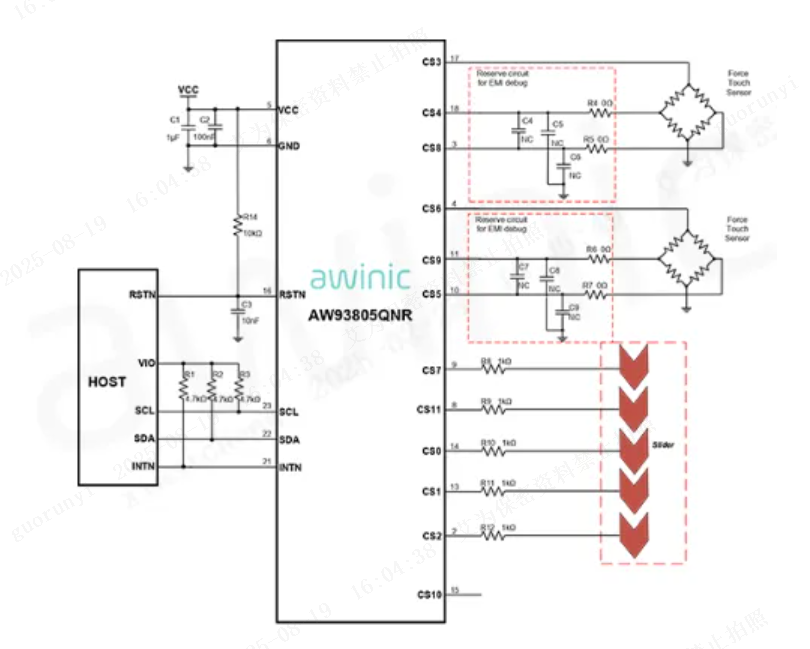
Figure 2: Typical Application Circuit of AW93805 (Datasheet)
The videos demonstrate the button effects: when approaching the button, the left red light turns on (enabled by the capacitance module, with induction without pressing); when pressed lightly, the right blue light turns on; when pressed hard, the right red light turns on (both enabled by the pressure sensing module).
3. Product Features of the AW938xx Series
-
High-sensitivity pressure detection and capacitance detection
-
Pressure sensing resolution: ADC=21bit, PGA=125
-
Single-click/double-click/triple-click/long-press for pressure sensing/capacitance buttons
-
Capacitance resolution: 1 aF; compensation capacitance: 220 pF
-
Capacitive one-dimensional sliding and wear detection
-
Ultra-low dynamic power consumption (Active mode: 23.5μA)
-
I2C: 400 kHz, address expandable
-
1.2V/1.8V IO
-
VCC: 1.65V~3.6V
-
Memory: 20KB RAM
-
Packages: QFN 2×2×0.55-14L, QFN 3×3×0.55-24L
The AW938xx integrates a high-precision ADC and an adaptive baseline tracking algorithm, enabling pressure/capacitance button recognition, pressure sensing quantity detection, capacitive sliding detection, and capacitive wear detection. It is compatible with various application scenarios combining pressure sensing and capacitance.
To meet different application needs, the series offers materials with different channel counts and package sizes for users to choose from.
4. Product Advantages of the AW938xx Series
-
21-bit high-precision ADC with 1V offset compensation capability, enabling high signal-to-noise ratio pressure sensing signal detection.
-
1 aF high-sensitivity capacitance sensing with 16 adjustable ranges, effectively supporting different sliding sensing PADs.
-
Wide selection range of capacitive sliding channels, allowing for more precise coordinate accuracy.
-
Built-in high-speed sliding coordinate analysis algorithm, which can parse and report sliding coordinate data in real time.
-
Supported by 32-bit MCU + RAM architecture, the chip can process pressure sensing and capacitance signals simultaneously, and supports customized algorithm event reporting logic and algorithm upgrades.
-
Pressure sensing + capacitance algorithms are implemented within a single chip, facilitating maintenance and eliminating reliance on platforms for algorithm processing (high independence). The 2-in-1 component occupies a smaller board area and reduces costs.
5. Application Fields of the AW938xx Series

Table 2: Application Fields of the AW938xx Series
6. Product Selection of the AW938xx Series
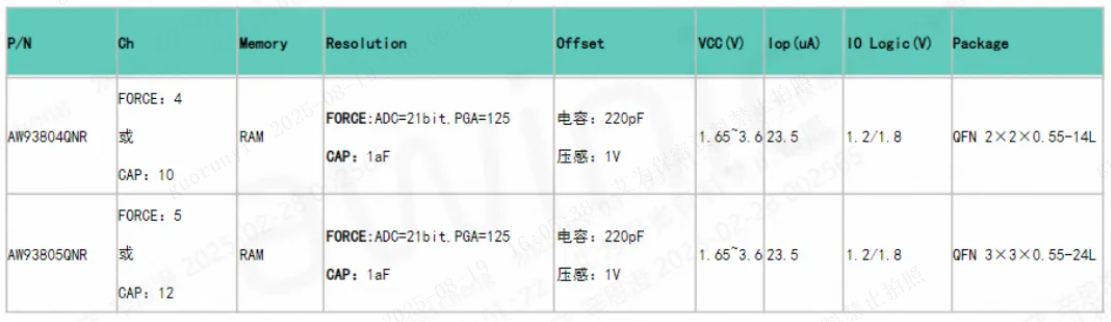
Table 3: Product Selection Table of the AW938xx Series
Conclusion
Awinic has deepened its presence in the field of independent pressure sensing and capacitance chips for many years, accumulating rich industry experience and mature solutions. The newly launched AW938xx series chips will provide customers with more precise and efficient pressure sensing + capacitance 2-in-1 solutions.
Key Terminology Glossary
-
2-in-1 SoC (System on Chip): An integrated circuit that combines two core functional modules (pressure sensing and capacitance detection in this case) into a single chip, reducing board space and simplifying design.
-
ADC (Analog-to-Digital Converter): A component that converts continuous analog signals (e.g., pressure, capacitance) into discrete digital signals for processing by the chip’s MCU.
-
Capacitive Touch Detection: A technology that detects user touch by measuring changes in capacitance between a sensor and the human body (no physical contact with the sensor is required).
-
Pressure Sensing Technology: A technology that captures the magnitude of force applied by the user, enabling functions like multi-level press recognition (light press vs. hard press).
-
aF (attofarad): A unit of capacitance (1 aF = 10⁻¹⁸ farads), used here to describe the ultra-high precision of the chip’s capacitance detection.
-
PGA (Programmable Gain Amplifier): An amplifier with adjustable gain, used to enhance weak pressure sensing signals for more accurate detection.