The "Awinic Light Language" series currently has more than 80 product models, widely empowering application scenarios such as automobiles, mobile phones, smart speakers, TVs, routers, PCs, wearable devices, general energy storage devices, e-sports equipment, and conference communication systems. The cumulative global shipment volume has exceeded 1 billion units. Cooperative customers include international first-tier brands and domestic industry-leading enterprises.
Recently, the "Awinic Light Language" family has added a new member - the breathing light driver chip AW21209, which integrates Charge Pump boosting and an SRAM programmable intelligent light effect engine. It not only injects new impetus into building a unique and high-end light language interaction experience for intelligent terminal devices, but also can convey the sense of atmosphere in details through flexible light effects, effectively enhancing users' emotional value.
AW21209FOR is a high-performance 9-channel RGB LED driver, integrating 1x/1.5x adaptive charge pump boosting. Its power supply can be as low as 2.5V, effectively solving the problem of color deviation and brightness abnormality of LED beads in low-voltage battery scenarios. The chip integrates 96x16bit programmable SRAM, supports flexible light effect instruction sets, and is equipped with 3 groups of independent light effect execution engines, enabling flexible customization of high-end and differentiated dynamic light effects.
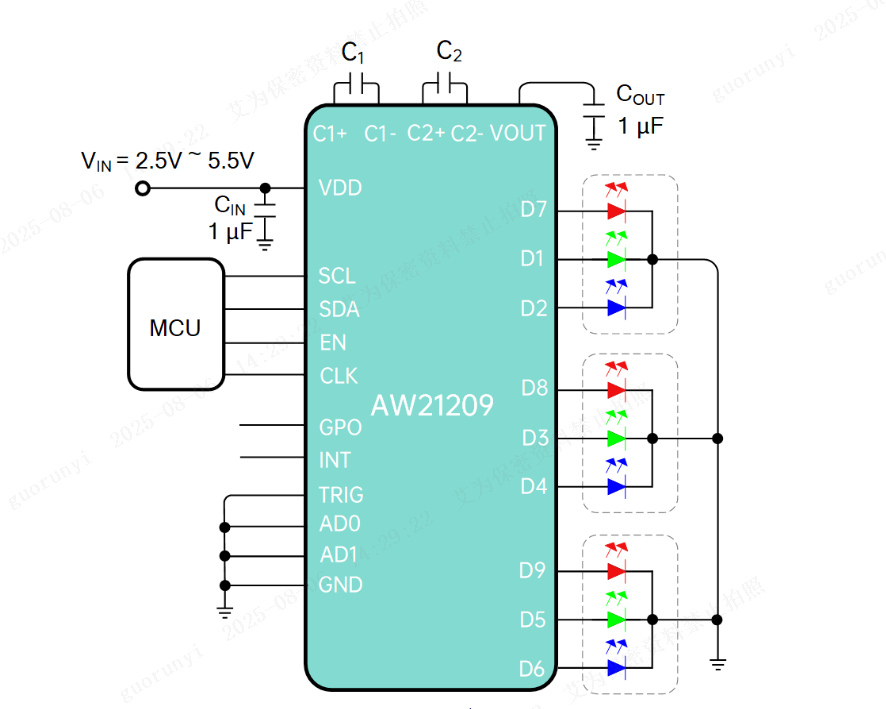
Picture 1 Typical Application Diagram of AW21209
Product Highlight 1
Adapting to the Trending Demand for Low-Voltage Battery Power Supply
In recent years, silicon anode batteries have become an important direction for battery technology upgrading in terminal devices such as mobile phones, thanks to their significant advantage of 10%-30% higher energy density than traditional graphite batteries. Major mobile phone brands have launched models equipped with silicon anode batteries, with battery capacities jumping from 5000mAh to over 7500mAh. While greatly improving battery life, they also help terminal devices achieve thin and light designs. According to industry sources, the iPhone 17 is also expected to be equipped with a silicon anode battery to solve the long-standing battery life shortcoming that has attracted users' attention.
As silicon anode batteries gradually become an industry trend, their unique technical characteristics bring new challenges: the cut-off voltage of such batteries during discharge is as low as 2.5V, under which RGB LEDs will have problems such as color shift or brightness abnormality, which puts higher requirements on the working voltage adaptability of LED driver chips.
While silicon anode high-energy-density batteries are favored by the industry, lithium iron phosphate batteries, although relatively low in energy density, occupy an important position in diverse scenarios such as new energy vehicles, power tools, handheld devices, and electronic cigarettes due to their three core advantages of high safety, long cycle life, and low cost.
The nominal voltage of a single lithium iron phosphate battery is 3.2~3.6V, but its discharge cut-off voltage can be as low as 2.5V - this value is usually lower than the forward voltage (VF) of blue and white LED beads, which will cause problems such as dim brightness and abnormal color of LEDs.
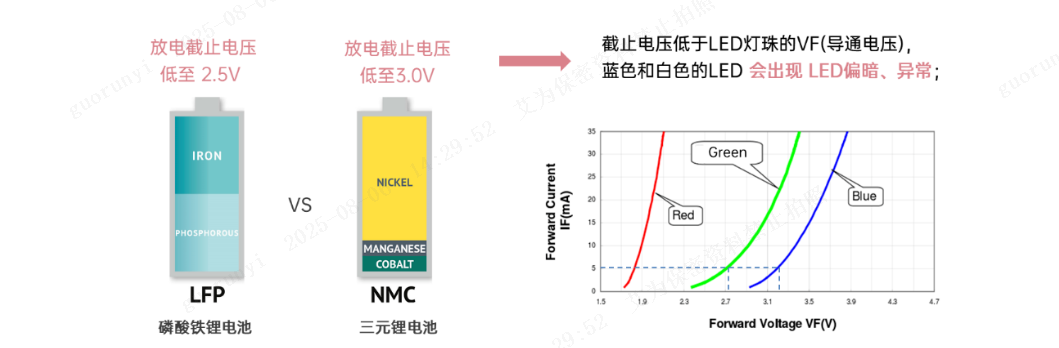
Picture 2 Discharge Cut-Off Voltage Lower Than LED Bead VF Voltage
AW21209 accurately solves the above pain points, providing a professional LED driver solution for low-voltage battery scenarios. It does not require an additional Boost chip to supply power to LEDs, simplifying circuit design and reducing costs. AW21209 supports 1x/1.5x adaptive Charge Pump boosting and a wide input voltage range of 2.5V~5.5V (AW21309 can support a lower input voltage of 2.3V~5.5V), intelligently adapting to low-voltage scenarios such as lithium iron phosphate batteries and silicon anode batteries.
Product Highlight 2
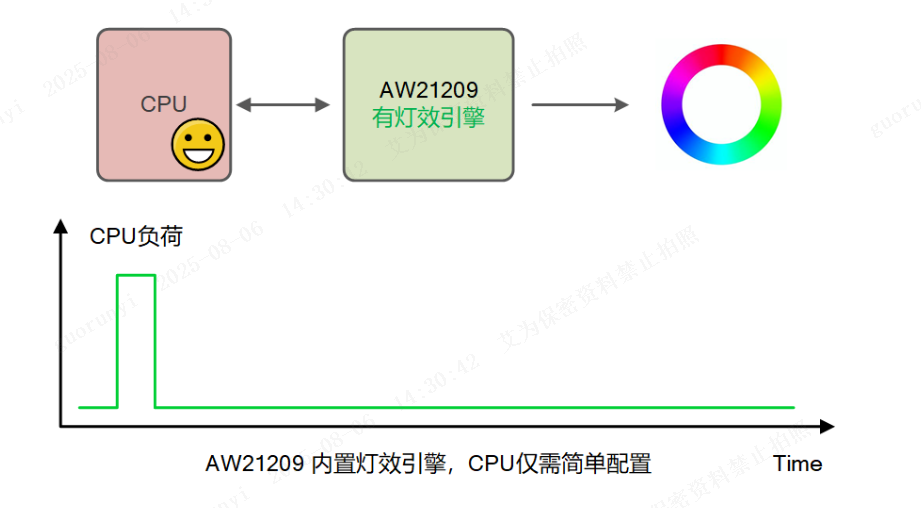
Built-in Intelligent Light Effect Engine, Reducing CPU Load
Intelligent terminal devices such as mobile phones are continuously pursuing extreme performance, which requires the CPU to concentrate resources on handling high-priority tasks, such as improving core experience links of e-sports games such as image rendering, frame rate stability, stereo sound effects, and haptic feedback.
Traditional LED Drivers, lacking an SRAM programmable light effect engine, need to overly rely on the main CPU to continuously refresh RGB configuration parameters when realizing real-time dynamic interactive light effects. This mode not only significantly increases the CPU load, leading to a decrease in the execution efficiency of high-priority tasks, but also increases the overall power consumption of the system; at the same time, limited by data transmission delay, the presentation of LED light effects is often difficult to achieve a delicate and smooth visual effect.
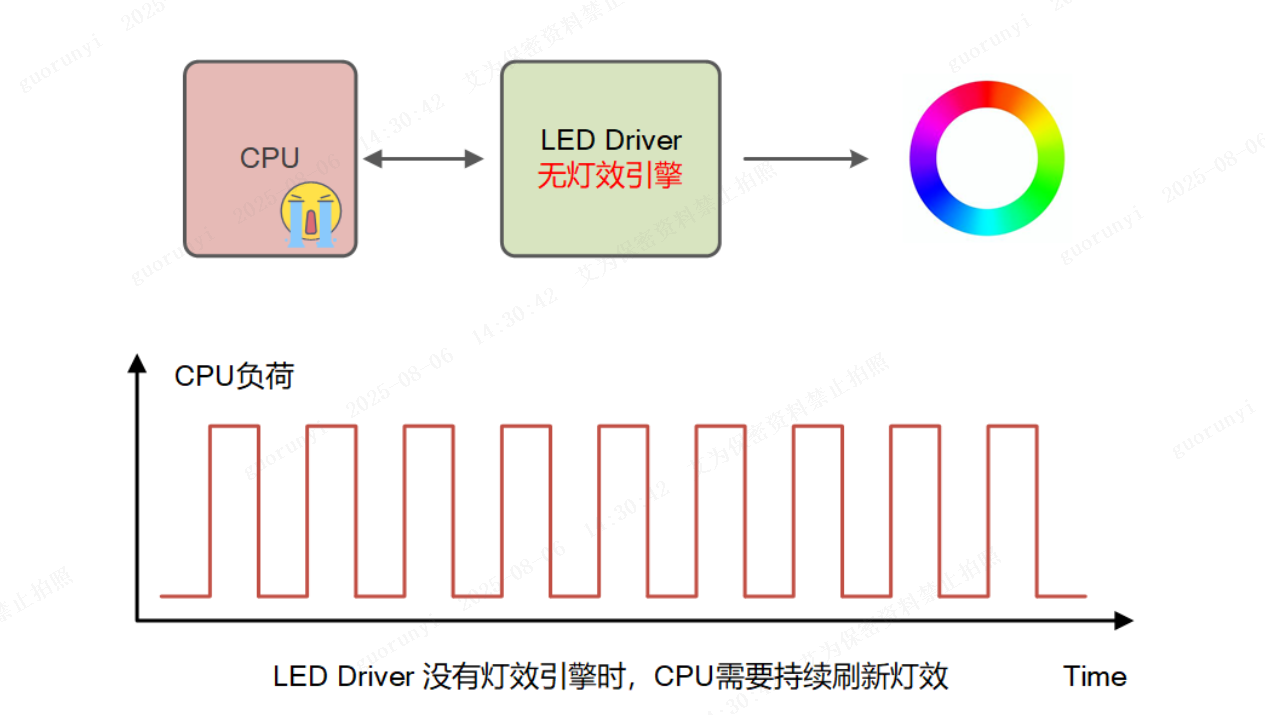
AW21209FOR directly addresses the industry pain point of excessive CPU load in refreshing light effects, achieving a technological breakthrough through a hardware-level light effect processing architecture: the chip has 3 built-in independent light effect execution engines, supports full-scenario light effect instruction sets including ramp, wait, loop, trig, etc., and integrates a 96×16bit SRAM storage unit, which can pre-store 96 light effect execution instructions. This design enables the chip to independently refresh dynamic light effects, not only freeing up CPU computing power to focus on high-priority tasks, but also supporting flexible customization of high-end personalized light effects, helping customer brands build differentiated light language identifiers.
The advanced model AW21309FOR further upgrades the hardware configuration, increasing the SRAM capacity to 128×16bit. With stronger instruction storage and intelligent execution capabilities, it provides users with more abundant freedom in light effect design, empowering customer brands to create light language interaction experiences with more distinct layers and styles.
Key Features of AW21209FOR
9-channel programmable constant current source output
-
Common cathode high-side constant current architecture
-
Each channel's constant current can reach 25.5mA
-
Each channel's constant current is 256-level adjustable (100uA/Step)
-
Each channel supports 4096-level PWM delicate dimming
-
Supports exponential dimming, more in line with human eye perception characteristics
Adaptive 1×/1.5× Charge Pump
-
2.5V~5.5V wide power supply, adapting to low-voltage battery scenarios
-
Efficiency up to 94%, reducing system heat loss
-
Integrates overcurrent and short-circuit protection, improving reliability
3 independent light effect execution engines
-
96x16bit programmable SRAM, pre-storing 96 light effect instructions
-
Full-scenario instruction set: ramp, wait, loop, trig, etc.
-
Pulling down the TRIG pin can trigger preset light effects, supporting real-time interaction
Ultra-low power consumption
-
Standby power consumption as low as 300nA, extending device battery life
-
Automatic power-saving mode, current as low as 8μA
1MHz I2C interface
-
Supports 1.2V/1.8V/3.3V/5.5V multi-communication levels
-
I²C address can be expanded through AD1/AD2
Operating temperature range: -40~105℃
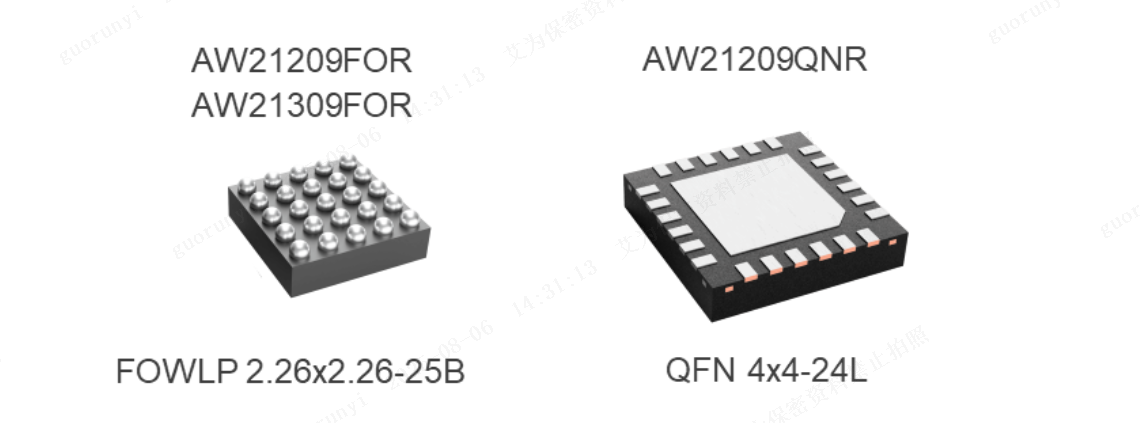
Small package & large package, matching different scenario needs
Picture 3 Package Information
Charge-Pump Series Selection Table

About Awinic
Leading Chinese Digital-Analog Company
Shanghai Awinic Electronics Technology Co., Ltd. was founded in 2008, focusing on the design of high-performance digital-analog hybrid signals, power management, signal chains and other ICs. It was successfully listed on the Science and Technology Innovation Board of the Shanghai Stock Exchange in August 2021, with the stock code 688798.
Awinic Electronics has accumulated 42 product subcategories and a total of more than 1400 product models. The performance and quality of its products have reached the industry-leading level. The company's products are widely used in consumer electronics, industrial internet and automotive markets, including smart phones, tablet computers, laptops, smart wearables, smart speakers, smart home appliances, mobile payments, the Internet of Things, AI education, smart toys, servers, new energy, robots, drones, security, automotive electronics and other fields.
In 2024, the company's R&D investment was 510 million yuan, accounting for nearly 17% of its revenue. Technical personnel accounted for more than 74%. It has accumulated 649 domestic and foreign patents, 125 software copyrights, and 595 integrated circuit layout registrations.
Awinic Electronics has been awarded qualifications and honors such as the National Enterprise Technology Center, the Single Champion Enterprise in the audio manufacturing industry, the National Intellectual Property Advantage Enterprise, the "National High-Tech Zone Listed Company Innovation Top 100", the Shanghai Innovative Enterprise Headquarters, the Shanghai Quality Gold Award, the Shanghai Municipal Design Innovation Center, the Shanghai Intelligent Audio Chip Technology Innovation Center, and the Shanghai Hardcore Technology Enterprise TOP 100 list.