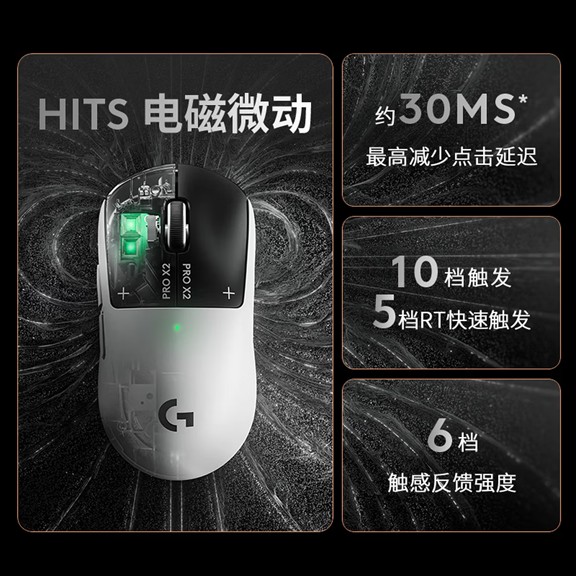
Figure 1 Logitech G PRO X2 SUPERSTRIKE (Source: Logitech JD
Flagship Store)
In the field of gaming peripherals, a millisecond-level response
gap can determine victory or defeat. In 2025, the Logitech G PRO X2 SUPERSTRIKE
shook the industry with its HITS (Haptic Inductive Trigger System) — replacing
traditional physical micro-switches with inductive analog sensing to achieve
contactless triggering, reducing click latency by up to approximately 30ms, and
introducing adjustable haptic feedback on a mouse for the first time. This
breakthrough marks the official entry of gaming mice into the era of
"programmable haptics."
From traditional micro-switches to linear motor haptic feedback,
and then to electromagnetic inductive contactless triggering, every leap in
click technology places higher demands on driver ICs in terms of response
speed, power consumption, and vibration precision. To address the stringent
requirements of gaming mice for ultra-low latency triggering, precise haptic
feedback, high-precision magnetic sensing detection, long battery life, and
lightweight design, AWINIC has launched a series of high-performance Haptic,
Hall sensing, and supporting power solutions. These cover key components
including normal-voltage motor drivers, digital linear Hall sensors, RGB
ambient LED drivers, linear chargers, USB PD controllers, OVP overvoltage
protection, and load switches. The specific application architecture is shown
below:
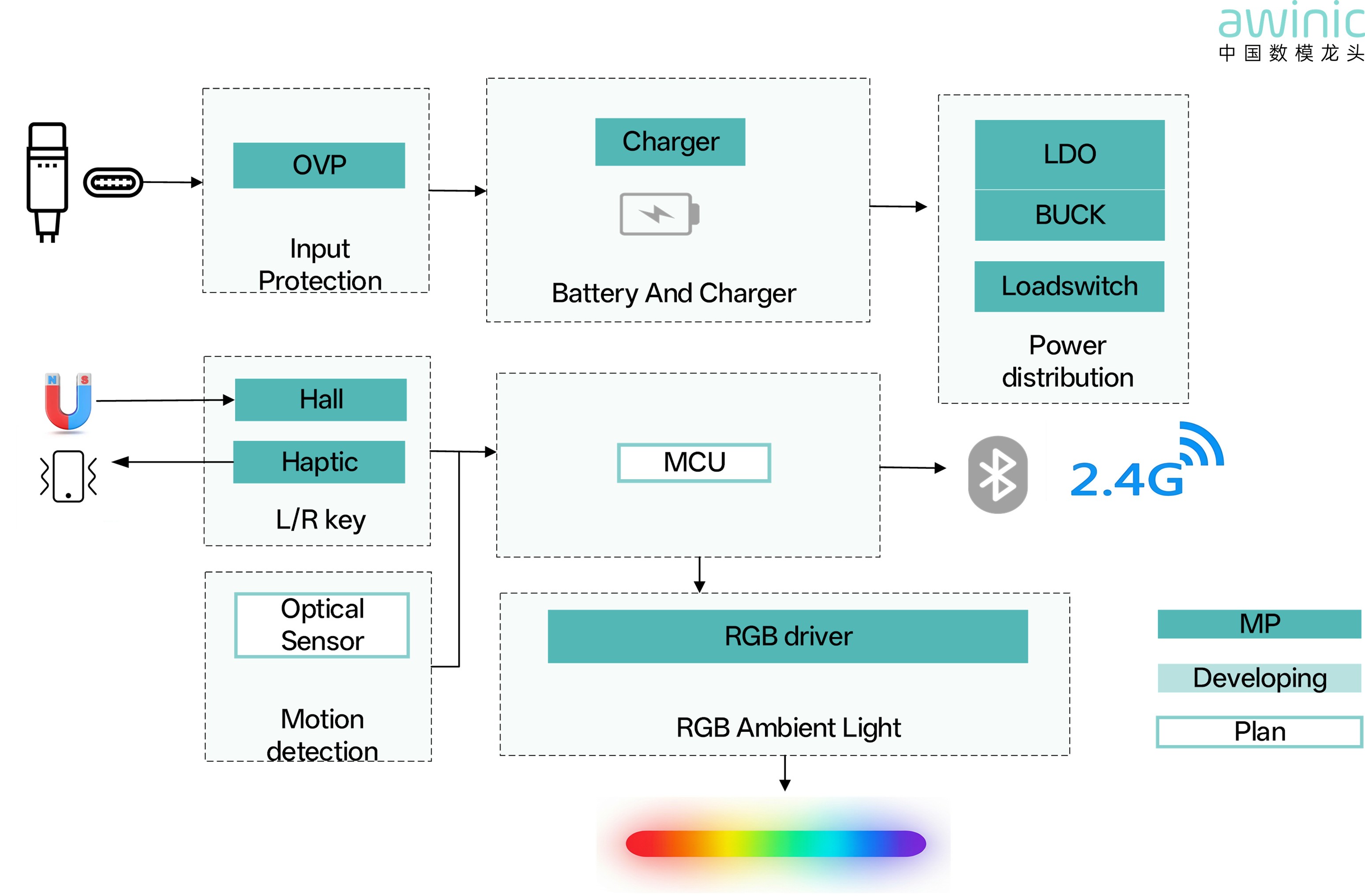
Figure 2 Gaming Mouse Application Block Diagram
Product Features
Haptic Feedback – AW86253 Series
The AW86253 is AWINIC's fifth-generation normal-voltage LRA
Haptic driver IC, deeply optimized for gaming mouse button feedback scenarios.
With a 0.2ms
ultra-fast startup , it delivers near-zero-latency click
haptic response. Key features are as follows:
·
Supply Voltage Range: 1.8V ~ 5.5V wide voltage
·
Startup Time: 0.2ms (significantly superior to competitors'
1~5ms)
·
Built-in Waveform Storage: 4KB SRAM, supporting 8k/12k/24k/48k
multiple sampling rates
·
Playback Modes: Real-time playback / Memory playback / Hardware
trigger / Continuous playback / awinicTikTap® Engine
·
Self-developed AAE 3.0 Auto-Brake Engine: Crisp vibration
without lingering, enhancing button rhythm
·
LCC 3.0 Consistency Calibration: Eliminates motor unit-to-unit
variations, ensuring uniform vibration feel in mass production
·
Standby Current: 4μA @ DVDD=1.8V, Shutdown 0.5μA
·
Protections: Short-circuit / Over-temperature / Under-voltage
·
Package: QFN 1.6mm×1.6mm-12L ultra-compact package
·
Supports IEEE 2861.3 Gaming Haptic Protocol, enabling precise
synchronization between in-game events and vibration waveforms
Full-Chain Power Management
· Linear Charger AW32012A: Integrates
power path management, supports 2~512mA programmable charging current with
±0.5% charging accuracy, 28V input OVP, ship mode leakage <1μA, WLCSP
1.4mm×1.4mm package, optimized for compact mouse spaces.
· USB PD Controller AW35615:
USB-IF PD 3.1 certified (TID #8339), supports 28V EPR, DRP/SRC/SNK
configurable, FCQFN 1.2mm×1.2mm-9L ultra-compact package, enabling Type-C fast
charging and protocol negotiation for mice.
· OVP Overvoltage Protection Load Switch
with Integrated Surge Protection AW32915FCR:
Default OVP threshold 6.8V (adjustable from 4~24V via OVLO pin), built-in 27mΩ
ultra-low on-resistance nFET switch, supports 5A continuous current, input
withstand voltage 29VDC, surge protection >100V (IEC 61000-4-5), overvoltage
shutdown response 100ns typical, integrated system-level ESD protection
(contact discharge ±8kV / air discharge ±15kV), FCQFN 1.3mm×1.8mm-12L
ultra-compact package, providing reliable overvoltage and surge protection for
the mouse Type-C charging port.
· Low-Power Load Switch AW35111:
1~5.5V input, shutdown Iq only 16nA, enable Iq 2nA, FCDFN 0.8mm×0.8mm, cuts off
downstream loads during transportation/warehousing to extend battery life.
HALL – AW86570 Series
The AW86570 is a high-sensitivity digital linear Hall sensor
chip based on the Hall effect. It features a built-in 14-bit ADC, supports up
to 50kHz sampling frequency, and can detect magnetic field changes in the range
of ±100Gs to ±3000Gs, with N/S bipolar detection support. For gaming mouse
magnetic encoder scroll wheels, magnetic side buttons, left/right button press
detection, and contactless button trigger scenarios, it provides 0.1ms fast
power-on and threshold interrupt output, enabling precise position,
displacement, and press state detection. Key features are as follows:
·
Supply Voltage Range: 2.5V ~ 5.5V, VDDIO as low as 1.65V
·
ADC Resolution: 14/12/10/8 Bits selectable
·
Selectable Ranges: ±100Gs / ±200Gs / ±500Gs / ±1000Gs / ±2000Gs
/ ±3000Gs
·
Sampling Frequency: 1Hz ~ 50kHz configurable
·
Power-On Time: 0.1ms
·
Low Noise: ±0.46Gs @ FS=200Gs
·
I2C Interface: Supports Standard/Fast modes, up to 1MHz
·
Threshold Trigger Interrupt: Supports upper/lower limit
amplitude detection with configurable interrupt event counting
·
Built-in Temperature Sensor and Zero-Offset Calibration
·
Power Consumption: Normal mode 0.2mA @ 1kHz, Power-down mode
0.92μA
·
ESD: 4kV HBM
·
Package: DFN 1.6mm×1.6mm×0.55mm
Ambient LED Driver – AW21009 Series
The AW21009 is a 9-channel multi-function LED driver IC that
supports independent RGB ambient LED dimming and auto-breath effects,
delivering personalized lighting experiences for gaming mice. Key features are
as follows:
·
Channel Count: 9-channel constant-current sink, supporting
RGB/RGBW multi-group lighting effects
·
PWM Resolution: Up to 12-bit (4096 levels), supporting
8/9/12-bit configurable
·
Current Configuration: Global 256-level DC current + Independent
256-level channel current, recommended 40mA (REXT=4kΩ)
·
Current Accuracy: ±5% between channels, ±5% between chips
·
Lighting Effect Modes: Auto-breath mode (fade-in/fade-out/hold
time configurable), group control, fast RGB control
·
Dither Function: 9-bit PWM + 3-bit digital dithering, equivalent
to 12-bit resolution
·
EMI Noise Reduction: Slew Rate control + Programmable spread
spectrum technology, reducing MLCC audible noise
·
Protection Functions: LED open/short detection, UVLO,
Over-temperature protection (165°C)
·
Auto Power-Saving: Automatically enters power-saving mode when
all LEDs are off for >32ms
·
I2C Interface: 1MHz, 4 selectable addresses (20h/21h/24h/25h)
·
Supply Range: 2.7V ~ 5.5V
·
Power Consumption: Standby 3μA, Shutdown 0.1μA
·
ESD: ±2kV HBM
·
Package: QFN 3mm×3mm×0.75mm-20L
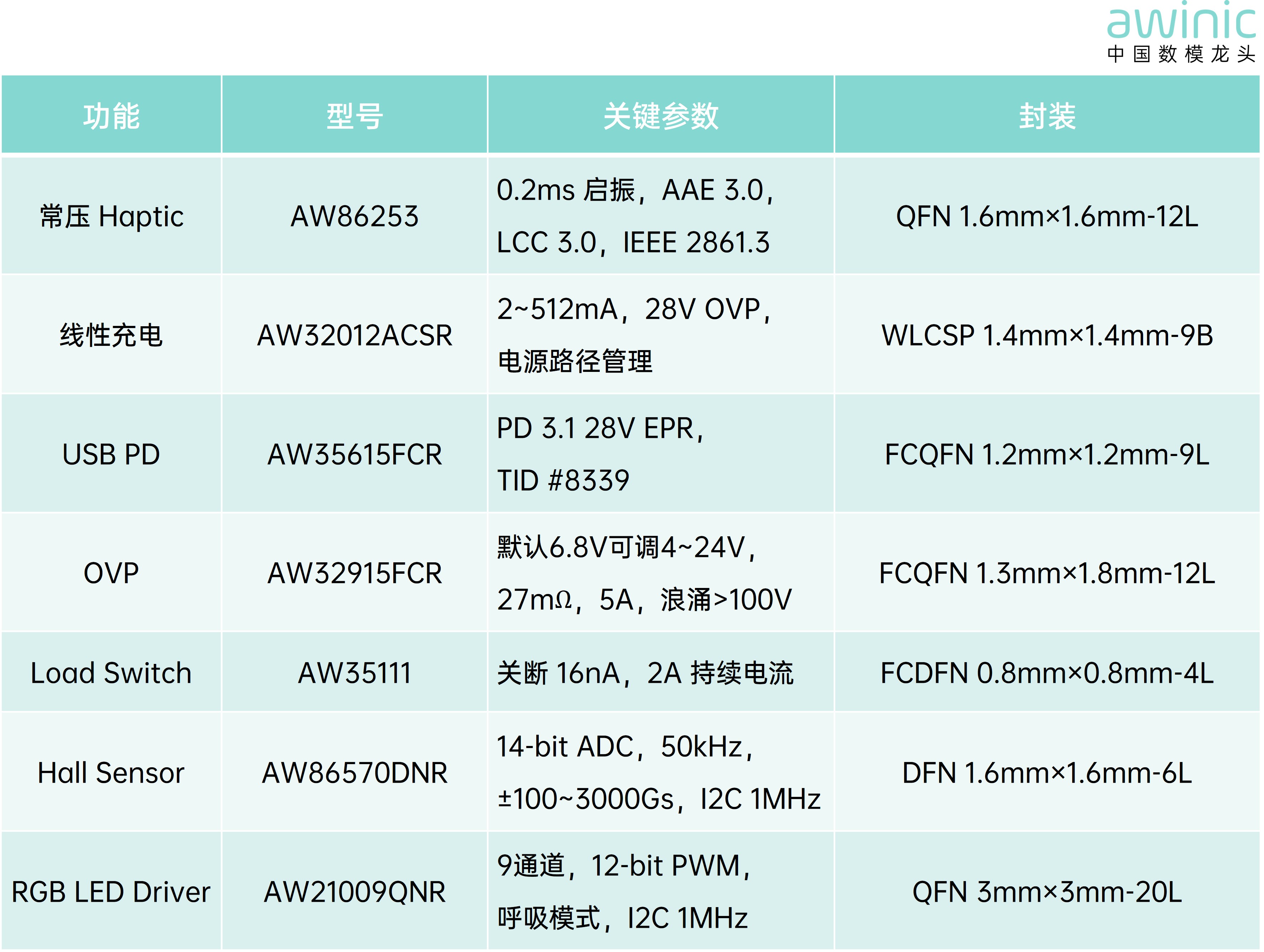
Table 1 AWINIC Gaming Mouse Recommended Component Selection
Table
AWINIC Haptic Ecosystem Capabilities
Since launching its linear motor driver ICs in 2017, AWINIC has
built a complete Haptic full-chain capability covering chips, algorithms,
tools, standards, and motor ecosystems, with over 700 million devices shipped
globally to date.
IEEE 2861.3 Gaming Haptic International Standard
AWINIC, together with Tencent and Xiaomi, jointly initiated the
IEEE 2861.3 Mobile Gaming Haptic Feedback International Standard, defining a
universal haptic interface and vibration waveform description file (HE format)
to address the industry pain point of inconsistent vibration feel across
different devices and motors. The AW8625X series chips are the first to
hardwire the IEEE 2861.3 protocol into the hardware layer, with protocol
parsing and waveform computation entirely handled by the chip independently,
without occupying the host MCU CPU or system memory, delivering three core
advantages:
· Zero Software Adaptation: Chips are
standard-compliant upon power-on, eliminating the need for protocol parsing
code development at the system level.
· Offloading Platform Computing Power: Protocol
processing offloaded to hardware, ensuring core tasks such as game rendering
and ray tracing remain unaffected.
· Ultra-Low Latency: Hardware
direct-path enables sub-millisecond haptic feedback response latency.
awinicTikTap® Algorithm Engine
· awinicTikTap® 4D Gaming Algorithm: Leverages
AI image recognition, sound feature extraction, and user operation recognition
to convert game content into haptic vibration parameters in real time, enabling
differentiated vibration effects for events such as kills, reloads, and hits.
AW86xxx series chips achieve response latency <1ms, delivering instantaneous
tactile feedback.
· awinicTikTap® Core Haptic:
Focuses on low-level driving and waveform parsing, working in conjunction with
AAE hardware closed-loop control to precisely reproduce IEEE 2861.3 HE waveform
description files, ensuring consistent expression across different LRA motor
models.
· awinicTikTap® Engine:
Provides functions such as vibration waveform visualization, audio-to-vibration
conversion, and vibration effect libraries, delivering immersive vibration
feedback for multimedia scenarios.
Chip Hardware Performance
AWINIC chips possess two core hardware-level performance
advantages — the AAE Auto-Brake Engine and LCC Motor Consistency Calibration —
ensuring haptic experience quality and consistency. Among them, AAE (Advanced
Auto-Brake Engine) has now evolved to AAE 2.0:
· AAE 1.0: Auto-brakes at
waveform end to suppress residual vibration
· AAE 2.0: Supports braking at
any moment; combined with fast-start algorithm, enables "square-wave
vibration" — steep rising and falling edges, crisp and clean tactile
feedback, no lingering in button responses
LCC 3.0 (LRA Consistency Calibration) Motor Consistency
Calibration: Due to material and process variations, LRA linear motors from
the same batch exhibit significant differences in resonant frequency (F0) and
vibration amplitude distribution. LCC 3.0 automatically detects each motor's F0
and adjusts driving parameters to achieve:
·
Calibration Accuracy: ±1Hz
·
Vibration Consistency Improvement: 50%
·
SmartLoop Function: Optimized F0 detection accuracy for
small-size LRAs
Motor Ecosystem Collaboration
AWINIC has established deep collaborations with leading LRA
motor manufacturers, providing customized services and technical support for
different motor models:
· Customized Waveform Library: Customizes
short/long vibration waveforms for different motors, available for direct
indexing and invocation by customers.
· Motor Fault Diagnosis: Supports
LRA impedance detection, short/open circuit detection via I2C register
readback.
Debugging Engineer Expertise and Modeling
AWINIC's debugging engineer team possesses extensive
mass-production debugging experience. Combined with motor modeling and waveform
simulation technologies, they provide customers with full-process technical
support from chip selection to mass-production debugging:
· Motor Modeling and Waveform Simulation: Verified
simulation waveforms closely match physical waveforms.
Debugging Tools
AWINIC provides a complete haptic debugging toolchain,
encompassing vibration acceleration measurement sensor hardware and supporting
software tools, enabling a closed-loop process from waveform design, real-time
debugging, to quantitative evaluation:
· Acceleration Measurement Sensor:
High-sensitivity piezoelectric accelerometer, paired with a data acquisition
card, captures LRA vibration acceleration waveforms in real time, quantifying
vibration intensity, startup/braking times, and residual vibration characteristics.
· Supporting Software Tools:
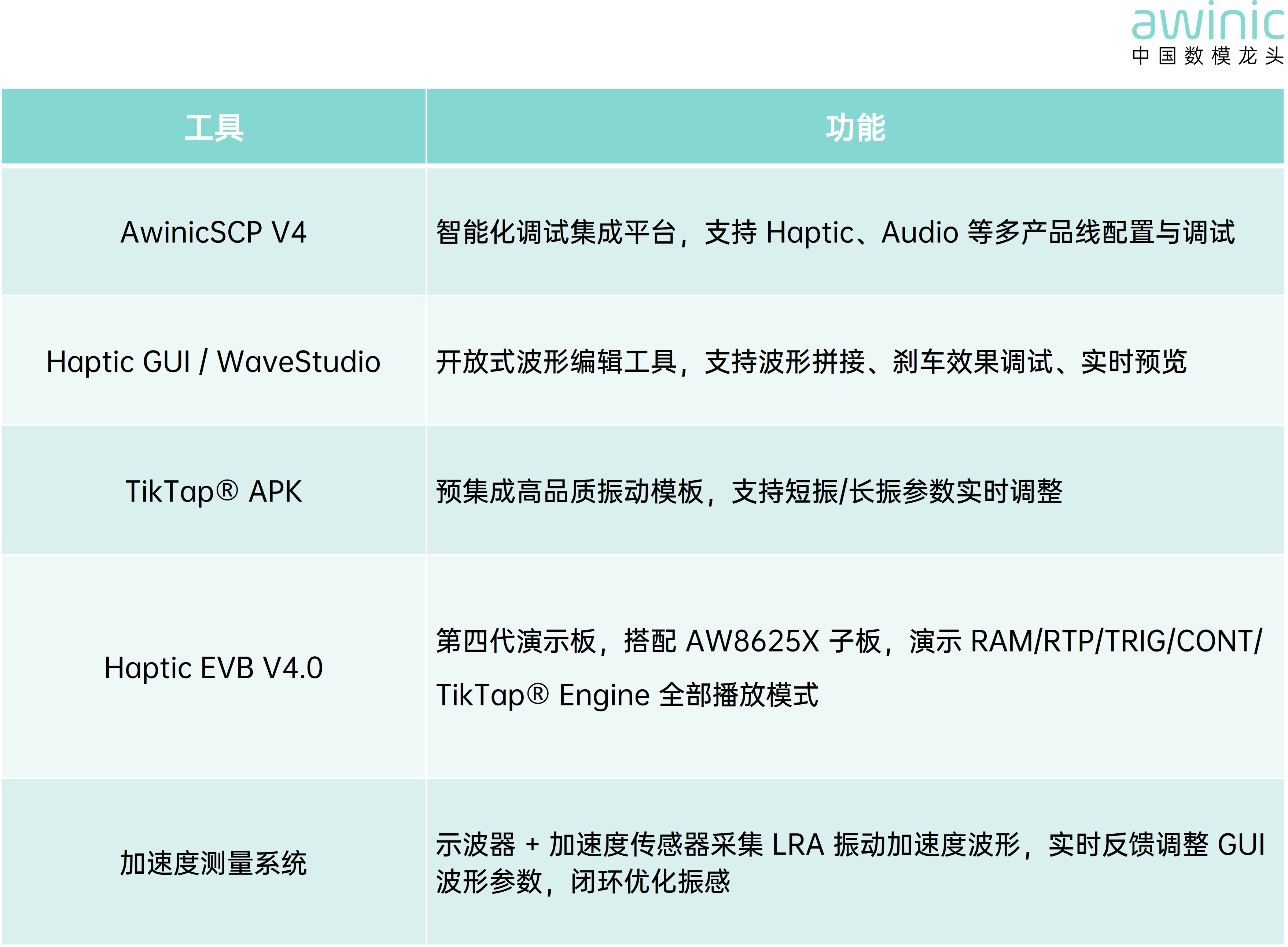
AwinicSCP V4 integrated debugging platform + Haptic GUI/WaveStudio waveform
editor, supporting real-time acceleration waveform display, online parameter
adjustment, and one-click waveform optimization.
Table 2 Supporting Software Tools
AWINIC Solution Highlights
· 0.2ms Ultra-Fast Haptic Response:
The AW86253 compresses the delay from click to haptic feedback to
sub-millisecond levels, far surpassing traditional solutions' 5~10ms,
significantly enhancing confirmation feedback in competitive FPS scenarios.
· Full-Scenario Haptic Coverage:
The AW86253 covers haptic feedback for left/right buttons, side buttons, and
palm rest areas with normal-voltage driving. The 0.2ms ultra-fast startup
combined with the AAE 3.0 Auto-Brake Engine delivers a uniform and crisp
vibration experience across all scenarios. Meanwhile, the AW86570 enables
contactless press detection for left/right buttons via magnetic sensing,
addressing both vibration feedback and trigger detection.
· Full-Chain Low-Power Management:
From linear charging, USB PD, OVP protection to load switches, total standby
leakage in ship mode is as low as μA-level (approximately 40μA), helping
wireless mice achieve battery life exceeding 90 hours.
· High-Precision Magnetic Sensing Detection:
The AW86570 offers 14-bit resolution and 50kHz sampling rate with 0.1ms fast
power-on. Paired with threshold interrupts, it enables scroll wheel rotation
detection and contactless magnetic side button triggering for gaming mice,
eliminating mechanical jitter and further enhancing operational precision.
· Immersive RGB Ambient Lighting Effects:
The AW21009 delivers personalized lighting experiences for gaming mice with
9-channel independent dimming and auto-breath modes. Its 12-bit PWM resolution
enables smooth gradients, while EMI noise reduction and auto power-saving
balance lighting performance with battery life.