Entering the AI
era, a new generation of lightweight AI recording devices—such as smart
recording cards and recording pods—has quickly become a standard productivity
tool in business meetings, education & training, legal compliance, and
media interviews. Their core advantages include portability, unobtrusiveness,
intelligent transcription, efficient organization, security, and reliability.
They help individuals and organizations achieve precise voice capture,
intelligent processing, secure storage, and efficient reuse of audio
information.
As AI-driven
portable recording terminals, smart recording cards transcend the functional
boundaries of traditional voice recorders. They integrate high-definition audio
capture, real-time transcription, multi-language translation, speaker
diarization (voiceprint differentiation), AI-powered key point extraction, and
data encryption. With their card-sized or bean-shaped miniature design, they
enable unobtrusive wearing and instant use, ensuring every conversation is clearly
recorded, properly managed, significantly reducing information loss and
organization costs, and ultimately improving communication and collaboration
efficiency.
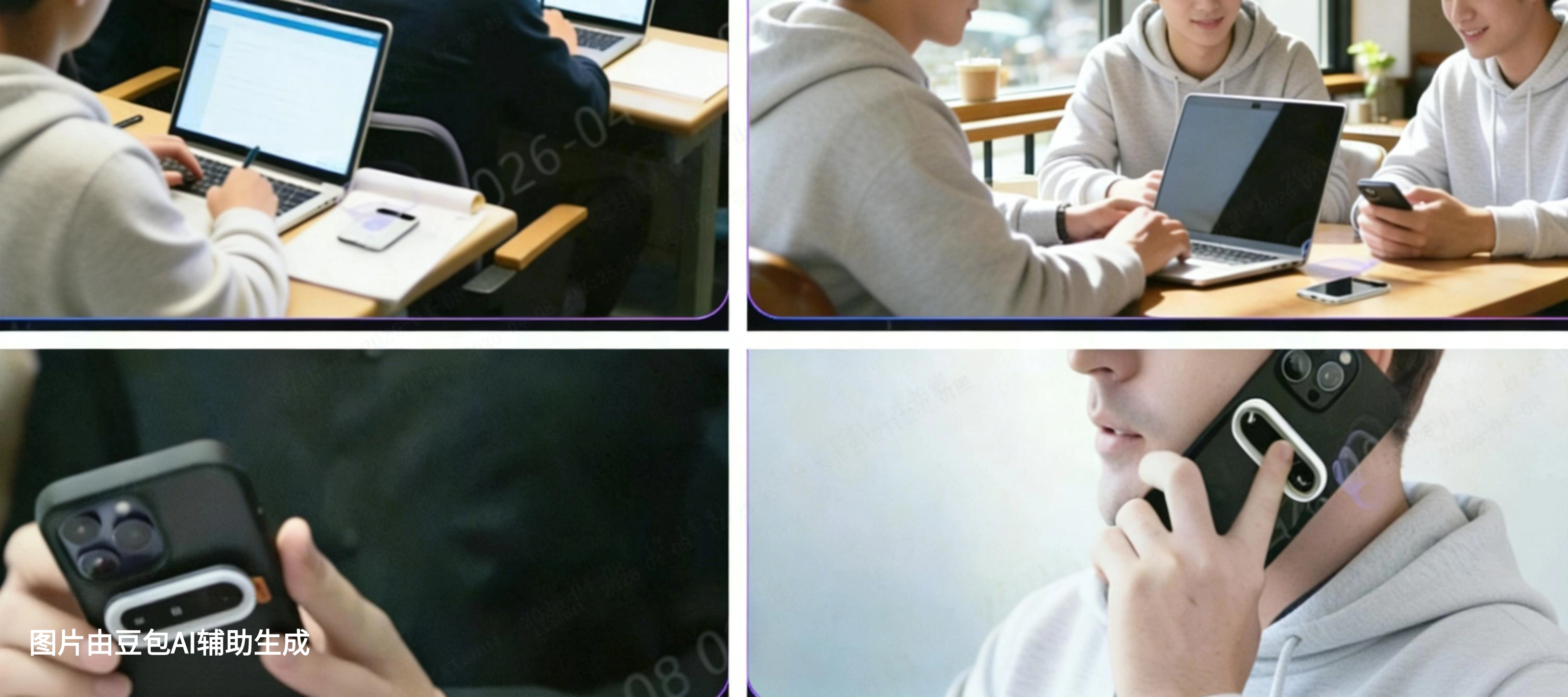
Figure 1: AI
Smart Recording Card Use Cases
In response to
this trend, AWINIC Technology has launched a smart recording card application
solution (as shown in Figure 2 below), offering a comprehensive product
portfolio for power management, intelligent detection, human-machine
interaction, and main control assistance.
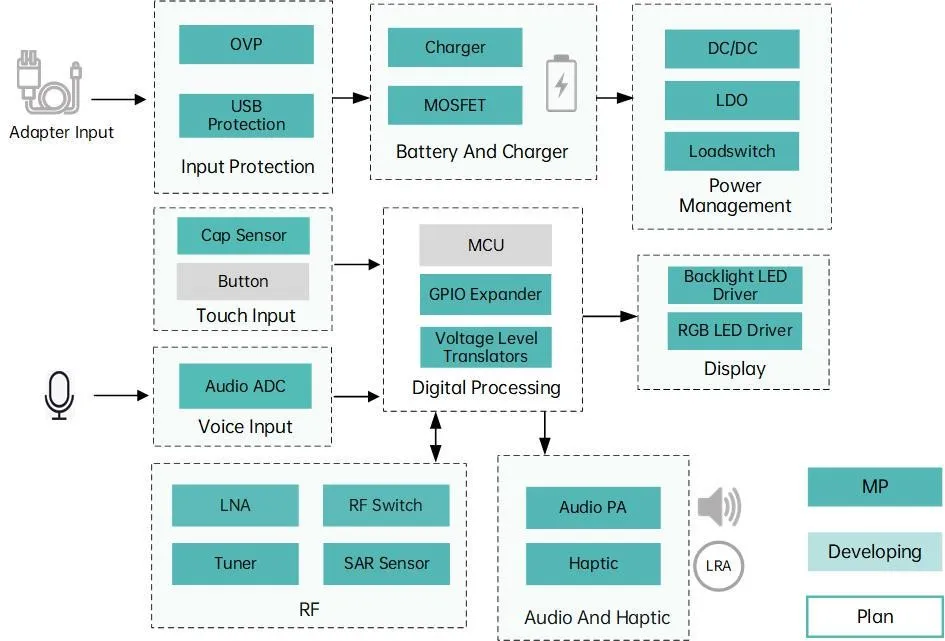
Figure 2: AWINIC
Smart Recording Card Application Solution
01 Comprehensive
Power Management Solution
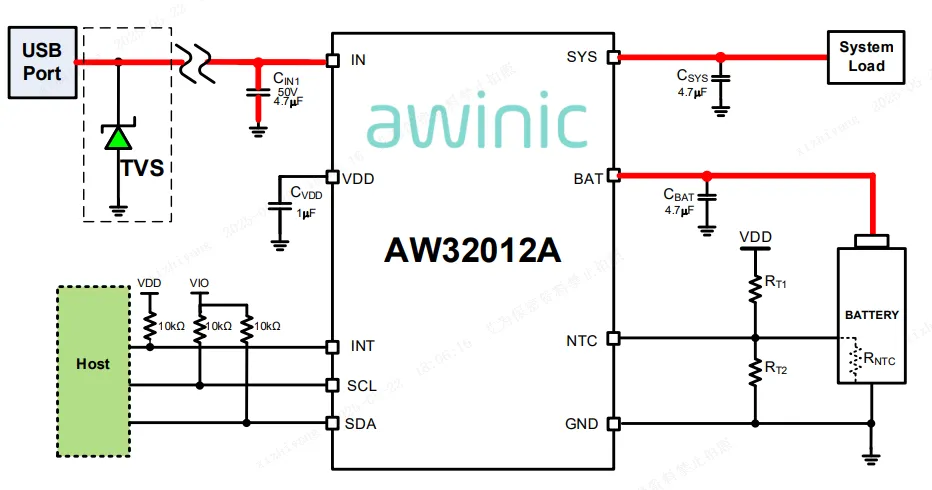
Figure 3:
AW32012A Typical Application Diagram
-
Single-cell
Li-ion/polymer linear charger with power path management
-
Input
voltage range: -5V to 28V, with high input over-voltage protection
-
Charging
current: configurable from 2mA to 500mA; charging voltage accuracy: ±0.5%
-
Ultra-low
quiescent current: ~5μA (battery standby current)
-
Supports
shipping mode, pre-charge, constant current/constant voltage, charge
termination control
-
Full
protection features: over-voltage, over-current, over-temperature, battery
reverse protection
-
Ultra-small
WLCSP (1.4mm × 1.4mm × 0.63mm, 9-ball package)
-
Suitable
for wearables, TWS earbuds, AI glasses, etc.
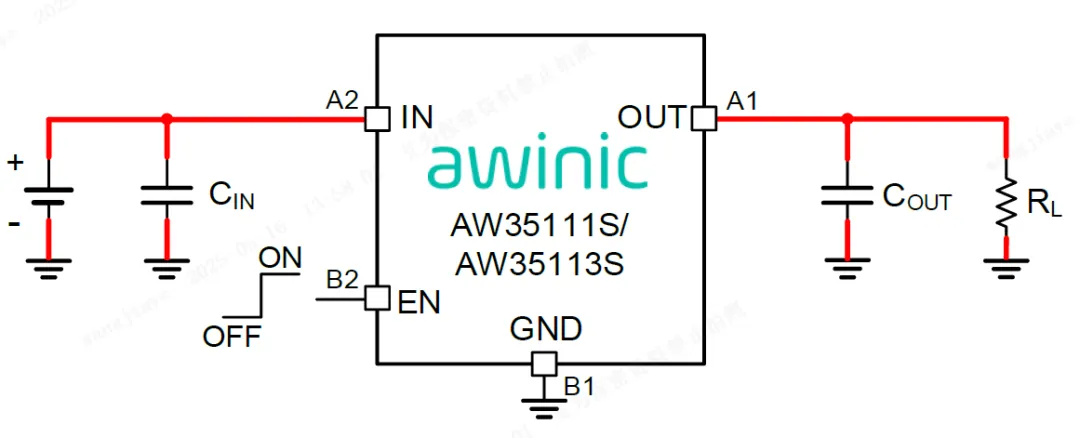
Figure 4:
AW35111S Typical Application Diagram
-
Single-channel
P-channel MOSFET load switch with slew rate control
-
Input
voltage: 1V to 5.5V; max continuous current: 2A
-
On-resistance:
typical 64mΩ at 3.3V
-
Fast
output discharge function prevents output from floating
-
Ultra-small
WLCSP (0.618mm × 0.618mm, 4-ball package)
02 Human-Machine
Interaction

Figure 5:
AW21104 Typical Application Diagram
-
4-channel
programmable RGBW LED driver
-
Independent
8-bit current control (0–25.5mA) and 8-bit PWM dimming
-
3
program execution engines for autonomous lighting effects
-
Auto
power-saving mode when outputs are idle
-
I2C
interface (1MHz); 4 selectable I2C addresses
-
Current
accuracy: ±5%; channel matching: ±2%
-
Supply
voltage: 2.7V–5.5V
-
Ultra-small
FOWLP (1.62mm × 1.22mm package)

Figure 6:
AW88084 Typical Application Diagram
-
Mono
digital-input smart Class-K audio amplifier
-
Supports
I2S/TDM digital audio interface; sampling rate: 8kHz–96kHz
-
Low
output noise: ~9μV; high power supply rejection ratio (PSRR)
-
Pop/click
suppression; excellent TDD noise immunity
-
Integrated
protection: short-circuit, over-temperature, under-voltage
-
I2C
control interface; minimal external components
-
Supply
voltage: 3.0V–5.5V; suitable for wearables and smart devices
03 Intelligent
Detection
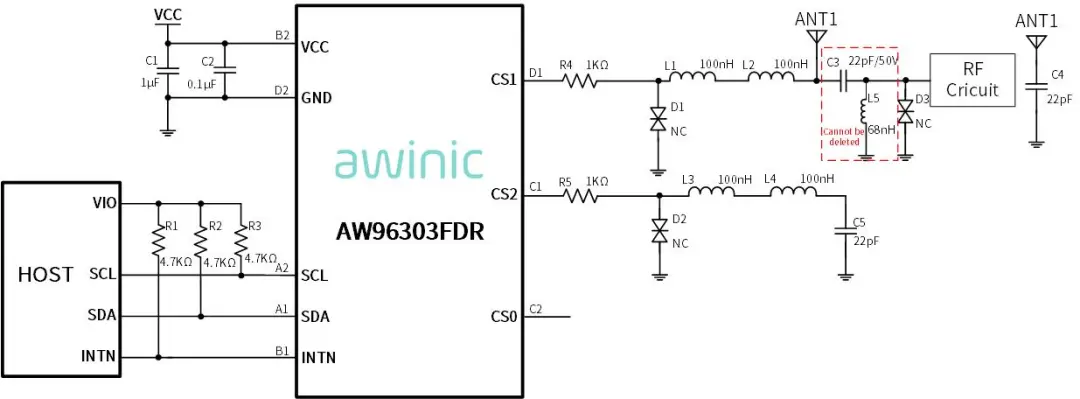
Figure 7:
AW96303 Typical Application Diagram
-
3-channel capacitive sensing
-
Self-capacitance/mutual
capacitance detection technology
-
Capacitance
measurement accuracy down to 0.52aF
-
Capacitance
offset compensation up to 440pF
-
Automatic
capacitance compensation
-
Adaptive
temperature compensation
-
Configurable
multiple judgment thresholds
-
Effective
water resistance with Dayu Waterproof Algorithm®
-
1.2V/1.8V,
400kHz I2C interface
-
Low power modes:
-
Active
mode: 18.1μA
-
Doze
mode: 9.7μA
-
Sleep
mode: 7.9μA
-
Deep-sleep
mode: 6.1μA
-
Power
supply range: 1.65V–3.6V
-
Compact
FCDFN (1.6mm × 1.0mm, 8-lead package)

Figure 8:
AW89403 Typical Application Diagram
-
4-channel
high-performance audio ADC (Analog-to-Digital Converter)
-
24-bit
resolution; max sampling rate: 96kHz
-
High
SNR: typical 105dB (sum off); THD+N: typical -95dB
-
Programmable
gain: -6dB to 36dB; digital volume control
-
Supports
differential/single-ended inputs; programmable microphone bias
-
I2C
control interface and I2S/TDM audio output
-
Suitable
for voice capture, smart audio, robotics, etc.
04 Main Control
Assistance
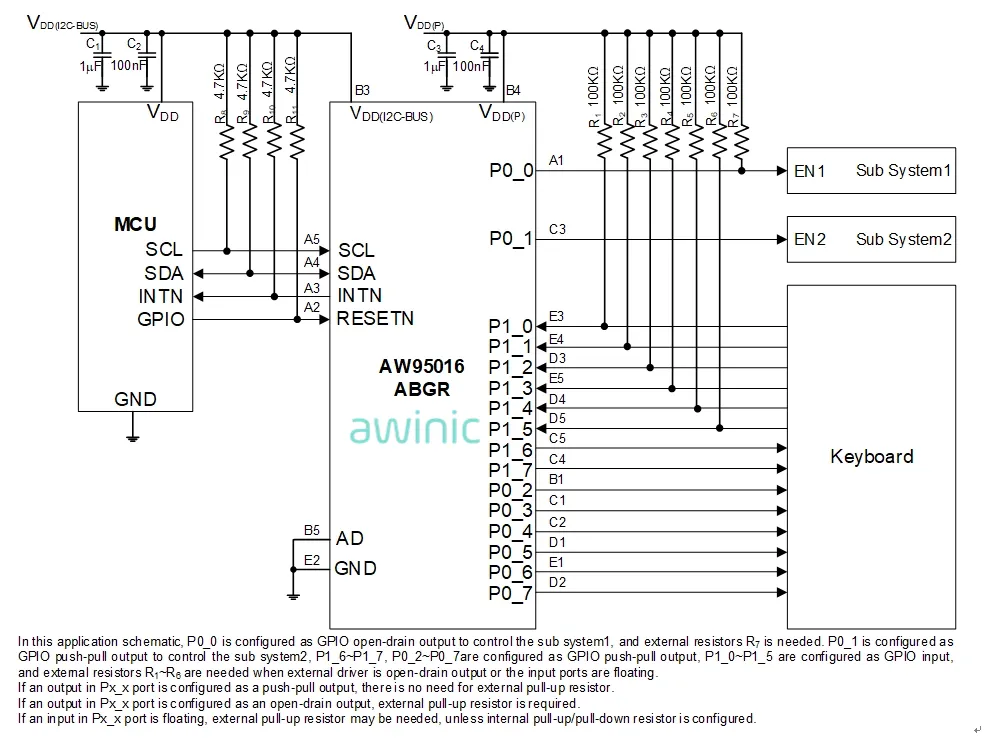
Figure 9: AW95016A Typical Application Diagram
-
16-channel
general-purpose GPIO expander controller
-
Dual
power supply: independent supply for core/GPIO and I2C bus
-
Each
channel configurable as input/output with programmable drive strength
-
I2C/SMBus
interface (1MHz); open-drain interrupt output
-
Built-in
configurable pull-up/pull-down resistors
-
Integrated
ESD protection; low-power design
-
Compact
BGA (3.0mm × 3.0mm × 0.86mm, 24-ball package)
-
For
I/O expansion in consumer electronics, industrial, automotive, etc.
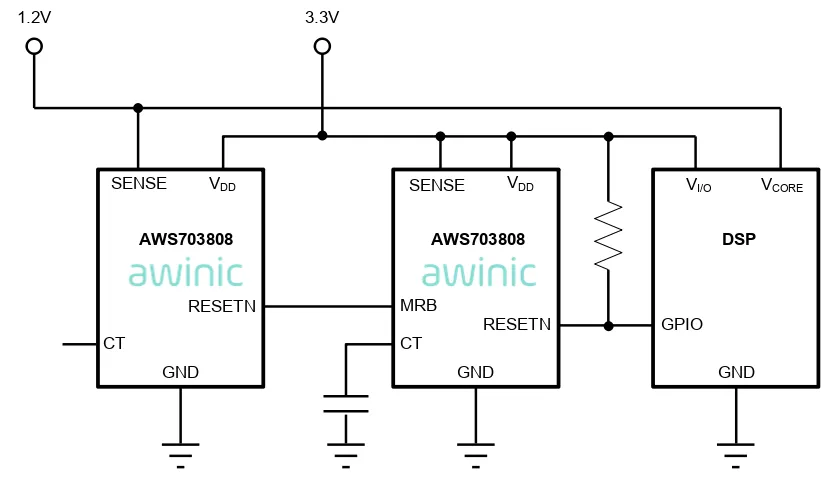
Figure 10:
AWS703808 Typical Application Diagram
-
Low-power,
programmable delay power monitor/reset IC
-
Operating
voltage range: 1.0V–5.5V; ensures valid reset output even at low supply
voltages
-
Reset
threshold voltage and reset delay time are programmable
-
Ultra-low
operating current: typically < 2μA
-
Debounced
manual reset input (TTL/CMOS compatible)
-
Supports
power fail / low battery warning detection
-
Miniature
WBSOT23-6L (1.25mm) package, suitable for portable and battery-powered
devices
As digital
office adoption and AI technology continue to spread, lightweight, intelligent,
all-in-one smart recording devices are transforming from professional tools
into everyday necessities. In the future, smart recording cards will further
deepen their AI capabilities and scenario adaptability, becoming reliable
partners for efficient communication, intelligent recording, compliance
management, and knowledge retention in the digital age—with more stable
performance, stronger security mechanisms, and smoother collaborative
experiences. AWINIC Technology will continue to launch more suitable products
to help empower digital transformation across all industries.