Walkie-Talkie Market Overview
A walkie-talkie is a two-way mobile communication device suitable for relatively fixed scenarios with frequent communication needs, and it also serves as a terminal device for trunked communication. Featuring simple operation, flexibility, speed, and low cost, walkie-talkies are widely used in various scenarios and businesses such as public security, production scheduling, and engineering construction. According to different product types, walkie-talkies can be divided into analog walkie-talkies and digital walkie-talkies.
-
Analog Walkie-Talkies: These devices modulate voice and signals onto the walkie-talkie’s carrier frequency in the form of continuous waves, using electromagnetic waves to transmit analog electrical signals of sound, thereby enabling real-time dialogue within a certain range.
-
Digital Walkie-Talkies: These convert voice signals into digital form and transmit them as digital codes. Their basic principle is to first convert analog voice into digital signals, process the digital signals, and then modulate them onto radio frequencies for transmission.
In addition to the above-mentioned digital walkie-talkies, there is another type of public network walkie-talkie in the communication field. It can transmit voice and data with the support of public networks. Similar to digital walkie-talkies, it uses digital signal transmission, offering strong anti-interference capabilities and clear voice quality.
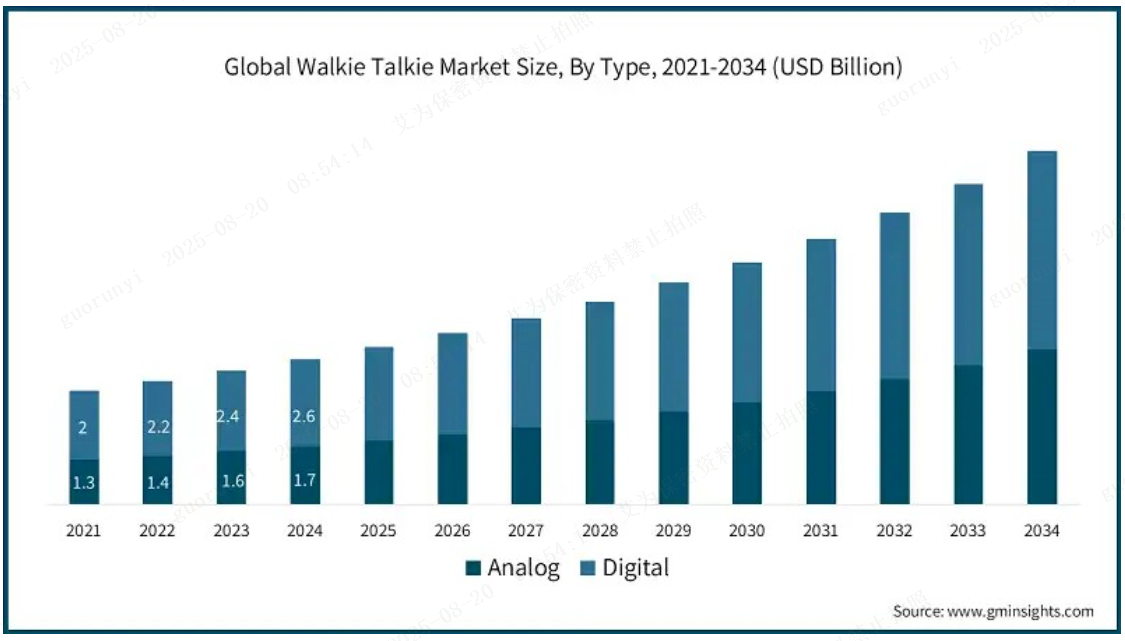
By 2024, the global walkie-talkie market size had reached 4.3 billion US dollars, and it is expected to grow at a compound annual growth rate (CAGR) of 9.4% from 2025 to 2034. Unlike analog walkie-talkies, digital walkie-talkies transmit users’ voices in digital form, boasting better audio quality and digital error correction functions. Leveraging these advantages, digital walkie-talkies have been gaining increasing competitiveness in the market; it is projected that by 2034, the digital walkie-talkie market will exceed 5.5 billion US dollars.
Figure 1: Walkie-Talkie Market Statistics (released by Gminsights in February 2025)
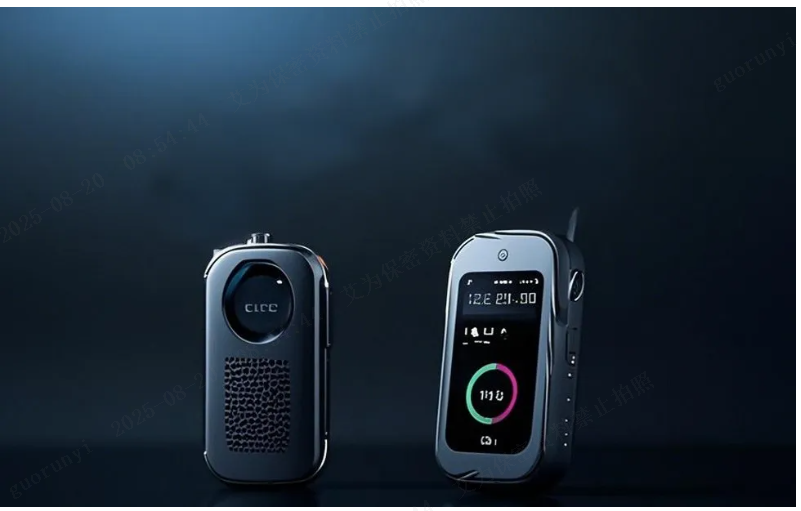
In January 2025, a leading domestic communication manufacturer launched a sports walkie-talkie. Specifically designed for skiing, cycling, and other aerobic sports, it is also the first of its kind launched in China. This walkie-talkie supports 4G all-network access, enabling nationwide 5,000-kilometer intercom. Equipped with an independent noise-canceling chip and adopting Awinic Class K audio PA for audio processing, it ensures clear sound for users even when moving at a speed of 60 km/h.
Figure 2: Analog Walkie-Talkie Product Image
Naturally, this sports walkie-talkie is also empowered by Awinic products, with a total of 5 types of Awinic products applied in it:
-
Awinic breathing light driver chips are used to power the dot-matrix digital display screen;
-
Awinic Class K audio amplifiers drive the speaker to produce clear human voices;
-
Analog switches are employed in the internal functional circuit to switch audio analog signals to the main control chip;
-
Awinic high-performance LDOs supply power to various functional modules;
-
An Awinic Class AB audio power amplifier is used to drive Type-C headphones.
Introduction to These Chips
1. Awinic Breathing Light Driver Chip
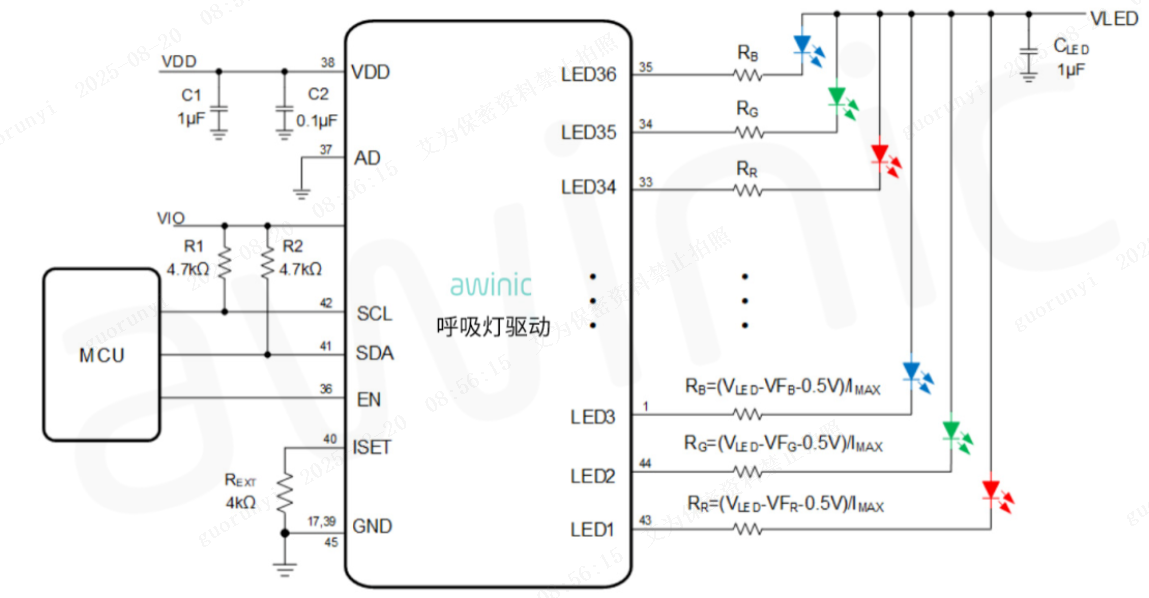
Awinic’s 36-channel direct-drive LED driver chip can realize clear display of single-color dot-matrix and brilliant dynamic effects such as RGB colorful breathing. In this product, it drives 25 single-color LED lights; combined with a light-shielding structure, it enables precise digital display and brightness adjustment of pattern effects. The main control communicates with it via the I2C bus, reducing the consumption of platform IO resources. Its key features are as follows:
-
36-channel RGB LED driver
-
Global 256-level DC current configuration
-
Independent 256-level PWM dimming
-
Independent 256-level current for color mixing
-
High-precision current sinks
-
Inter-device error: ±5%
-
Inter-channel error: ±5%
-
Flexible LED lighting mode control
-
Automatic breathing light effect, no need for main control MCU participation
-
Open/short circuit detection for each channel LED
-
Over-temperature protection
-
400kHz I²C interface with four optional addresses
-
Power supply voltage: 2.7V ~ 5.5V
-
Package: QFN-44L 5mm×5mm×0.75mm
It is reported that this type of breathing light driver chip is not only used in sports walkie-talkies but also has achieved mature and wide application in products such as mobile phones and financial payment terminals.
Figure 3: Typical Application Diagram of Breathing Light Driver
2. Class K Audio Amplifier
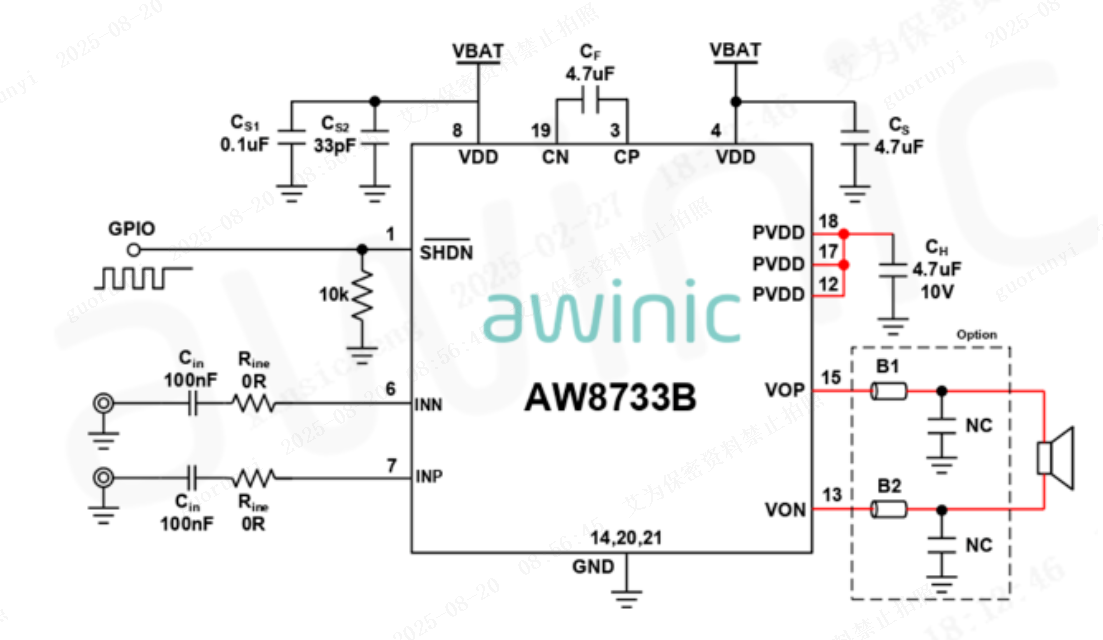
Awinic Class K audio amplifier has a built-in charge pump converter that can generate a 6.5V power supply voltage. It also integrates the NCN function, which can automatically adjust the system gain when detecting clipping distortion of the output signal. This protects the speaker from damage under high-power conditions and provides users with the most comfortable listening experience. Its key features are as follows:
-
Operating voltage range: 2.5V ~ 5.5V
-
Quiescent current: 7.5mA
-
Shutdown current: 0.1μA
-
Output power: 2W @ 4.2V
-
Ultra-low noise: 29μV
-
One-wire pulse control method
-
4 gain configurations: 12dB / 16dB / 24dB / 27.5dB
-
NCN anti-clipping function
-
Package: QFN-20L 3mm × 3mm × 0.75mm
Figure 4: Typical Application Diagram of Differential Input for Audio PA
3. Class AB Audio Power Amplifier
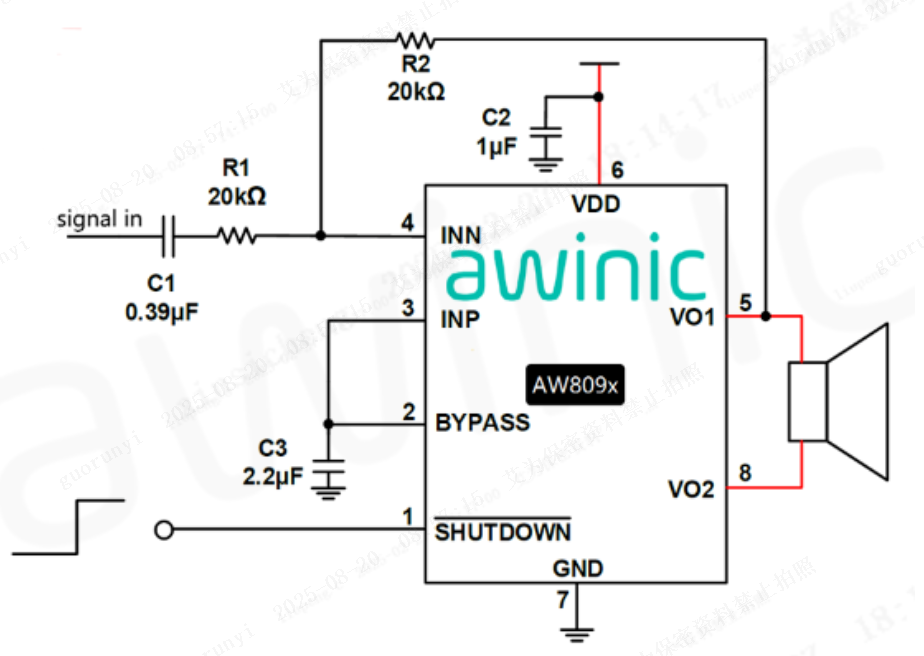
When users interact via voice using headphones, an audio PA is required to drive the headphones, which demands the audio PA to have minimal EMI and output noise. Awinic’s new-generation Class AB audio power amplifier adopts an advanced process, with noise as low as 17μV and high loop matching, effectively improving the stability of audio signal transmission. Compared with similar products on the market, its offset voltage has been optimized by 80%, and there is no EMI interference. It has a built-in Thermal AGC, ensuring stable sound output even in harsh ambient temperatures.
This audio power amplifier is widely applicable to various industrial & IoT markets such as IP cameras (IPC), walkie-talkies, and robotic vacuum cleaners.
-
Input voltage: 2.5V ~ 5.5V
-
Maximum output power: 2W (5V, 6Ω)
-
Quiescent current: 2.45mA
-
Offset voltage: ±10mV
-
Noise: 17μV
-
Power supply rejection ratio (PSRR): 85dB
-
Package: MSOP8 (easier for soldering and replacement)
Figure 5: Typical Application Diagram of AW809x
4. High-Performance LDO
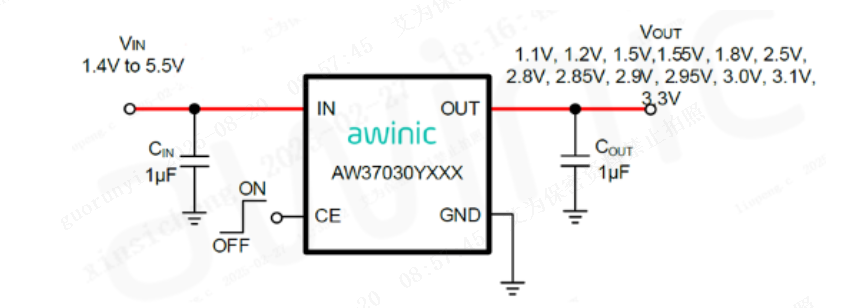
The AW37030 series LDO is a low-dropout, high-PSRR, and low-noise LDO. With its rich range of output voltage models and higher reliability, this device has been applied in various products.
-
Supply voltage range: 1.4V ~ 5.5V
-
Fixed output current: 300mA
-
Power supply rejection ratio (PSRR): 90dB @ 1kHz (Iout=30mA, 1.8V output)
-
Noise: 33μV (Iout=30mA, 1.8V output)
-
Quiescent current: 50μA
-
Shutdown current: 0.1μA
-
Over-temperature protection, with built-in Auto discharge function
-
Packages: DFN1mm×1mm×0.37mm-4L, SOT23-5
Beyond the AW37030 series, Awinic also offers a wider range of LDO series (such as low-power, high-voltage, high-current, and automotive-grade LDOs) for selection.
Figure 6: Typical Application Diagram of AW37030 Series
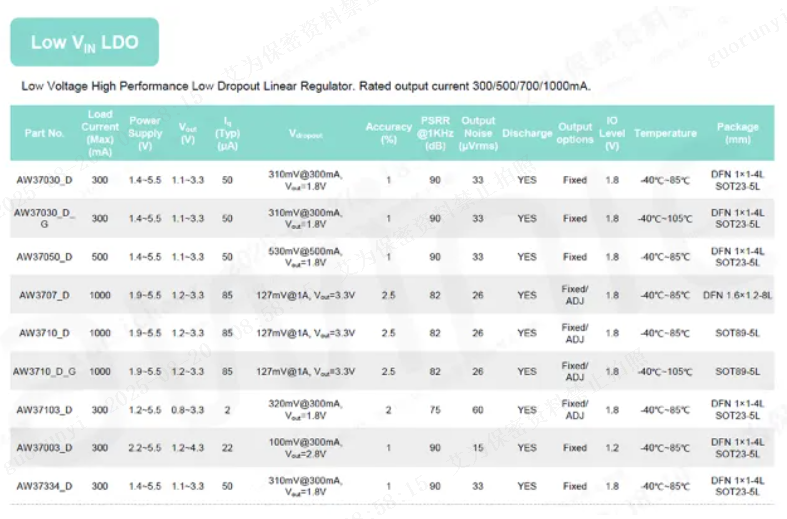
Figure 7: Product Model Reference Diagram
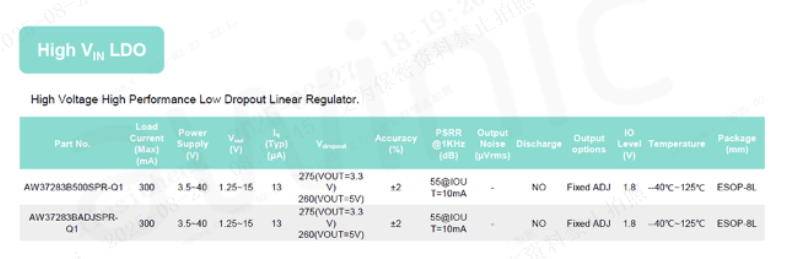
Figure 8: Product Model Reference Diagram
5. Analog Switch
The AW35301STR is a single-channel single-pole double-throw (SPDT) analog switch with bidirectional signal transmission capability. Adopting a transmission gate structure, this chip features excellent linearity and low distortion. Similar to mechanical switches, it can turn on and off transmission paths. For platforms with only one microphone input and analog output interface but two or more peripherals, analog switches can be used to select analog signals. The application block diagram is as follows:
Figure 9: Demonstration Diagram of Analog Switch
Features of the analog switch:
-
Supply voltage range: 1.8V ~ 5.5V
-
On-resistance: 3Ω @ V+=4.5V
-
-3dB bandwidth: 400MHz
-
Shutdown isolation: -50dB @ 10MHz
-
Rail-to-rail support
-
Break-before-make feature
-
Package: SOT363-6L (SC70-6)
Awinic’s Applications in Walkie-Talkies
In addition to the 5 types of products mentioned above, Awinic also offers other products (as shown in the block diagram below) that can be applied in walkie-talkies.
Figure 10: Walkie-Talkie Application Block Diagram
Conclusion
In 2025, the walkie-talkie industry continues to exhibit significant development trends and technological innovations. These changes not only enhance the functionality and user experience of walkie-talkies but also drive their application across various industries. Awinic will continue to deepen its efforts in various product lines, striving to create high-quality digital-analog hybrid chips, power management chips, and signal chain chips, and bring more and better experiences to the walkie-talkie market.
Some images in this article are sourced from the Internet, and their copyright belongs to the original authors. In case of copyright issues, please contact the background of the "Awinic Home" WeChat official account to negotiate relevant matters.