

I. Revolutionary Innovation in Smartphone Attachable Lens Imaging
Smartphone imaging has moved beyond the pixel race; optical bottlenecks, telephoto mechanical defects, and algorithmic barriers now constrain professional shooting capabilities. Huawei Ruiying Z10 breaks away from integrated body imaging solutions, leveragingmodular optical reconstruction, self-developed mechanical innovation, and coordinated software-hardware scheduling—three major innovations—to reshape the form of portable professional imaging.
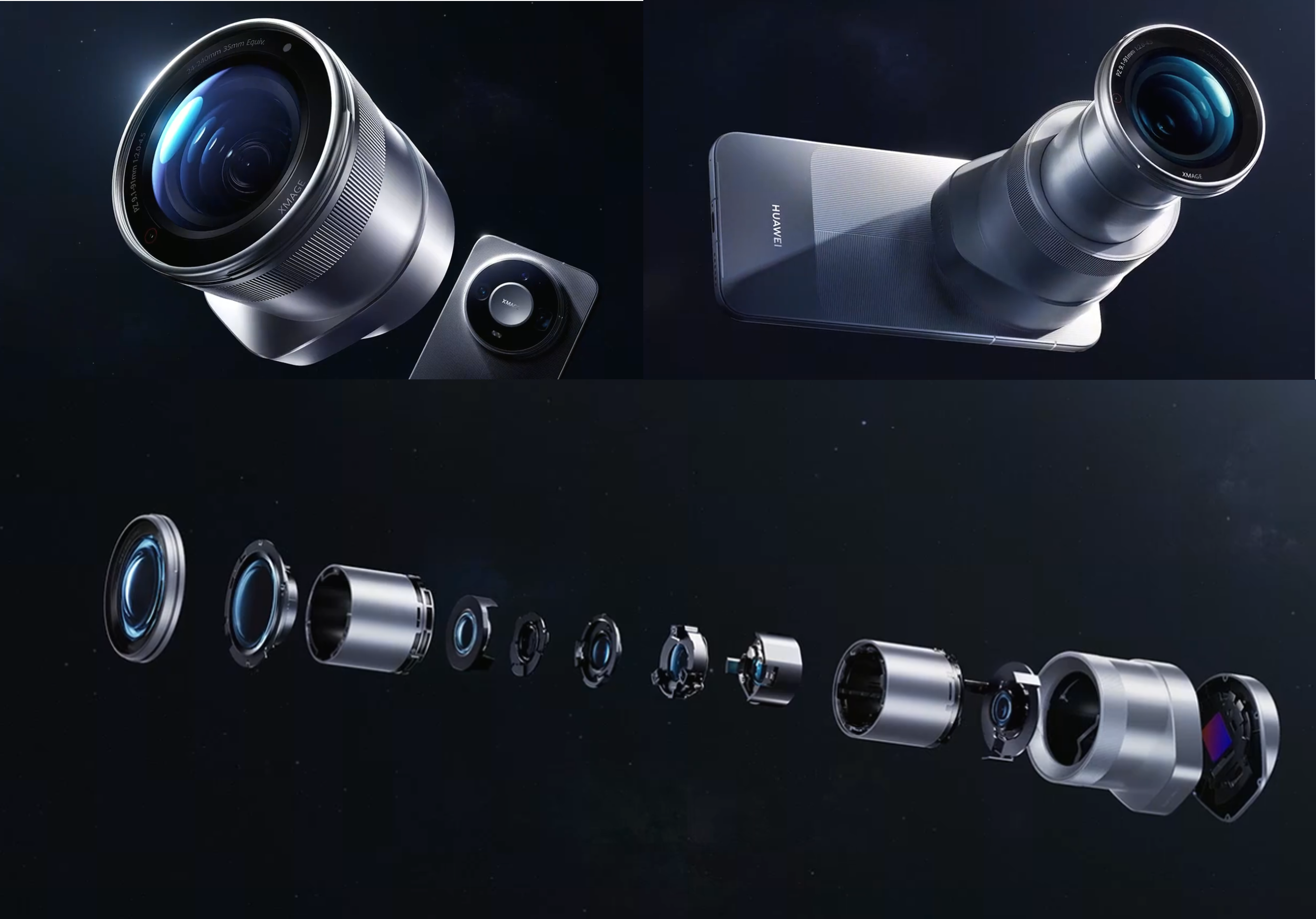
Huawei Ruiying Z10(Image Source: Huawei Official Website)
Equipped on the optical end with a 1 -inch RYYB ultra-sensitive sensor, based on XMAGE underlying tuning, it achieves 24-240mm full-range 10 x pure optical continuous zoom, with no cropping loss in image quality throughout the process. The third-generation Red Maple True Color algorithm enhances low-light light intake, improving noise and color cast issues in telephoto night scenes, delivering a transparent texture close to that of professional cameras.
The mechanical aspect is a core advantage. Ruiying Z10 is equipped with a high-precision stepless electric zoom motor; its micro-transmission structure enables millisecond focusing and smooth zooming, eliminating jitter and frame discontinuities. The magnetic locking buckle supports quick assembly and disassembly, balancing lightweight design with structural stability.
Relying on a coordinated software-hardware architecture, the external module independently captures raw optical images, while the smartphone's imaging computing engine performs real-time tuning, achieving deep linkage between hardware and AI . Without needing heavy cameras, smartphones can break through native imaging limits, opening a new track for lightweight professional photography.
II. Differences Between Smartphone Imaging and DSLR Imaging
To write this technical article well, we invited Qiao Ba, a senior photographer from awinic,——to help us interpret the positioning of these two types of equipment from a creative perspective.
Hello everyone, I am Qiao Ba:
I am delighted to accept the column invitation from colleagues in the Motion Control Division and share with everyone some insights on smartphone imaging versus DSLR imaging. Having worked in imaging for twenty years, I used to always stuff my big bag with a DSLR and several lenses when going out. After Huawei released the latest Mate 90 series, as a heavy electronics enthusiast, I couldn't resist buying one too. Now when working outdoors, the DSLR is still there, but my bag often includes an extra phone, and when necessary, I bring the Ruiying Z10. Many people love to compare smartphone attachable lenses with DSLRs, insisting on determining which is superior. In my view, the two need not be opposed; rather, they are best used together.
First, regarding the foundation, Ruiying Z10 's 1 -inch sensor is smaller than a full-frame DSLR. In complex low-light scenarios, DSLRs offer stronger dynamic range, detail, and RAW post-processing space;Z10 excels in continuous optical telephoto, offering flexibility for capturing distant subjects. In creation, they can be used in combination: DSLRs for large scenes, and the external module for distant close-ups, providing complementary materials.
Color logic各有 characteristics: DSLRs deliver realistic straight-out images, relying on RAW to preserve post-processing space;Z10 , tuned by XMAGE , offers comfortable straight-out colors, allowing immediate preview and sharing after shooting.
Operational experiences complement each other. DSLR physical controls suit detailed creation;Z10 touch screen + electric zoom makes capturing behind-the-scenes moments and distant close-ups more efficient, saving the trouble of frequently changing telephoto lenses.
Both have obvious shortcomings: limited by sensor size,Z10 Equipment does not have a replacement relationship; DSLRs guard the upper limit of imaging, while modular external units supplement portable snapshot capabilities.The fusion of old and new imaging technologies and technological equity allow creators to enjoy the pleasure of shooting at any time.
III. awinic: In this field of imaging drivers “dominated by Japanese companies” , slowly growing our own roots
For a long time, the smartphone imaging VCM motor driver IC market has been dominated by overseas manufacturers, with话语权 over high-end AFandOIS solutions held by Japanese, European, and American chip enterprises, limiting domestic terminal selection and forcing a passive product iteration rhythm.
awinic has deeply cultivated VCM Driving for a decade,2020 AFOIS
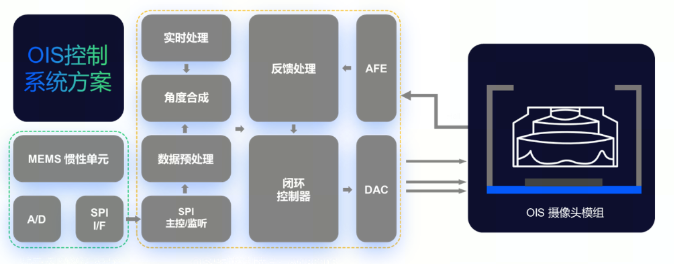
OIS
AW86026 16 ADC+13 DAC, position detection accuracy ±1μm, current control error≤1.5%, with hardware specifications benchmarked against leading overseas solutions.
Chips embed self-developed algorithms
Not only supplying bare chips, but also providing integrated hardware and software solutions.FTP Closed-loop focusing algorithms achieve fast, accurate, and stable focusing; self-developed “Jingdou Cloud” image stabilization algorithm, stabilization angle ±5°, supporting 6 -axis image stabilization; the latest generation of intelligent“Night Demon”image stabilization algorithm is poised for launch.
System-level low-power optimization
Dynamic voltage regulation schemes reduce OIS power consumption by 30% or more. Combined with mass-production optimizations such as inter-frame centering and motor friction compensation, device heating is alleviated.
Forward-looking layout for next-generation motors
Launched China's first SMA shape memory alloy motor driver chip; the micro-gimbal ±5° solution has been successfully mass-produced, assisting terminals in launching 6 -axis image stabilization products, making it one of the few IC manufacturers in China with mass production experience in micro-gimbals.
awinic has forged a path for domestic chips characterized by “following, running alongside, and leading in specific areas” , continuously breaking the monopoly of overseas manufacturers in the high-end imaging driver field.
IV. Customized Imaging Solutions: awinic “Chip + Algorithm” One-stop Imaging Motion Control Solution
Optical Image Stabilization (OIS) technology, although widely applied, sees most solutions focusing solely on single hardware or algorithm segments, making it difficult to form a closed-loop advantage.awinic Electronics has deeply cultivated imaging motion control systems, creating an integrated full-set“Chip+Algorithm”OISsolution, possessing rich capabilities for developing customized imaging solutions.
In addition toOISdriver chips and“Jingdou Cloud”In addition to algorithms, awinic has built a comprehensive portfolio of camera motor driver products coveringVCM(voice coil, leaf spring, ball bearing),SMA(shape memory alloy),Piezo(piezoelectric), and more, encompassing imaging motion control solutions such as autofocus (AF), optical image stabilization (OIS), variable aperture (VA), and continuous optical zoom (ZOOM), providing end manufacturers with one-stop customized solutions. Through deep collaboration with motor manufacturers, camera module vendors, and end customers, the awinic Motion Control Division possesses the experience and capability to support the development of external lens application solutions.


沪ICP备10011954号 |

沪公网安备 31011202011955号
