

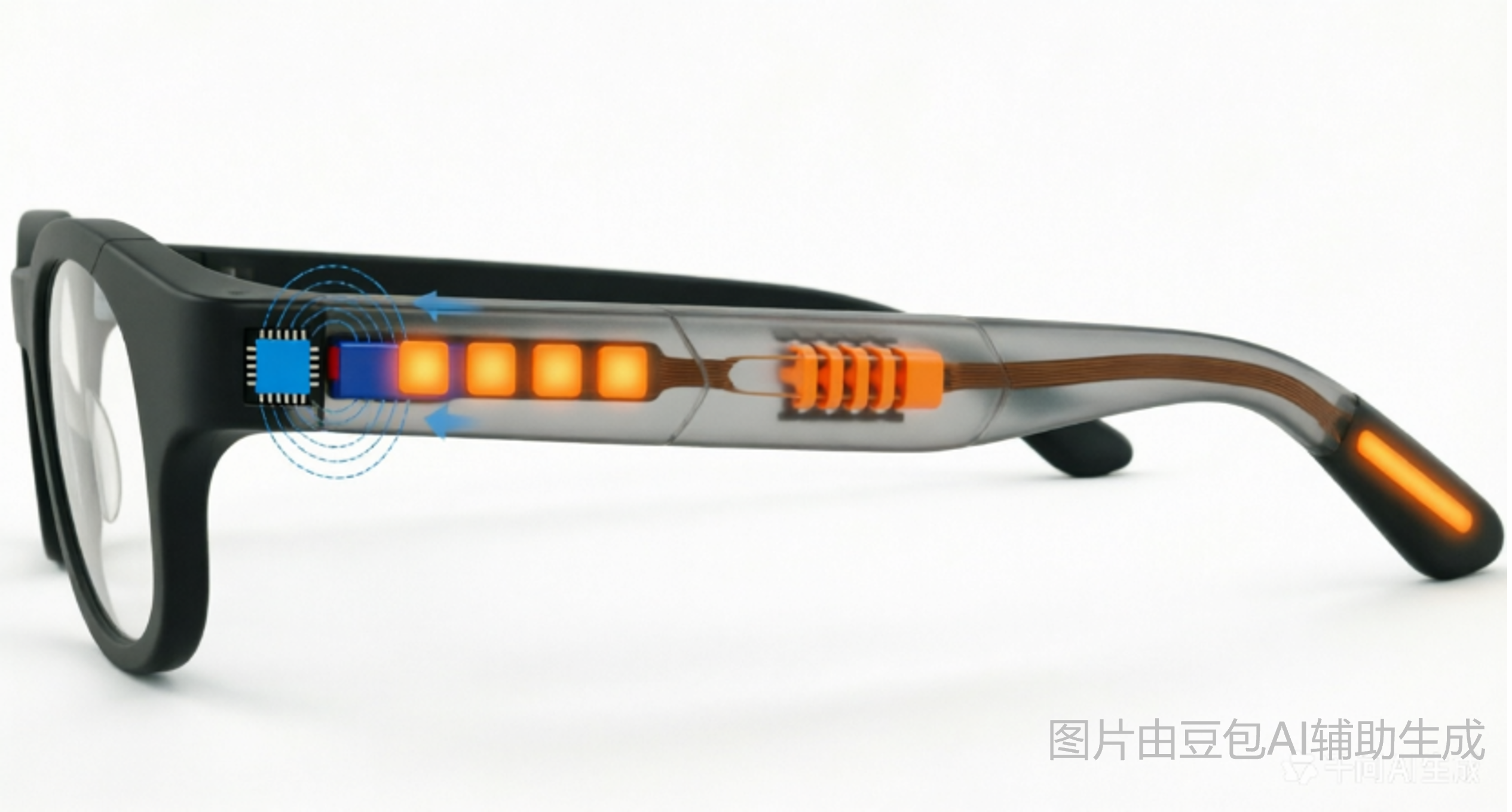
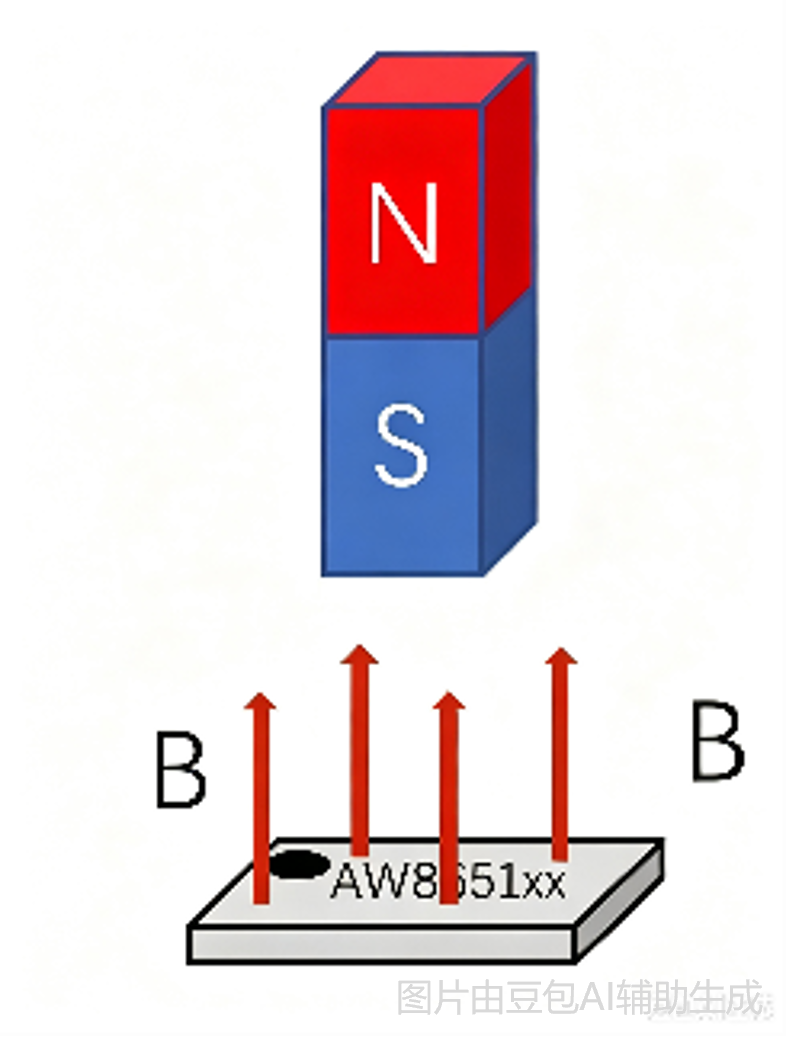
Figure 1.2 Hall Effect Sensing
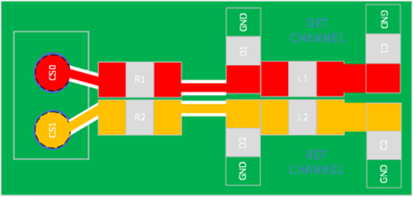
Figure1.3 Wear Detection Electrodes
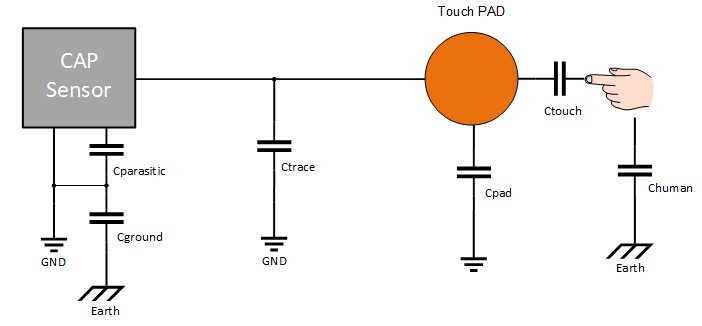
Figure1.4 Capacitive Detection

Part.1 Capacitive+and Pressure-Sensitive 2-in-1: Single-Electrode Dual-Mode Interaction
Hardware Reuse Advantage: The same chip simultaneously handlestouch positioningandpressure detection, eliminating the need for an additional pressure-sensing chip.
Algorithm Synergy Advantage: The system first confirms finger touch presence via capacitive signals, then wakes up pressure detection for force analysis, forming a"touch+force"dual-verification mechanism, fundamentally preventing non-contact false triggers. Light pressure locks the target while scrolling, and heavy pressure confirms entry, overlaying two interaction dimensions on the same physical area.
Structural Advantage: All functions are implemented via hidden electrodes inside the temple arms, requiring no mechanical openings, directly supporting fully sealed waterproof designs, while avoidingmechanical wear issues associated with traditional micro-switches.
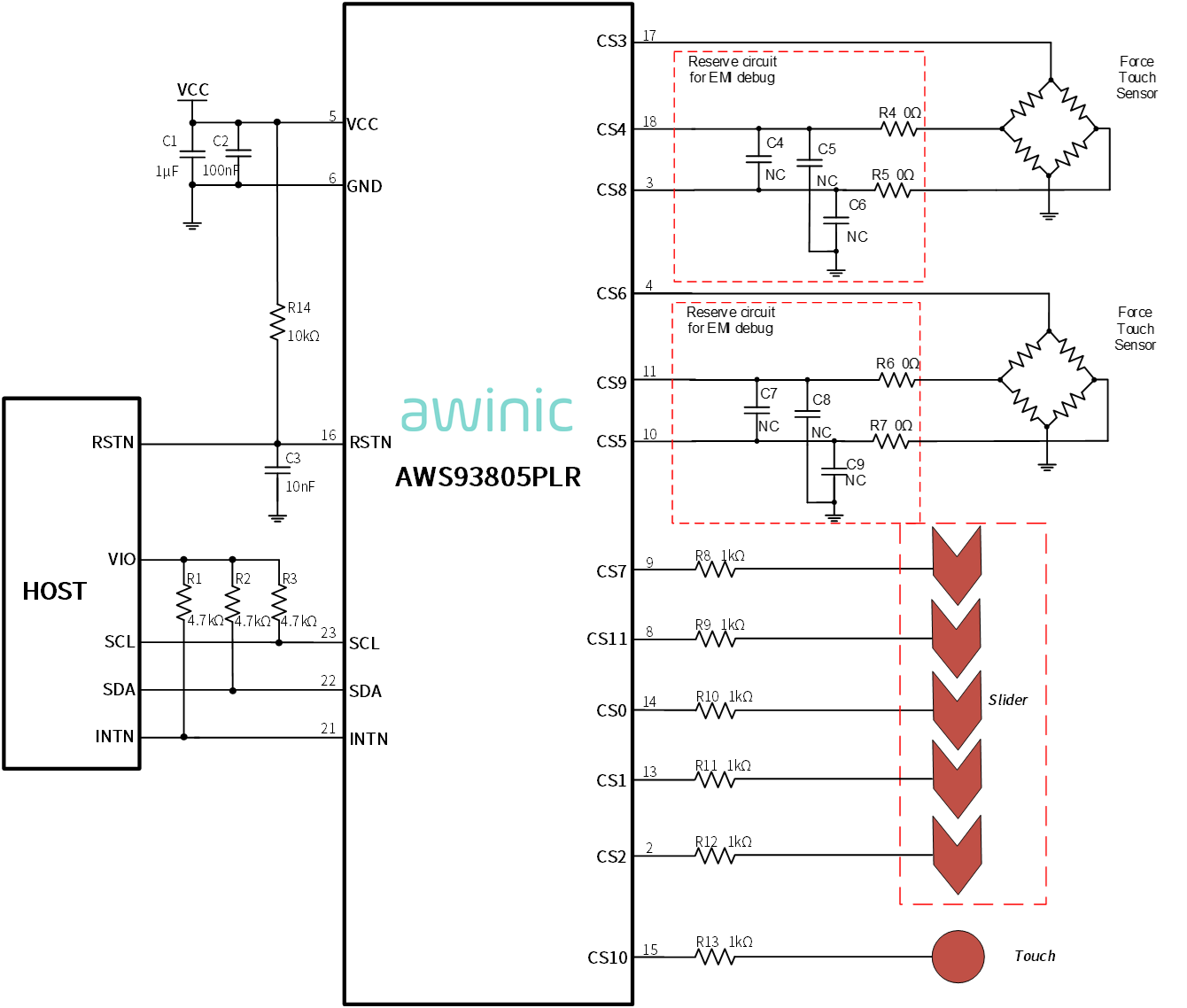
Figure2 AWS93805PLR Capacitive+and Pressure-Sensitive 2-in-1 Typical Application Block Diagram
Part.2 Capacitive Detection Technology: High-Sensitivity Sliding Control and Intelligent Wear Sensing
2.1 Temple Arm Sliding Touch Control
Deployingmulti-channel capacitive sensor arraysin the temple arm area to detect gesture types. Addressing signal attenuation caused by the curved structure, thin bezels, and multi-layer coatings of smart glasses, core technical highlights include:
High SensitivityAFEFront-end: awinic capacitive detection technology achieves resolution at theaFlevel, supporting stable touch response through plastic housings of2mmor more.
Adaptive Baseline Tracking Algorithm: Real-time monitoring of environmental capacitance baseline changes to eliminate slow drift caused by prolonged wearing, ensuring continuous precision of sliding trajectories.
Wet-hand sliding response mechanism: Dayu Waterproofing2.0algorithm, upgraded with multi-dimensional feature extraction functions to real-time extract signal change trends, amplitude variations, and other information, ensuring signals are not affected by residual water stains. Actual testing shows wet-hand touch success rate reaches95%or above.
Performance Metrics: Minimum touch response latency <2ms, Standby current <10μA.
2.2 Wearing Detection and Dynamic Waterproofing Strategy
Wearing detection is based onhuman body coupling capacitance effect. Sensors at the ear side and temple can identify stable wearing status signals, achieving automatic wake-up upon wearing and automatic sleep upon removal. The solution mainly supports the following functions:
Power-on upon wearing function: Equipped with awinic's innovative‘TouchSense’algorithm, the system can lock onto the true capacitance baseline in real-time like an‘intelligent radar’. It maintains normal operation across various application scenarios without cumbersome recalibration processes. Its power-on wearing success rate reaches98%or above.
Waterproofing while wearing function: Utilizes data features output by the Dayu Waterproofing2.0algorithm to adjust the baseline in real-time, enhancing environmental adaptability. This solution has been applied in multiple smart glasses projects, with actual testing showing a wearing success rate in water and sweat scenarios reaching95%or above.
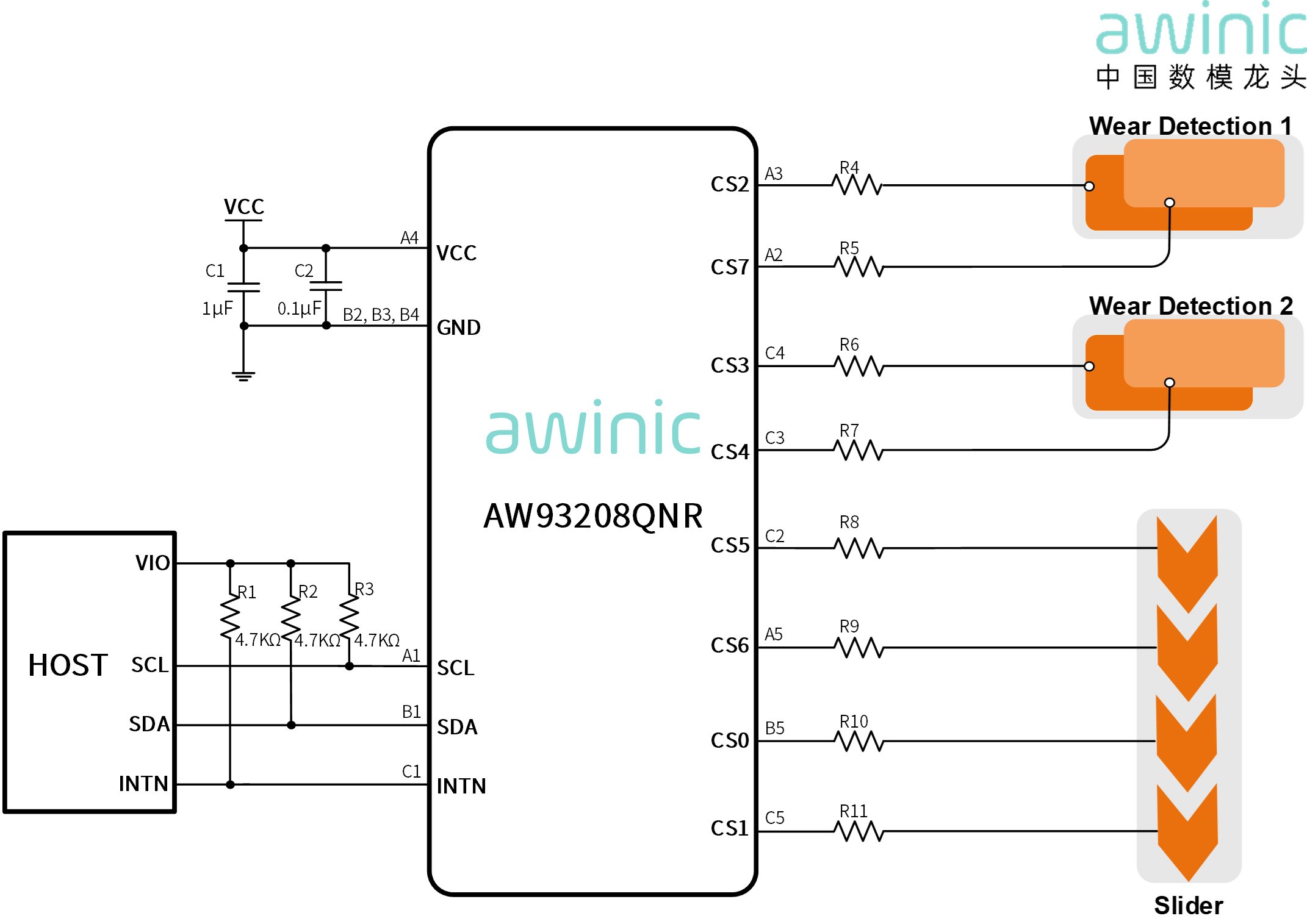
Figure3 AW93208CSR Wearing+Typical Application Block Diagram for Sliding
Part.3 Multi-finger gesture recognition: Recognition technology based on capacitive spatiotemporal features
Within the narrow space of the temple arm, distinguishing between single-finger and two-finger sliding cannot rely solely on capacitance amplitude judgment but requires analysis of spatial distribution features and temporal correlation.
Spatial Feature Extraction: Single-finger and two-finger operations generate different waveform characteristics on the capacitance array, with distinguishable differences in signal distribution range and overall signal strength.
Temporal Correlation Analysis: For single-finger and two-finger sliding, there are differences in the activation timing of data on each sampling electrode.
Performance Metrics: Supports operational gestures such as single-finger sliding, two-finger sliding, double-tap, and long-press;Recognition accuracy >98%,End-to-end latency <2ms.
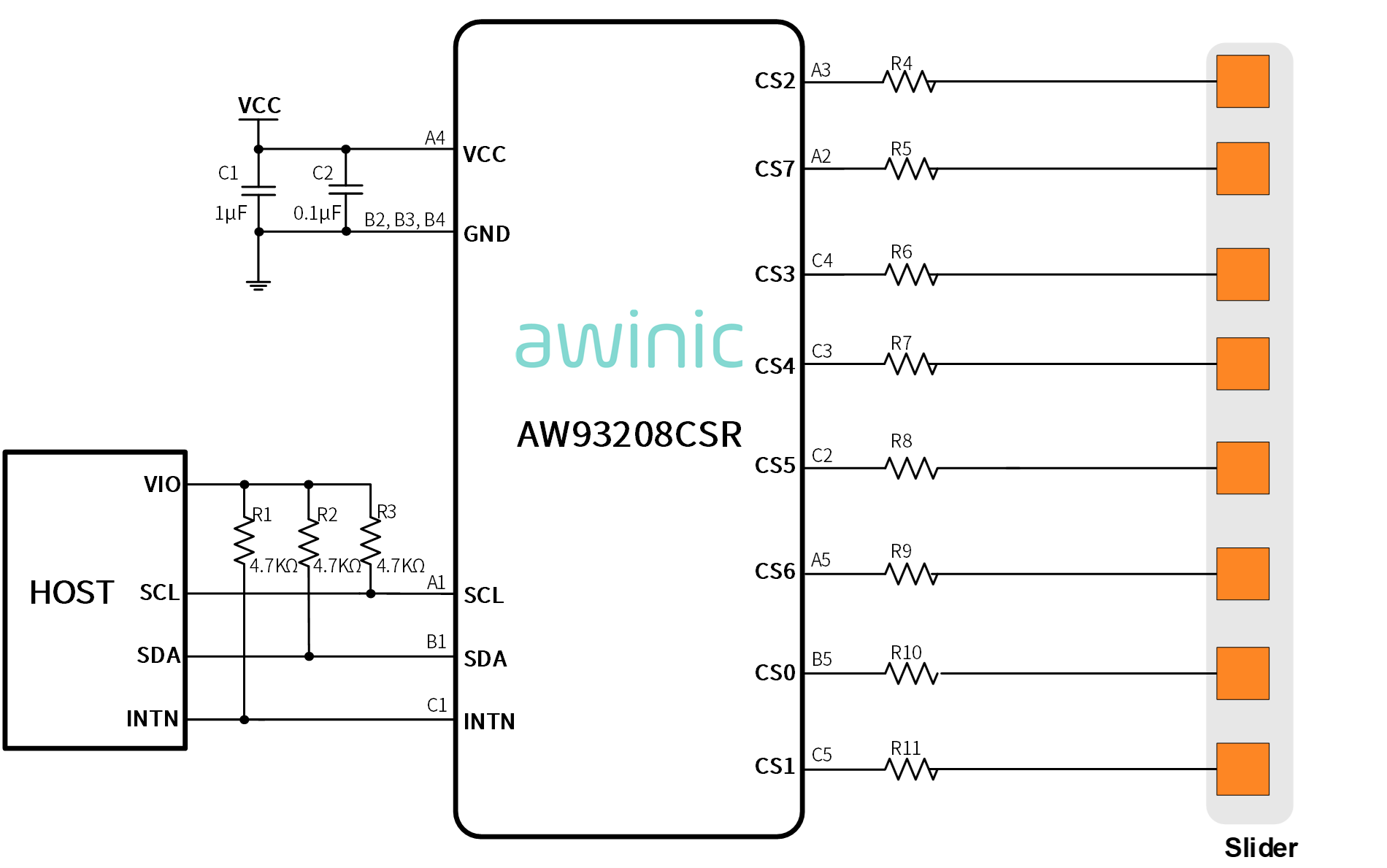
Figure4 AW93208CSR Typical Application Block Diagram for Two-Finger Sliding
Part.4 Temple Arm Open/Close Detection: High-sensitivity, micro-power, omnipolar Hall switch
Temple arm open/close detection utilizes a high-sensitivity, micro-power, omnipolar Hall switchAW86511EBCFDR, which detects magnetic field changes from magnets built into the temple arm based on the Hall effect to identify the open/close status. The device featuresultra-low power consumption characteristics, reducing overall power consumption and extending device battery life; meanwhile, it adopts anultra-small package, adaptable to AR/VR the narrow structural space of glasses temple arms, ensuring stable status detection.
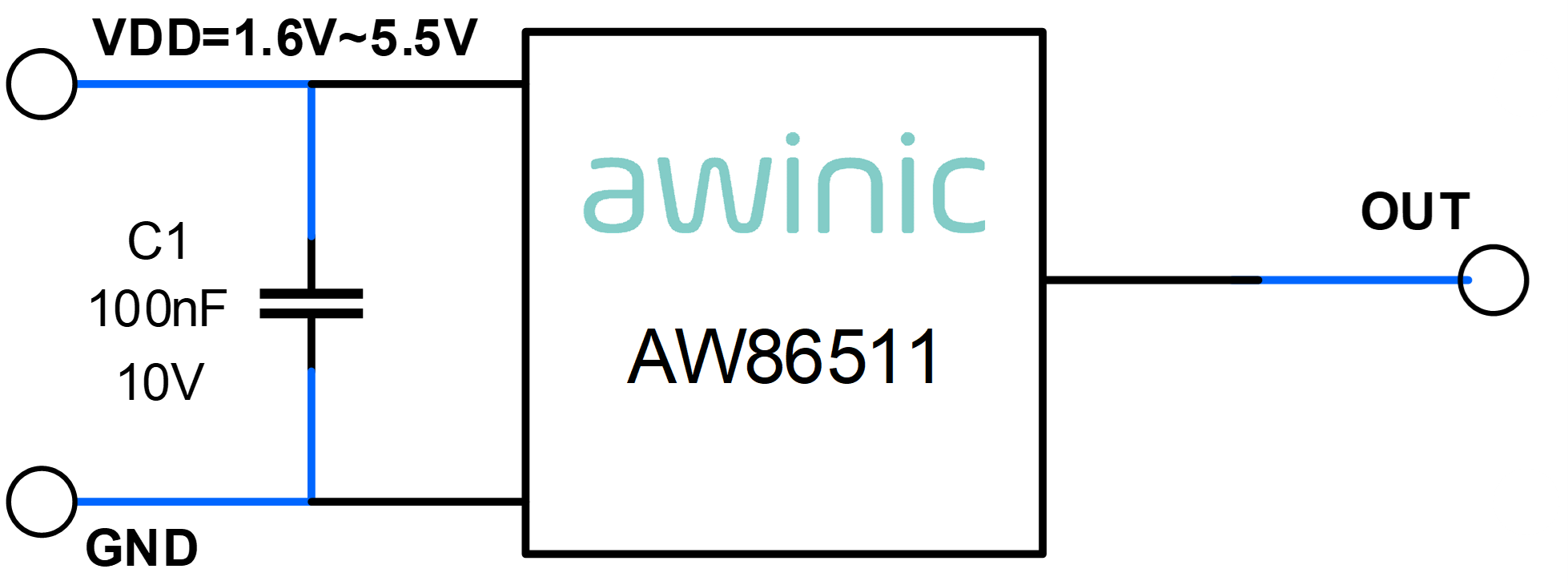
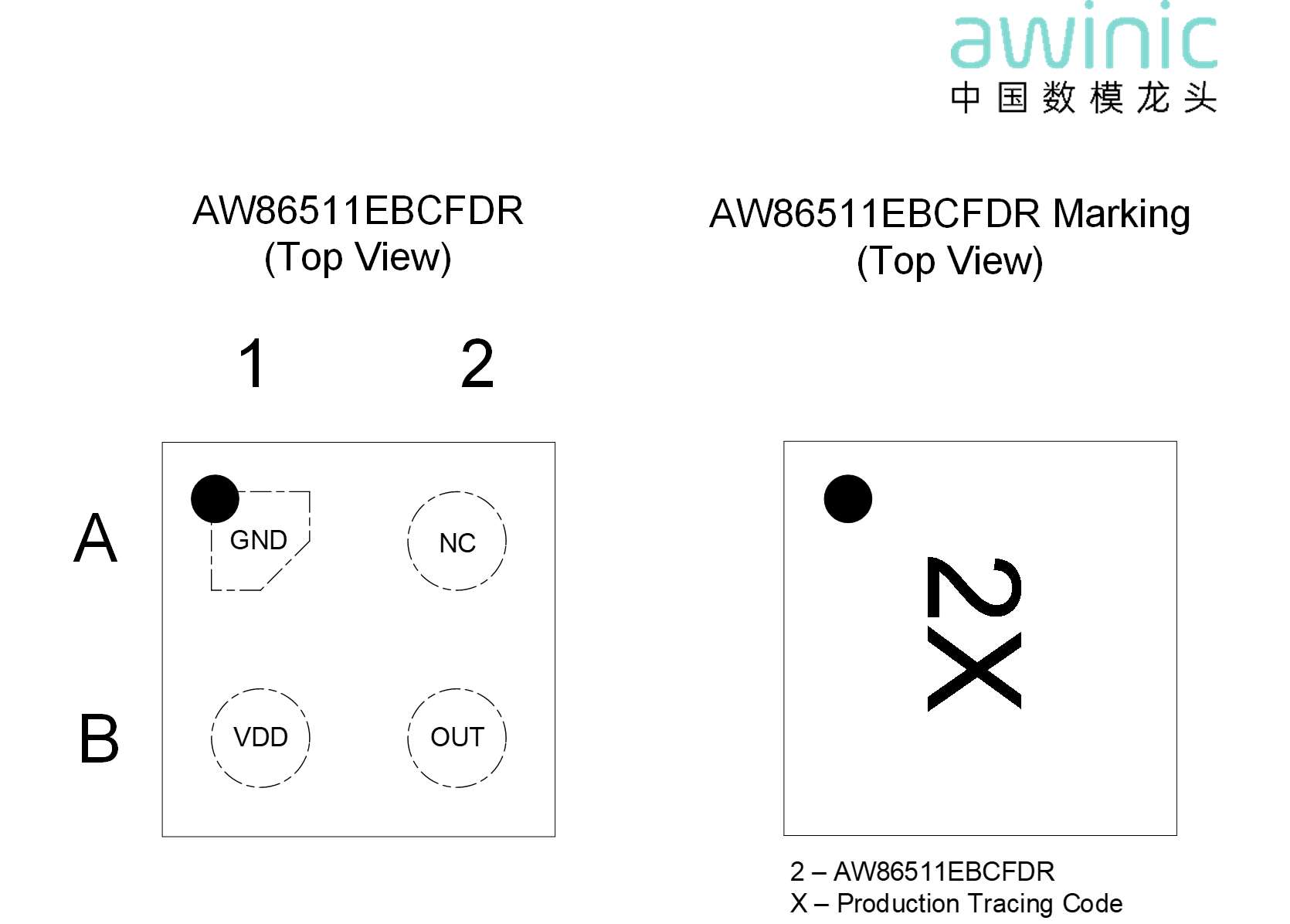
Supported operating voltage 1.6V ~ 5.5V
High-sensitivity omnipolar Hall detection
Ultra-low power operation, typical average current 0.8uA(VDD=1.8V)
Ultra-compact package:FCDFN 0.8mm×0.8mm‑4L
Supported operating voltage 1.6V ~ 5.5V
Magnetic field threshold: Operating point Bop=±25Gs, Release point Brp=±18Gs
Wide operating temperature range:‑40℃ ~ 85℃
Advantages: Ultra-low power consumption, ultra-compact package.
Part.5 Built on awinic chips, ushering in a new era of smart glasses experience
Capacitive detection, multi-finger gesture recognition, and pressure-sensitive pressing form the interaction link between users and devices; while the Hall switch serves as a key component for status sensing, real-time identifying the structure status of the temple arms, providing"when to wake up and when to enter sleep mode"as the decision basis for power management. The four technologies collaborate deeply at the system level:
Hall detection联动 with capacitive wear detection to achieve"folded-unfolded-worn"full-link layered power management;
Wear detection provides context awareness for gestures and pressure sensing;
Combining pressure sensing with sliding achieves a closed-loop operation logic of"selection-confirmation";
Full-link low-power design ensures both interactive experience and battery life performance.
This solution offers smart glasses manufacturers a one-stop solution for interaction and status sensing, enabling every smart glasses model to possess the ultimate experience of"understanding your thoughts, within your touch".


沪ICP备10011954号 |

沪公网安备 31011202011955号
