

The intelligent interaction of smart devices such as smartphones, smart speakers, and smart home products relies on AI computing power and algorithms. However, the fundamental basis for devices to perceive the outside world is inseparable from ADC (analog-to-digital converter) chips. If CPUs and AI chips are responsible for a device's "thinking and computation," then ADC chips are the device's "sensory nerves," specifically tasked with bridging the physical analog world and the digital computing world.
This article will break down in plain terms the core advantages of ADC chips, their essential application scenarios, and focus on the AW8940X series high-performance ADCs from Awinic, analyzing how their robust performance resolves pain points in terminal perception.
I. Core Advantages of ADC Chips: Why Are Smart Devices Inseparable from Them?
The core value of ADC chips lies in precision acquisition, low-loss conversion, and stable output, directly determining the sensitivity and fidelity of smart device perception. Three major core advantages cover the essential needs of terminal devices:
1. High-Precision Sampling for True Signal Detail Restoration
Ordinary signal acquisition is prone to distortion and loss of detail, resulting in blurred device audio reception and data deviation. High-performance ADCs feature high resolution and high signal-to-noise ratio (SNR), enabling them to capture weak analog signals and accurately distinguish subtle signal differences. They achieve lossless acquisition of human voice, ambient sounds, and sensor signals, ensuring signal quality at the source and reducing the computational pressure on downstream AI algorithms for correction.
2. Low Noise and Low Distortion for Adaptation to Complex Environments
Circuit and power supply noise during device operation can easily interfere with signals and cause distortion. Quality ADCs offer excellent anti-interference capability and ultra-low harmonic distortion parameters, effectively filtering out environmental noise and preventing large signals from overloading or small signals from being drowned out. They deliver clean and stable digital signals even under complex operating conditions, ensuring interaction and detection accuracy.
3. Ultra-Low Latency for Real-Time Interaction
Real-time voice interaction and dynamic data monitoring are extremely sensitive to latency. High-performance ADCs support microsecond-level high-speed conversion and transmission, enabling simultaneous signal acquisition, conversion, and response. This completely eliminates stuttering and lag, making them suitable for all types of highly real-time smart terminal applications.
4. Low Power Consumption and High Integration for Compact Terminals
Addressing the current demand for slim, lightweight, and low-power wearable and small IoT devices, high-performance ADCs offer high integration, minimal external circuitry, and compact size, saving PCB space and simplifying hardware design. At the same time, ultra-low power consumption effectively reduces overall device energy consumption and extends battery life, balancing performance with practicality.
II. Why Choose an External ADC? Core Technical Pain Points of Built-in Mainstream ADCs
Most main controller chips come with built-in ADCs, so why do high-end audio and AI-interactive devices still require external independent ADCs? The core reason is that built-in ADCs in main controllers are general-purpose designs that can only handle basic acquisition and cannot support advanced requirements such as high-fidelity audio capture, low-noise interaction, and multi-channel synchronous sampling. They have inherent shortcomings that cannot be overcome in high-end terminal scenarios.
Ordinary IoT devices and simple sensor equipment can function adequately with built-in ADCs. However, for products with extremely high demands on audio purity, real-time performance, and stability—such as AI wearables, smart speakers, and humanoid robots—the performance deficiencies of built-in ADCs directly degrade the overall interactive experience.
1. Low SNR, Severe Noise Floor, and Poor Voice Clarity
To maintain versatility and cost control, main controllers simplify the analog circuit design of their built-in ADCs, resulting in weak anti-interference capability. They are easily disrupted by internal bus noise, high-frequency circuits, and power switching, leading to a high noise floor and insufficient SNR. In actual use, this often manifests as current noise and residual environmental noise, with soft-spoken commands and distant voices being masked by noise. This causes devices to mishear, wake up falsely, and exhibit low recognition rates, failing to meet high-definition audio acquisition standards.
2. Insufficient Dynamic Range, Prone to Distortion and Clipping
Human voice has an extremely wide dynamic range—whispers are very weak while loud speech has prominent peaks. Built-in ADCs in main controllers generally have low dynamic range and cannot accommodate both weak and strong signals. They lack sufficient resolution for small-signal acquisition (causing detail loss) and are prone to overload clipping distortion for large signals. The result is the common problem of faint voices being unclear and loud voices breaking up, severely impacting AI voice recognition and echo cancellation performance.
3. Limited Channel Count, Unable to Meet Echo Cancellation + Multi-Channel Synchronous Acquisition Requirements
Built-in ADCs in main controllers have a very limited number of channels. However, the acoustic echo cancellation (AEC) algorithm essential for mainstream smart audio devices requires one or even multiple dedicated ADC channels to capture speaker playback reference audio for echo suppression. This directly consumes the already scarce channel resources, preventing the device from simultaneously achieving multi-microphone array pickup and audio acquisition. Relying on time-division multiplexing and switching sampling easily causes audio discontinuities and data asynchrony, leading to failed echo cancellation, degraded noise reduction, inaccurate sound field localization, and an inability to meet high-end smart audio requirements.
In summary, an external independent high-performance ADC is not redundant design but an essential necessity for upgrading the experience of high-end smart terminals. Professional independent ADCs, with their dedicated analog circuits, multi-channel architectures, professional noise reduction, and low-latency design, fully compensate for the inherent shortcomings of built-in controller ADCs. The Awinic AW8940X series is a high-performance audio ADC solution specifically designed to address the above industry pain points.
III. Awinic AW8940X Series ADCs: Precisely Matching Core Terminal Requirements
ADC chip performance directly determines the upper limit of terminal perception experience. Low-end ADCs on the market commonly suffer from poor SNR, high distortion, large latency, and uncontrolled power consumption, leading to blurred audio capture, severe noise floor, and interactive lag. To address these industry pain points, Awinic Electronics, based on extensive terminal scenario optimization, has launched the AW8940X series high-performance audio ADC chips. These fully align with the core advantages of high-performance ADCs and are suitable for mainstream applications including AI wearables, smart audio, smart home, and humanoid robots.
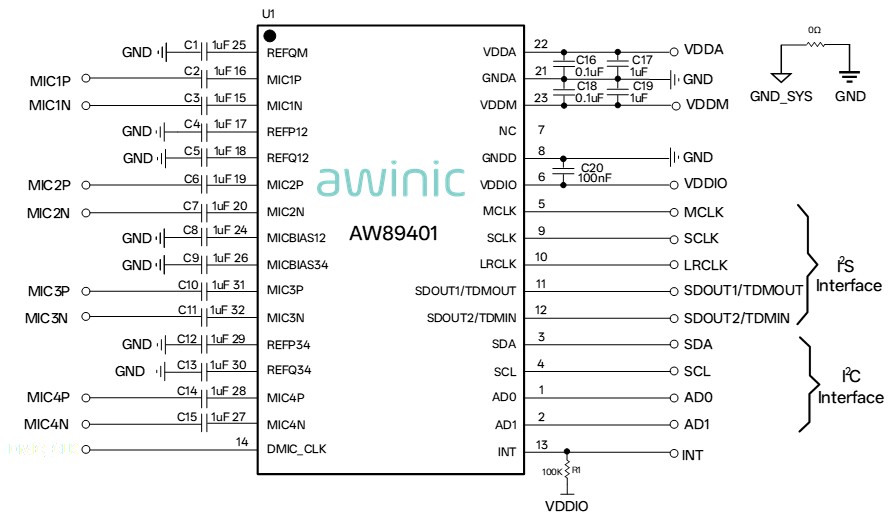
Figure 1: AW8940X Series Typical Application Diagram
1. Top-Tier Acoustic Parameters Redefine Signal Acquisition Precision
The AW8940X series features multiple channels with an ultra-high SNR of 102dB, which is further enhanced to 108dB with Awinic's proprietary Summmixer architecture. It also delivers an ultra-low THD+N (total harmonic distortion plus noise) of -94dB, placing its specifications firmly at the top of its class. The ultra-high SNR precisely strips away background noise and locks onto effective voice signals, while the wide dynamic range accommodates both whisper-quiet and high-decibel audio scenarios, thoroughly solving the pain points of "faint voices being inaudible and loud voices breaking up," and achieving high-definition, lossless acquisition at the source.
2. Extremely Low Latency for Real-Time Intelligent Interaction
The chip incorporates Awinic's proprietary high-speed conversion architecture, achieving an ultra-low latency of 60μs. It supports sampling rates up to 768kHz and configurable bit depths from 8 to 32 bits, covering advanced requirements such as high-definition audio and real-time AI interaction. This ensures synchronized, lag-free responses in scenarios like AI voice chat, speaker wake-up, and robot interaction.
3. Low Power Consumption + High Integration for Compact Terminals
Designed for compact portable devices, the AW8940X series features extremely low static power consumption, with operating power as low as 7.8mA, effectively extending device battery life. At the same time, the chip's high integration and minimal external components enable a streamlined layout that significantly saves PCB space, facilitating slim device designs and reducing R&D and manufacturing costs for vendors.
IV. Quality ADCs: The Invisible Cornerstone of Smart Experiences
As the invisible "sensory nerves" of smart devices, ADC chips, though not widely known to the general public, are the fundamental cornerstone of a high-quality smart experience. A chip's acquisition precision, response speed, and stability directly determine the baseline interactive experience of terminal devices.
With the rapid iteration of on-device AI and lightweight wearables, low-end ADCs can no longer meet the industry's demands for high definition, real-time performance, and low power consumption.
The Awinic AW8940X series ADC chips faithfully deliver the four core advantages of high-performance ADCs. With their robust capabilities of high precision, low distortion, low latency, and low power consumption, they fill the gaps in terminal signal acquisition, underpin the perception and interaction capabilities of various smart terminals, and deliver a smooth, stable, and high-definition on-device smart experience.


沪ICP备10011954号 |

沪公网安备 31011202011955号
