

PART 01
I. Industry Market Pain Points: Core Audio Bottlenecks in AI Wearable
Devices
AI glasses, action cameras, and lightweight smart wearable devices are rapidly gaining popularity, but the audio chain commonly suffers from design bottlenecks that are difficult to overcome:
1. Extremely
Constrained Structural Space
The PCB area inside AI glasses temples, action camera bodies, and portable
wearable devices is at a premium. Traditional power amplifiers and voice Codec
chips come in relatively large packages with numerous peripheral components,
crowding out space for battery and main controller layout.
2. Prominent
Battery Life Pressure
Wearable devices typically have batteries of ≤300 mAh. Traditional audio chips
have relatively high quiescent power and playback power consumption, while
voice wake-up and real-time loudspeaker output significantly reduce overall
device battery life.
3. Poor
Loudspeaker Audio Quality
The speaker cavities in wearable devices are extremely small, resulting in
missing low frequencies, insufficient volume, airflow noise, and severe
distortion and clipping. Conventional power amplifiers lack built-in audio
algorithms and rely on additional main controller computing power for parameter
tuning.
4. Outdoor Voice
Interaction Failure
In scenarios involving sports, cycling, strong winds, and crowded marketplaces,
wind noise and environmental noise interference are extremely strong.
Traditional voice chips have high VAD wake-up power consumption and weak noise
reduction capabilities, causing offline voice recognition rates to drop
sharply.
5. High Software
and Hardware Development Costs
Power amplifiers and voice processing chips belong to two separate solution
sets, algorithms require third-party licensing, debugging cycles are long, main
controller computing power is heavily occupied, and the implementation barriers
are high for small and medium-sized manufacturers.
AWINIC's Digital Series power amplifiers + AI-NPU voice chip combo solution addresses all pain points from three layers – hardware packaging, underlying power consumption, and self-developed DSP/NPU algorithms – making it suitable for mass production of lightweight wearable devices.
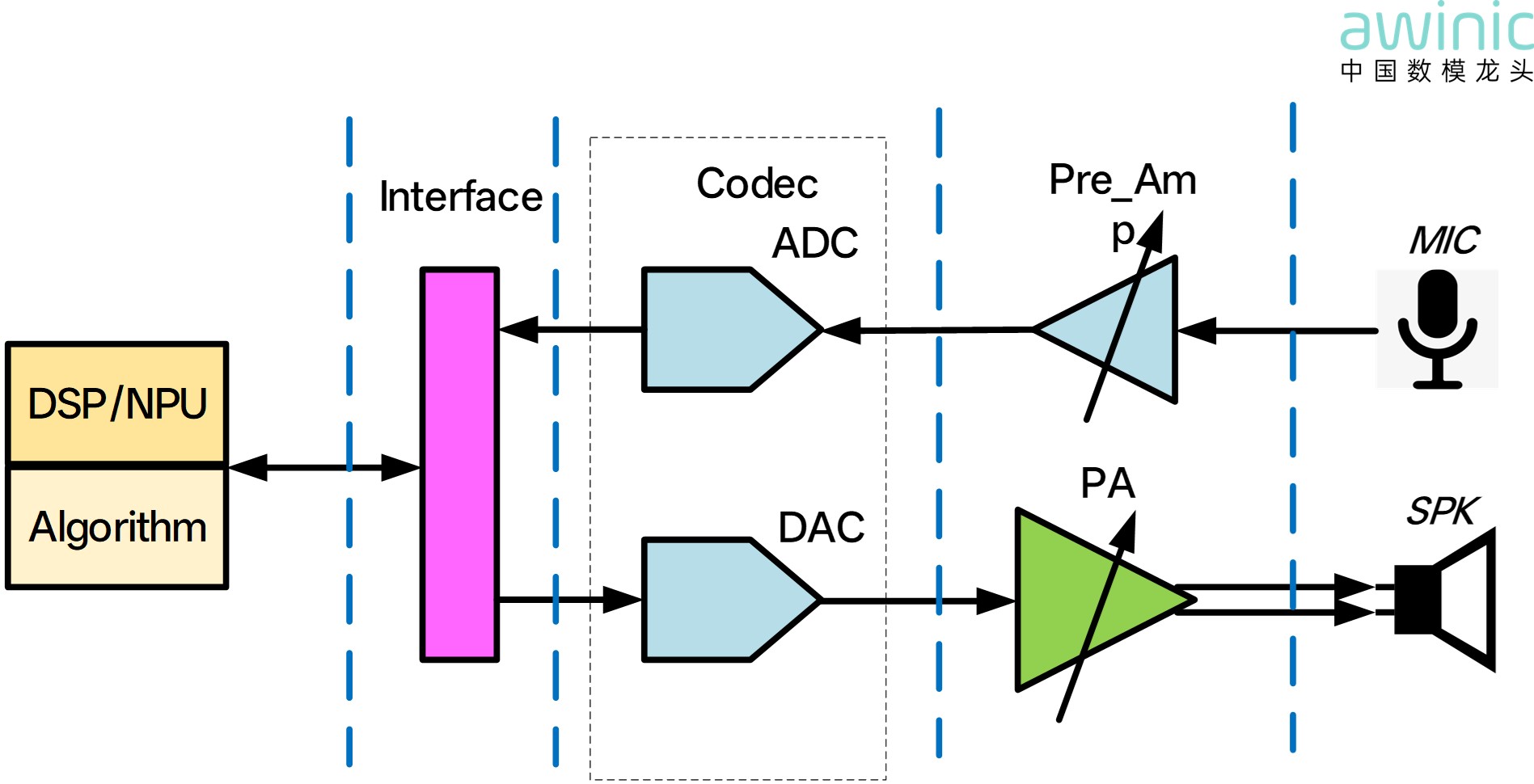
Figure 1 – AWINIC Full-Chain Solution
PART 02
II. AWINIC Integrated One-Stop Solution Architecture
AWINIC provides
an integrated one-stop audio solution with no additional third-party algorithm
chips, a compact PCB layout, and suitability for miniaturized wearable designs.
Microphone Array → Uplink NPU (VAD Wake-up + NPU Noise Reduction + Voice
Recognition) → I2S Digital Audio Bus → Digital Series DSP Audio Amplifier
(Audio Enhancement + Loudspeaker Driving) → Miniature Speaker
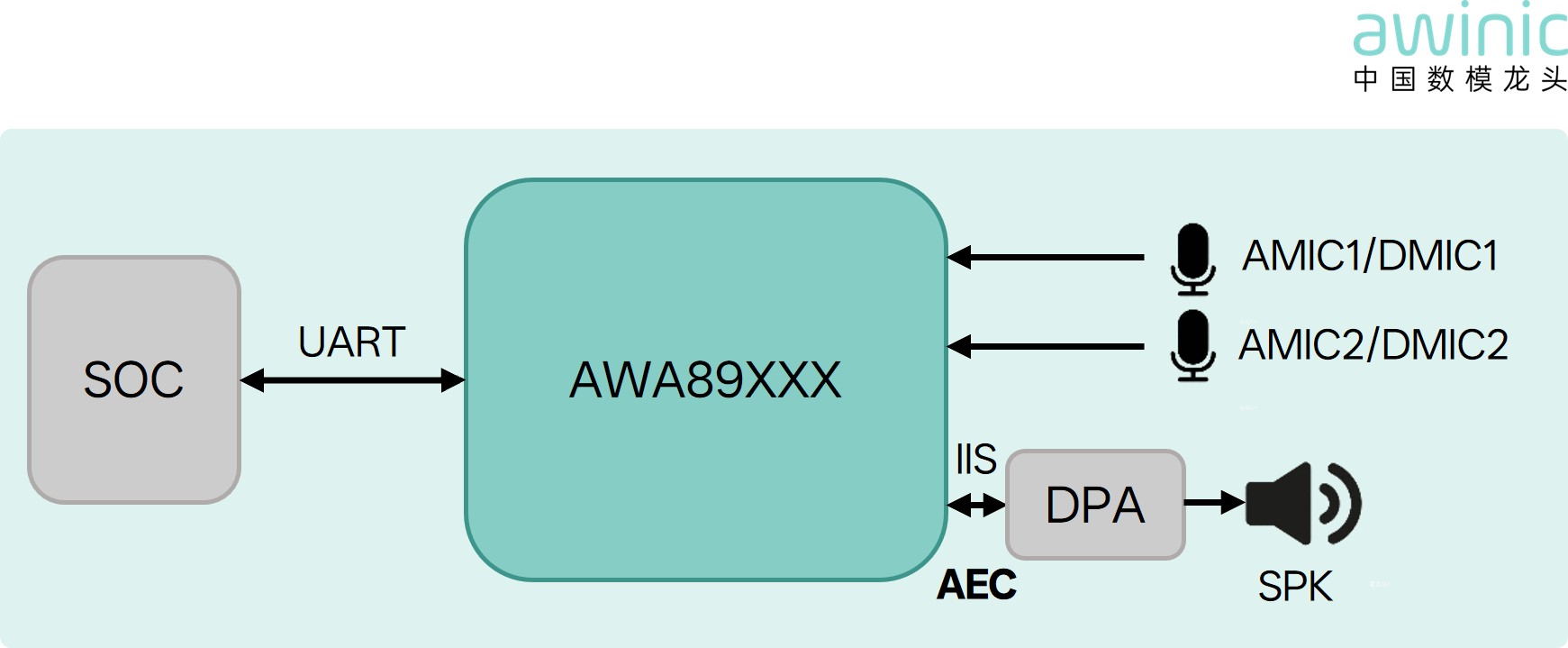
Figure 2 – AWINIC Integrated Audio Solution
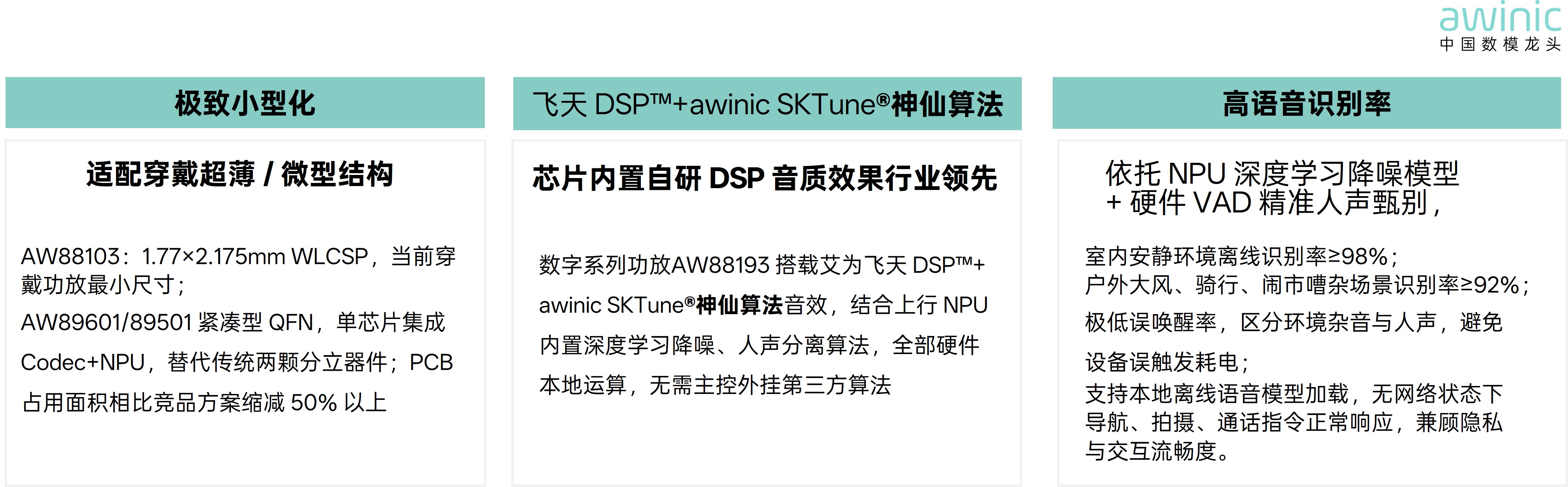
Figure 3 – Three Core Advantages
PART 03
III. Core Chip Product Specifications
(I) AW88103CSR Ultra-Miniature Flagship Power Amplifier
1. Miniaturized
Packaging
WLCSP wafer-level package with dimensions of only 1.77 mm × 2.175 mm – the
industry's smallest package for the same power rating. It reduces placement
costs and PCB routing complexity and can fit into the narrow space of AI
glasses temples.
2. Hardware
Specifications
6.25 V adaptive boost, 2.1 W output into an 8 Ω load, supports
receiver/loudspeaker dual modes, I²C control interface; output noise floor as
low as 10 μV, with strong RF immunity that effectively eliminates TDD RF noise
in wearable devices.
3. DSP Algorithm
Capabilities
Integrated with the Feitian DSP™ core, featuring AGC automatic
gain control, anti-clipping limiting, speaker protection, and airflow noise
suppression – a full suite of algorithms. No need for the main controller to
handle audio effect computations; the small-cavity speaker automatically has
its low frequencies enhanced, delivering clear, full-bodied vocal reproduction.
4. Ultra-Low
Power Design
Adaptive boost with dynamic voltage regulation reduces playback power
consumption by 25% at low volume levels; built-in multi-level power-saving
modes with microampere-level quiescent current in standby, suitable for all-day
wearable scenarios.
5. Protection
Mechanisms
Fourfold hardware protection – short circuit, over-temperature, undervoltage,
and overvoltage – suitable for outdoor action cameras in harsh, bumpy
environments with wide temperature variations.
6. Stable
Operation Across Temperature Ranges
Operating temperature range of –40°C to 85°C, suitable for outdoor action
cameras and all-weather wearable devices.
(II) AWA89601 & AWA89501 – NPU Uplink Voice Processing Chips
Integrates AI offline voice interaction capabilities, supports edge-side voice interaction in multiple languages, incorporates AI deep learning noise reduction and echo cancellation functions, and supports high-definition voice calls for applications in laptops, smart homes, security systems, AI toys, and other devices.
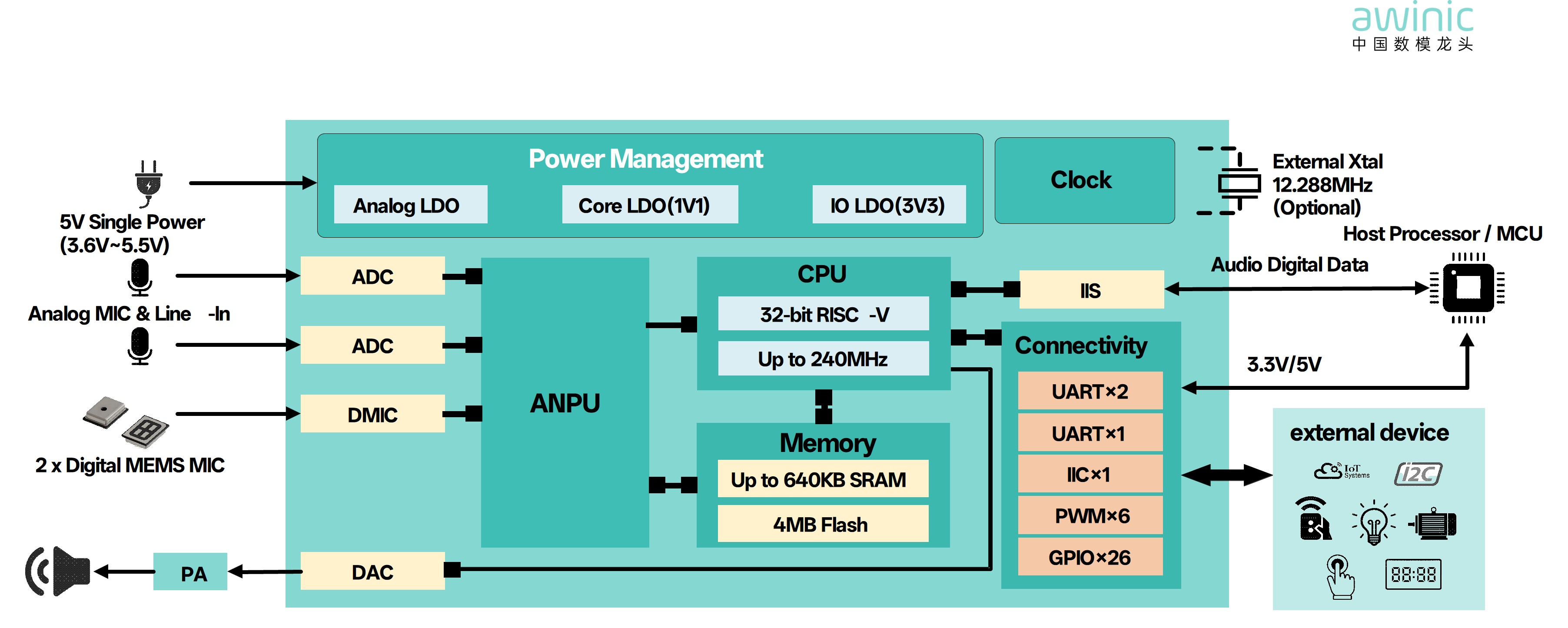
Figure 4 – ANPU Application Block Diagram
1. Five Core
Voice Processing Technologies
Five core voice processing technologies greatly improve the accuracy and
naturalness of voice recognition.
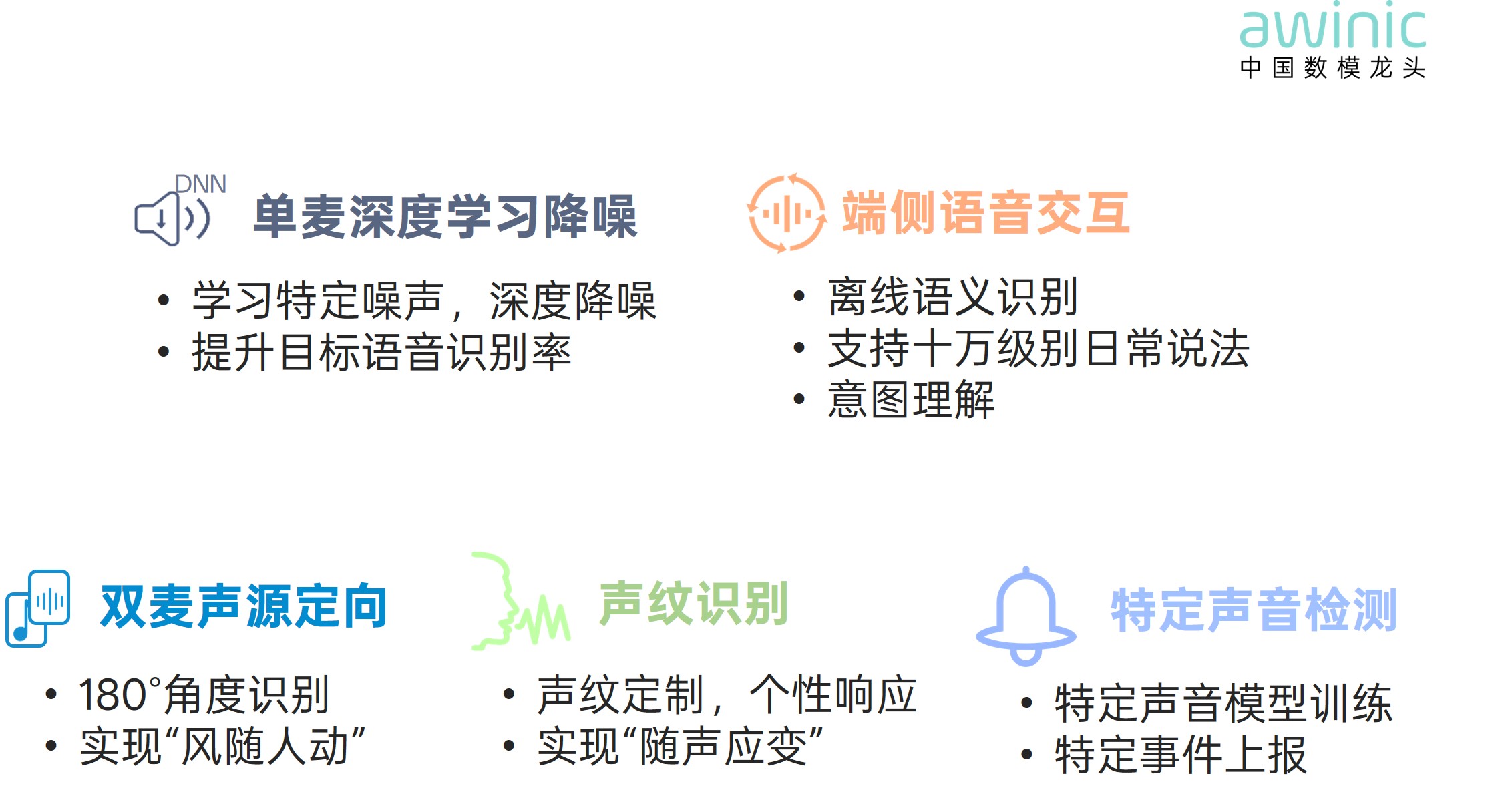
Figure 5 – Five Core Voice Processing Technologies
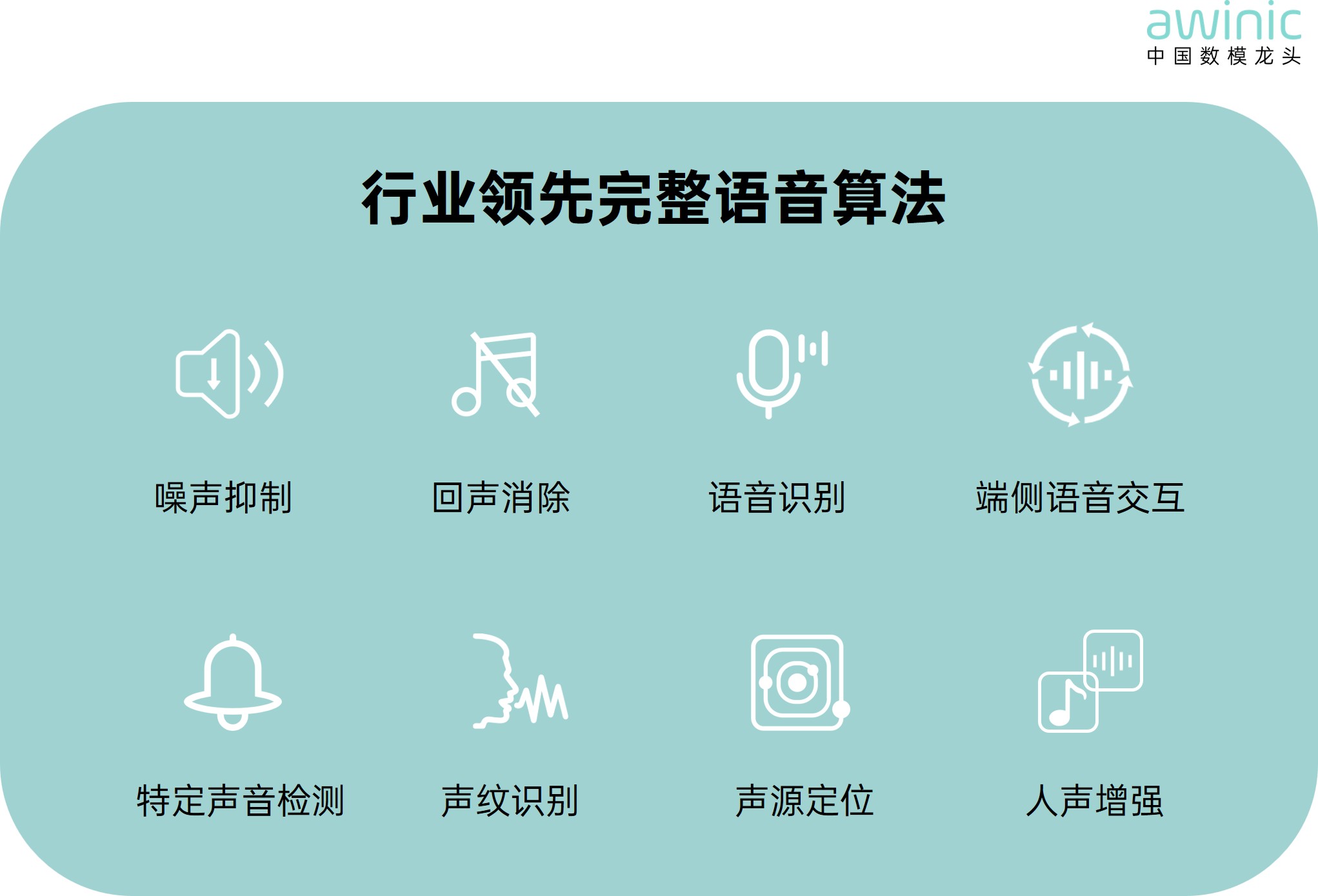
Figure 6 – Industry-Leading Complete Voice Algorithms
2. AI Voice Chip AWA89501QNR – Core Application Scenarios for AI Edge-Side Voice Interaction
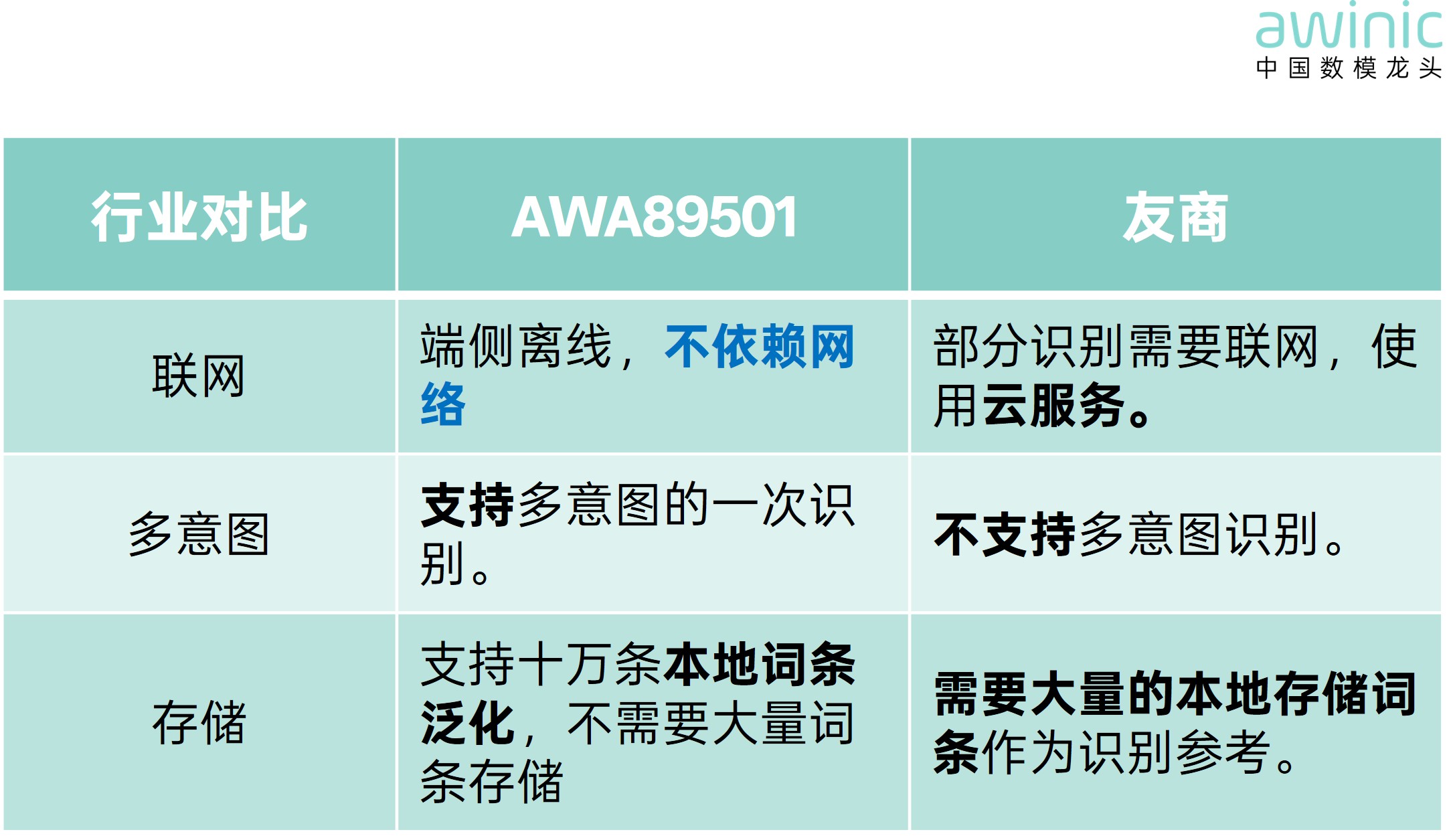
Figure 7 – AWA89501QNR Solution Advantage Comparison
Applicable Scenarios: AI toys/robots, AIoT devices, smart speakers, industrial control equipment, smart homes.

Figure 8 – AWA89501QNR Applicable Scenario Examples
3. AI Voice Chip
AWA89601QNR – Deep Learning Noise Reduction
Integrates AI deep learning noise reduction and echo cancellation functions,
supporting high-definition voice calls.
Applicable Scenarios: Walkie-talkies, building video intercoms, AI robots, smart helmets.
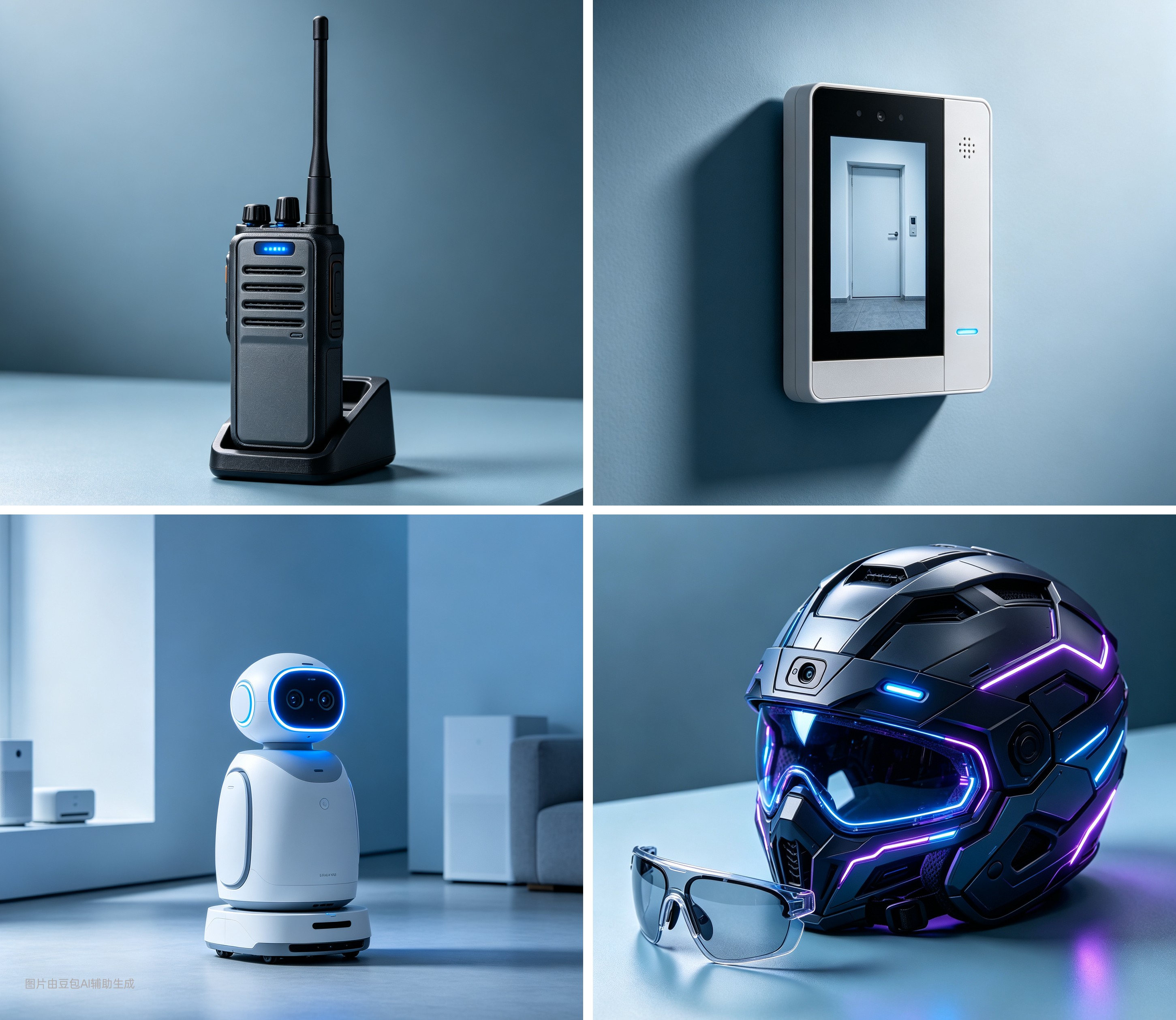
Figure 9 – AWA89601QNR Applicable Scenario Examples
AI wearable devices are shifting from being "display hardware" to "voice interaction–centric" products. The miniaturization, low power consumption, high audio quality, and high recognition accuracy of the audio chain have become core selling points for product differentiation.
AWINIC's integrated audio solution, with its four core capabilities – domestically developed self-designed chips, miniature package architecture, built-in software and hardware algorithms, and hardware-level ultra-low-power VAD – addresses all pain points in the full audio chain for wearable terminals such as AI glasses and action cameras in a one-stop manner. It empowers the industry to create differentiated wearable products featuring lightweight design, long battery life, powerful voice interaction, and superior loudspeaker audio quality.


沪ICP备10011954号 |

沪公网安备 31011202011955号
